I spent the better part of last decade watching people struggle through overnight studies, wired to a headbox and convinced their brains were fundamentally broken. Now, when I see travelers frantically scrolling through “hacks” or buying $200 weighted eye masks to figure out how to sleep well while travelling, I can’t help but roll my eyes. Most of the advice out there is just expensive noise designed to sell you a solution to a problem you don’t actually have. You don’t need a specialized magnesium spray or a revolutionary smart ring to survive a flight; you usually just need to stop fighting your body’s natural rhythm and manage your environment.
I’m not here to sell you a gadget or a lifestyle overhaul. Instead, I want to give you the clinical reality of what actually matters when your routine is stripped away by time zones and hotel rooms. I’m going to cut through the influencer nonsense and tell you which physiological triggers actually disrupt your rest and how to manage them. We’ll focus on the evidence-based adjustments that actually move the needle, so you can spend less time worrying about your sleep score and more time actually enjoying your trip.
Why Your Travel Fatigue Isnt a Disorder Just a Rhythm Issue
When I see patients in the clinic, they often arrive convinced they’ve developed chronic insomnia because of a particularly rough trip to New York or Singapore. They show me their wearable data, pointing to a “shattered” sleep score, and demand a diagnosis. But here is the reality: you don’t have a disorder; you have a circadian rhythm adjustment problem. Your body isn’t broken; it’s just confused.
The exhaustion you feel isn’t a sign of a failing nervous system, it’s the physiological consequence of your internal clock fighting against a new sun cycle. Most of what we call “travel fatigue” is actually just the biological friction of trying to force a body into a schedule it hasn’t agreed to yet. Instead of looking for a medical fix, you need to focus on managing time zone changes by anchoring your light exposure. If you try to treat a rhythm shift with the same intensity you’d use for a clinical sleep disorder, you’ll only end up more stressed and, ironically, even less likely to drift off.
The Truth About How to Sleep Well While Travelling
If you’re looking for a magic pill or a specific supplement to fix your travel exhaustion, I’m going to disappoint you. Most of the “hacks” sold online are just expensive ways to mask a problem that is fundamentally biological. When we talk about managing time zone changes, we aren’t talking about willpower; we are talking about the slow, often frustrating process of circadian rhythm adjustment. Your body doesn’t care that you have a meeting at 9:00 AM in Singapore; it only cares that your internal clock is still stuck in London.
Instead of chasing the latest trend in sleep hygiene for travelers, focus on the sensory inputs that actually signal rest to your brain. This means creating a portable sleep environment that mimics your home—think consistent darkness and a controlled temperature—rather than relying on a noisy hotel room with a radiator blasting. It’s about reducing the friction between your body and its surroundings. If you try to force sleep with heavy sedatives while your body is screaming for light, you aren’t actually resting; you’re just unconscious and likely to wake up feeling even more fragmented.
Stop Trusting Your Tracker to Manage Time Zone Changes
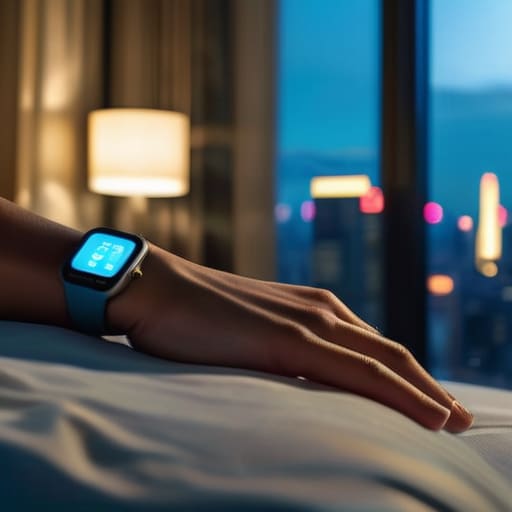
I see it every single week in the clinic: patients arriving with a sense of genuine panic because their smartwatch has given them a “sleep score” of 42 after a long-haul flight. They see that red number and conclude their body has fundamentally broken down. Let me be very clear: your wearable is not a polysomnograph. It is a glorified accelerometer that makes educated guesses based on how much you toss and turn. It cannot see your brain waves, and it certainly doesn’t understand the physiological reality of managing time zone changes.
When you are crossing several longitudinal lines, your internal clock is in a state of flux. A tracker might tell you that you didn’t get any “deep sleep,” but that is often just the device failing to interpret your body’s attempt at a circadian rhythm adjustment. Instead of obsessing over a digital score that is essentially an algorithm’s opinion, focus on the physical sensations. Are you actually rested when you wake up? Do you have the cognitive clarity to function? If the answer is yes, ignore the gadget. If the answer is no, then we need to look at your actual habits, not your data points.
Mastering Circadian Rhythm Adjustment Without the Expensive Gimmicks
You’ll see them everywhere in the duty-free section: melatonin gummies, “jet lag relief” patches, and expensive supplements promising to reset your brain overnight. As someone who has spent years looking at actual physiological data, I can tell you that most of these are just expensive ways to induce a groggy, disorienting fog. Real circadian rhythm adjustment isn’t about a magic pill; it’s about light and temperature. If you want to actually manage time zone changes, you need to stop looking for a chemical shortcut and start looking at the sun.
Instead of hunting for the best sleep aids for long haul flights, focus on the biological signals that tell your brain it’s time to switch gears. This means seeking bright, natural light in the morning of your destination and aggressively avoiding blue light from your phone when you should be winding down. It’s much more effective to anchor your internal clock with consistent light exposure than to try and force a physiological shift with a supplement that might just leave you feeling “wired but tired.”
Creating a Portable Sleep Environment That Actually Works
When you’re in a hotel or a cramped cabin, you lose the two things I tell my clinic patients to prioritize every single day: temperature control and light management. You can’t control the thermostat in a rental, and you certainly can’t control the cabin lights, but you can control what touches your skin and eyes. I’m not a fan of the “travel kit” industry that sells you expensive, single-use gadgets, but a high-quality, weighted eye mask is one of the few things actually worth the luggage space. It does more than block light; it provides a tactile signal to your nervous system that the environment is safe and the day is over.
If you are serious about creating a portable sleep environment, stop looking for a magic pill and start looking at your sensory inputs. A small, travel-sized white noise machine—or even a dedicated app—is far more effective at masking unpredictable hotel corridor sounds than any herbal supplement. We often focus so much on the biological side of managing time zone changes that we forget the sheer psychological disruption of being in an unfamiliar room. If you can mimic the sensory cues of your own bedroom, your brain is much more likely to transition into restorative sleep stages rather than staying in a state of hyper-vigilance.
Evidence Based Sleep Hygiene for Travelers Versus Marketing Fluff
The travel industry loves to sell you a solution for every minor discomfort, usually in the form of a brightly coloured pill or a “smart” eye mask that promises neurological recalibration. It’s exhausting. In my clinic, I see the fallout of people trying every gimmick on the market to combat flight fatigue, only to end up more anxious about their sleep than they were before they boarded. Most of these products are just expensive ways to mask a lack of basic physiological understanding.
If you want real sleep hygiene for travelers, you need to ignore the marketing fluff and focus on the biology. There is no magic supplement that will bypass the way your brain reacts to light and temperature. Instead of hunting for the best sleep aids for long haul flights, focus on the two things that actually move the needle: managing your light exposure and maintaining a consistent core temperature. If you can control when your eyes see bright light and when your body begins to cool down, you are doing more for your recovery than any overpriced wearable or herbal concoction ever could.
Five practical ways to manage your biology when your surroundings won't cooperate
- Anchor your wake time the moment you land. I know it’s tempting to sleep in to “catch up,” but that just keeps your circadian rhythm in a state of flux. Pick a time, stick to it, and get some light in your eyes immediately.
- Stop treating caffeine like a survival tool for the entire flight. It has a half-life that will haunt your ability to settle into a new time zone later that night. Use it strategically in the morning, then draw a hard line by midday.
- Manage your core temperature, even in a hotel. Most hotel rooms are kept unnecessarily warm, which is the enemy of deep sleep. Aim for a cool room and use a hot shower right before bed to trigger that natural temperature drop your body needs to signal sleep.
- Don’t let a “bad” night on your tracker dictate your mood. If you wake up feeling okay but your wearable tells you your sleep score was abysmal, ignore it. Your subjective feeling is a much better indicator of readiness than a consumer-grade algorithm.
- Use light as a tool, not an accident. Seek out bright, natural sunlight in the morning of your new destination to reset your clock, but wear sunglasses or dim the lights in the evening to prevent your brain from thinking it’s still midday.
The bottom line for your next trip
Stop chasing a “perfect” sleep score on your wearable; your tracker can’t tell the difference between jet lag and a genuine sleep disorder, and panicking over a low number will only make your insomnia worse.
Focus on your wake time rather than your bedtime—anchoring your morning routine is the most effective way to signal to your brain that the time zone has shifted.
Prioritise environmental control over expensive supplements; keeping your temporary bedroom cool and dark is far more evidence-based than trying to fix a rhythm issue with “sleep gummies.”
Frequently Asked Questions
If my wearable says I had a terrible night's sleep on the plane, should I be changing my routine, or should I just ignore the score?
Ignore the score. Your wearable is a glorified motion sensor, not a polysomnograph. It can’t tell the difference between you tossing because of a cramped economy seat and you actually being awake. If you start changing your routine based on a fluctuating number, you’ll trigger the exact anxiety that ruins sleep. Instead, check your subjective feeling: are you functional? If yes, ignore the app. If no, fix your light exposure and temperature, not your “score.”
How can I tell if my travel exhaustion is just a temporary rhythm shift or if I've actually triggered a long-term sleep issue?
Give it two weeks of a consistent routine once you’re home. If your sleep settles as soon as your wake time stabilizes and your bedroom temperature drops, it was just circadian drift. However, if you’re still staring at the ceiling three weeks later, despite a regular schedule, we might be looking at something more persistent. Don’t let a week of travel chaos convince you that you’ve broken your brain; wait for the rhythm to reset first.
Are there any specific, evidence-based supplements for jet lag, or is most of that just expensive marketing?
Look, I’ve seen enough “sleep support” gummies to last a lifetime. Most of them are expensive placebos. If we’re talking evidence, melatonin is the only real player here for shifting your circadian rhythm, but it’s a hormone, not a sedative—use it to signal timing, not to knock yourself out. Beyond that, most supplements are just marketing fluff. Focus on light exposure and consistent wake times; they’re free, and they actually work.