
I’ve spent seventeen years watching people struggle to find rest, and if there is one thing that makes my blood boil, it’s the expensive, useless nonsense being sold to shift workers. You’ll see influencers peddling “sleep supplements” or high-tech gadgets that promise to fix your circadian rhythm with a single pill, but let’s be honest: if you’re trying to figure out how to sleep better on shifts, a fancy wearable isn’t going to bridge the gap between your biology and your roster. Most of that advice is designed to sell a product, not to actually help you survive a night shift without feeling like a walking ghost.
I’m not here to sell you a subscription or a miracle cure. My goal is to give you the clinical reality of what actually works when your schedule is fundamentally at odds with the sun. We are going to strip away the hype and focus on the physiological levers you can actually pull—things like light management, temperature control, and the brutal importance of a consistent anchor wake time. I will tell you exactly what the evidence says, and more importantly, what to ignore, so you can stop fighting your body and start managing your environment.
Understanding How to Sleep Better on Shifts

The problem with most advice for shift workers is that it assumes you have the luxury of a consistent routine. It’s easy to tell someone to “stick to a schedule,” but when your life is dictated by a roster, that’s a fantasy. Instead of chasing a normalcy that doesn’t exist, we need to focus on circadian rhythm disruption management. This isn’t about willpower; it’s about biology. Your body is fighting a losing battle against the sun, and you cannot simply “try harder” to ignore the light hitting your retinas at 7:00 AM.
If you want to survive the rotation, you have to treat your bedroom like a sensory deprivation tank. This means investing in high-quality blackout curtains for daytime sleep—and I mean proper ones, not just some flimsy fabric that lets the morning light bleed through the edges. If your brain detects even a hint of blue light, it will signal your system to wake up, regardless of how exhausted you feel. We also need to talk about the difference between a strategic nap and a crash; one is a tool, the other is just a symptom of being completely burnt out.
Key Things to Know
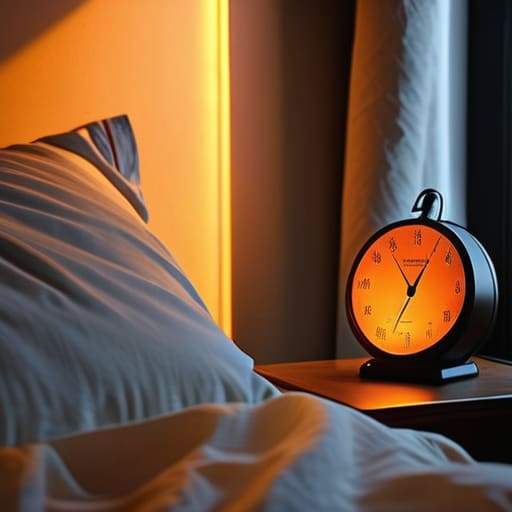
First, we need to stop pretending that “sleep hygiene” works the same way for you as it does for someone working a nine-to-five. When your internal clock is constantly being tugged in two directions, standard advice like “avoid screens before bed” feels a bit patronising. What you actually need is a strategy for circadian rhythm disruption management. This isn’t about being perfect; it’s about manipulating light and temperature to trick your brain into thinking it’s night, even when the sun is high and the neighbours are mowing their lawns.
If you aren’t already using heavy-duty blackout curtains for daytime sleep, you are fighting a losing battle against biology. Your brain is wired to respond to light, and even a sliver of morning sun hitting your eyelids can trigger a cortisol spike that makes deep, restorative sleep nearly impossible. Beyond the darkness, you have to look at your environment. If your bedroom feels like a sauna because the house has warmed up by midday, you won’t get the core temperature drop required for sleep. It’s not a lack of willpower; it’s basic physiology.
Practical Tips and Steps
First, let’s talk about your environment. If you are trying to sleep while the sun is high, your brain is fighting a losing battle against biology. You cannot expect deep, restorative sleep if your bedroom feels like a midday terrace. I cannot stress this enough: invest in high-quality blackout curtains for daytime sleep. If light is leaking through the edges of your blinds, your pineal gland is getting the message to wake up, regardless of how tired you feel. Pair this with a room temperature that is slightly lower than you think you need; we sleep better when our core temperature drops.
Regarding your routine, stop trying to “catch up” on sleep with erratic, marathon naps. Instead, look into specific napping techniques for healthcare workers or shift staff, such as the controlled 20-minute power nap. It prevents that heavy, groggy feeling of sleep inertia. When it comes to supplements, be wary of the hype. While some people find success with melatonin for shift workers to signal the start of a sleep window, it isn’t a magic pill and shouldn’t be used to mask a complete lack of consistent rest.
Common Mistakes to Avoid
The biggest mistake I see is the attempt to “force” a normal rhythm onto a schedule that is fundamentally broken. People treat shift work like a temporary inconvenience they can out-willpower, but you cannot fight your biology. I often see patients trying to use melatonin for shift workers as a magic wand to force sleep at 8:00 AM, but if your environment is screaming “daytime,” a supplement won’t do much. If you aren’t using heavy-duty blackout curtains for daytime sleep, you are essentially asking your brain to ignore the sun, and your brain is very, very good at noticing the sun.
Another trap is the “all or nothing” approach to rest. I see so many people attempting to power through a twelve-hour stretch by sheer caffeine dependency, only to crash in a way that makes them unsafe. Rather than white-knuckling it, you need to look at specific napping techniques for healthcare workers or those in similar roles—short, strategic bursts that don’t leave you with that heavy, disoriented sleep inertia. Stop trying to sleep like a person on a 9-to-5; it’s a recipe for failure.
Final Thoughts
At the end of the day—or the beginning of it, depending on your roster—the most important thing to remember is that you cannot “will” your biology into submission. You can buy the most expensive wearable on the market, but no app can fix the physiological reality of circadian rhythm disruption management. If your body thinks it should be awake because the sun is hitting your face, a high sleep score on your wrist isn’t going to change the fact that your sleep architecture is fragmented.
Stop looking for a magic pill and start looking at your environment and your consistency. Whether it is investing in heavy-duty blackout curtains for daytime sleep or being much more disciplined about your wake-up time, the goal is to reduce the friction between your schedule and your biology. Don’t let the industry convince you that you’re broken; often, you’re just trying to live a life that contradicts your internal clock. Focus on the variables you can actually control, and give yourself permission to accept that some days will be harder than others. It’s about mitigation, not perfection.
Five ways to stop fighting your own biology
- Stop treating your “off” days like a chance to catch up. If you try to revert to a normal 9-to-5 schedule on your days off, you are just giving yourself permanent jet lag. Pick a consistent anchor time for your sleep, even when you aren’t on shift, to give your circadian rhythm something to hold onto.
- Fix your light exposure, not just your darkness. When you finish a night shift, wear high-quality sunglasses on the commute home. If your eyes hit that bright morning sun, your brain thinks the day has started and shuts down melatonin production immediately. You can’t sleep well if you’ve already told your brain it’s breakfast time.
- Get your bedroom temperature down. Most people working shifts try to sleep when the rest of the world is heating up. If your room is a sauna, your core temperature won’t drop, and you’ll spend the whole time tossing and turning. Invest in blackout blinds and a fan; you need a cave, not a lounge.
- Be wary of the “caffeine tail.” I see so many people hitting the coffee at 4:00 AM to make it through the end of a shift, not realising that caffeine has a half-life of about five to six hours. You might feel awake, but you’re effectively poisoning your ability to enter deep, restorative sleep when you finally hit the pillow.
- Stop obsessing over your wearable’s “sleep score.” If your tracker tells you that you had “poor quality” sleep after a night shift, ignore it. A wrist-worn sensor cannot distinguish between the physiological stages of sleep and the messy reality of shift-work rest. Don’t let a gadget turn your sleep anxiety into a self-fulfilling prophecy.
The Bottom Line
Stop treating your shift schedule like a character flaw; if your rhythm is broken, you need physiological strategies, not just more willpower.
Your wearable’s “sleep score” is a guess at best, so stop obsessing over the data and start paying attention to how you actually feel when you wake up.
Distinguish between a lifestyle struggle and a clinical disorder—if you’re doing everything right and still gasping for air or unable to rest, it’s time to see a specialist, not buy another supplement.
Frequently Asked Questions
If I feel like I'm constantly exhausted despite following all the "sleep hygiene" rules, how do I know if I actually have a sleep disorder like apnea or if it's just the shift work?
It’s the question that keeps me up at night—or rather, the one I hear most often in clinic. If you’ve mastered the “hygiene” side—dark room, cool temperature, no caffeine—and you’re still crashing, we need to look deeper. Shift work wreaks havoc on your rhythm, but it doesn’t cause apnea. If you’re gasping for air or waking up with a headache, that’s a physiological red flag, not just a tired schedule.
My wearable says I'm getting "poor quality" sleep every time I work a night shift—should I be panicking about that score, or is the device just failing to understand my rhythm?
Please, take a deep breath and put the watch in a drawer for a moment. Your wearable isn’t “measuring” sleep; it’s making an educated guess based on movement and heart rate, and it is programmed with a very narrow, middle-of-the-road definition of what “good” sleep looks like. It doesn’t understand circadian misalignment. If you feel rested, the score is irrelevant. If you feel exhausted, the problem is your rhythm, not a failing device.
Is there any point in trying to keep a consistent wake time on my days off, or will that just make the transition back to my next shift even harder?
It’s a bit of a catch-22, isn’t it? If you try to stay on your “work rhythm” during your days off, you’ll feel like a zombie when you’re off; if you revert to a normal social life, the transition back to your shift is brutal. My advice? Don’t aim for perfection, aim for a compromise. Pick a middle ground—a “buffer zone” wake time—that doesn’t drift more than two or three hours from your work schedule. Consistency is more important than the specific hour you choose.