
I’ve spent seventeen years sitting in dim clinic rooms, watching people stare at their smartwatches with genuine distress because their “sleep score” has plummeted since they hit sixty. There is a pervasive, expensive myth circulating that you simply lose the ability to sleep as you age, and that a restless night is an inevitable tax you pay for getting older. It’s nonsense. While it is true that how sleep changes in older age involves some physiological shifts—like your circadian rhythm deciding it prefers 5:00 AM to midnight—most of what people experience isn’t a breakdown of the system, but rather a series of mismanaged symptoms and bad timing.
I’m not here to sell you a magnesium supplement or a $300 weighted blanket. My promise to you is much more practical: I am going to strip away the guesswork and tell you what is actually happening in your brain and body. We will separate the genuine age-related shifts from the avoidable habits that are keeping you awake. By the end of this, you’ll know whether you’re facing a biological shift or if you just need to stop fighting your own internal clock.
Understanding How Sleep Changes in Older Age

When I sit down with patients in the clinic, the first thing I notice isn’t their exhaustion, but their confusion. They’ve been told that losing sleep is just an inevitable part of getting older, which is a lazy way of looking at it. What we are actually seeing are significant sleep architecture changes with aging. You don’t necessarily lose the need for sleep, but the way your brain structures it shifts. You’ll find yourself spending less time in those deep, restorative slow-wave stages and more time in the lighter, more fragile stages of sleep. It’s why you might feel like you’ve been “sleeping” all night, yet wake up feeling as though you haven’t rested at all.
This fragmentation is often compounded by biological shifts, specifically regarding melatonin production and aging. As we age, the chemical signals that tell our brain it’s time to wind down become less robust. This can lead to earlier sleep onset and even earlier waking, which people often mistake for a broken internal clock. It isn’t always a disorder; often, it’s a physiological recalibration that requires a different kind of management than the “just try harder” advice you’ve likely been given.
Key Things to Know
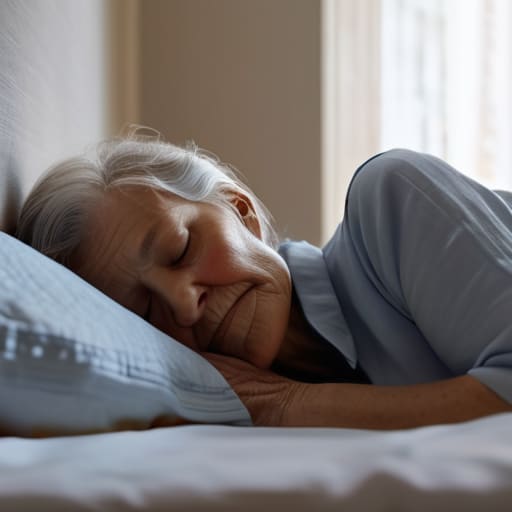
First, let’s strip away the myth that you’re “losing” sleep. You aren’t actually sleeping less; your sleep is just becoming more fragile. What we see in the lab are significant sleep architecture changes with aging, specifically a reduction in those deep, restorative slow-wave stages. You might feel like you’re tossing and turning more, but often it’s simply that the “buffer” between sleep stages has thinned. You’re more easily nudged into wakefulness by a passing car or a slight temperature change in the room.
Then there is the biological timing. We see much more pronounced circadian rhythm shifts in seniors, where the internal clock begins to drift earlier. This is why you might find yourself nodding off at 7 PM and waking up at 4 AM feeling strangely alert. It’s often compounded by a natural decline in melatonin production, which means the chemical signal telling your brain it’s nighttime isn’t as loud as it used to be. It isn’t a failure of willpower; it’s a shift in your physiological signaling.
Practical Tips and Steps
First, let’s address the elephant in the room: your bedroom environment. I see so many patients who are convinced they have a clinical disorder when, in reality, they are simply trying to sleep in a room that feels like a sauna. As we age, our internal thermostat becomes a bit more finicky. If you are struggling with frequent awakenings, check your thermostat before you reach for a sedative. It is much easier to lower the ambient temperature than it is to fix a broken sleep cycle.
Secondly, we need to talk about your routine. I know I ask this every time, but what time are you actually getting out of bed? Consistency is your best defense against the disruption caused by circadian rhythm shifts in seniors. If you find yourself napping heavily at 3:00 PM, you are effectively stealing from your nighttime sleep reservoir. Instead, try to anchor your day with morning light and a fixed wake time. This isn’t about “trying harder”; it’s about providing your brain with the predictable signals it needs to manage those inevitable architecture changes without falling into a cycle of exhaustion.
Common Mistakes to Avoid
The first mistake I see, and it’s one that drives me mad in clinic, is the attempt to “fix” sleep by spending more time in bed. When people notice more frequent awakenings, their instinct is to lie there for an extra hour, hoping to catch more rest. This is a mistake. Because of natural sleep architecture changes with aging, your sleep is already more fragmented; by staying in bed while awake, you are simply training your brain to associate the mattress with frustration rather than rest. If you aren’t sleeping, get out of the bedroom.
The second error is placing too much faith in those little glowing circles on your wrist. I see patients every week who are genuinely distressed because their wearable says they had “poor quality” sleep, even when they feel fine. These devices are not clinical polysomnography; they cannot distinguish between a deep sleep stage and a period of quiet wakefulness. Don’t let a guessed sleep score dictate your mood for the day. Instead, focus on the tangible: are you managing your light exposure and is your bedroom temperature actually conducive to rest?
Final Thoughts
Look, I know how exhausting this cycle is. You spend your days fighting through brain fog, only to spend your nights staring at the ceiling, wondering if your body has simply forgotten how to rest. It is easy to feel like you are losing a battle against time, but I want you to remember that much of what you are experiencing is a predictable shift in your biology, not a personal failure. Whether it is the subtle sleep architecture changes with aging or the way your internal clock begins to drift, these are physiological realities we can work with.
My advice is to stop chasing the “perfect” eight hours and start focusing on what is actually manageable. If you are struggling with managing sleep fragmentation, don’t let a low score on a wrist-worn tracker convince you that your health is collapsing. Those devices are notoriously poor at distinguishing between a restless night and a genuine disorder. Instead, focus on the basics: a consistent wake time, a cool room, and a realistic expectation of what rest looks like now. We aren’t trying to reclaim your sleep from twenty years ago; we are just trying to make today a little more restorative.
Five things to focus on when your sleep starts to shift
- Stop obsessing over the “eight-hour” rule. As we get older, our sleep architecture changes—we spend less time in that deep, restorative slow-wave sleep and more time in lighter stages. If you’re waking up more frequently, it’s often a physiological shift, not a sign that your body has suddenly broken.
- Prioritise your wake-up time over your bedtime. I know it sounds counterintuitive when you’re exhausted, but drifting into bed at 9 PM only to toss and turn for three hours is a recipe for anxiety. Pick a consistent time to get up, even on weekends, to help anchor your circadian rhythm.
- Watch your bedroom temperature like a hawk. A common mistake I see in clinic is patients blaming “age-related insomnia” when, in reality, their bedroom is just too warm. As our thermoregulation changes, we become more sensitive to heat; keep it cool, keep it dark, and keep it consistent.
- Be wary of the “sleep tracker” trap. If you’re staring at a wearable telling you that your sleep score was a 62/100, you’re likely inducing more stress than the data is worth. Most consumer devices are guessing based on movement, not measuring your brain waves. If you feel rested, trust yourself over the gadget.
- Audit your evening light exposure, but skip the expensive “blue light” gimmicks. It’s not about special glasses; it’s about the sheer intensity of light. Dim the overheads an hour before you want to be asleep. We need that signal to tell our brains that the day is actually over.
The bottom line
Don’t mistake a shift in sleep architecture for a disease; as we age, sleep becomes lighter and more fragmented, but that doesn’t mean you’ve “lost” the ability to rest.
Stop trusting your wearable’s “sleep score” to tell you how you slept; a gadget can measure movement, but it cannot measure the quality of your brain waves or whether you actually feel restored.
Focus on the variables you can actually control—specifically a consistent wake time and a cool, dark bedroom—rather than chasing expensive supplements that lack robust evidence.
Frequently Asked Questions
If I'm waking up more frequently at night, is it because my sleep architecture has actually changed, or is it just a symptom of something else like sleep apnea or temperature?
It’s usually a bit of both, but not in the way you think. As we age, our sleep architecture does shift—we spend less time in those deep, restorative stages and more time in lighter sleep, making us easier to rouse. However, that “lightness” often just makes you more sensitive to things that weren’t problems before, like a slightly warmer room or a breathing struggle like apnea. It’s less about losing sleep and more about losing your buffer.
My wearable says my deep sleep has plummeted since I turned sixty—should I be worried about this "score," or is the device just misinterpreting my movement?
Don’t panic. Your wearable is essentially a very expensive, very confused pedometer. It uses movement and heart rate to guess your sleep stages, but it has no idea what’s actually happening in your brain. As we age, our sleep architecture naturally shifts—we spend less time in deep sleep, yes, but that doesn’t mean your sleep is “failing.” Unless you’re waking up exhausted every single day, trust your body, not the algorithm.
Is there a point where "normal" age-related sleep changes become a clinical issue that actually requires a sleep study?
It becomes a clinical issue when the “changes” stop being about sleep architecture and start being about your daytime survival. If you’re waking up earlier but feeling refreshed, that’s likely just aging. But if you’re gasping for air, snoring through the night, or feeling like you’re walking through sludge despite “sleeping” eight hours, that’s not age—that’s a disorder. When your fatigue interferes with your life, it’s time to stop guessing and get a real study.