I spent a decade in the dark, watching patients struggle through the night while tethered to a headbox, and if there is one thing I’ve learned, it’s that people are being sold a lot of nonsense. You’ll see ads for expensive, high-tech “allergy-proof” mattresses or smart air purifiers that promise to revolutionize your rest, but they rarely address the actual mechanics of the room. Most of the time, when people ask me how allergies affect bedroom setup, they aren’t looking for a gadget; they are looking for relief from a bedroom that has become a biological minefield of dust mites and stagnant air.
I am not here to sell you a subscription to a wellness app or a designer duvet. My promise to you is much simpler: I am going to strip away the marketing fluff and look at your sleeping environment through a clinical lens. We are going to talk about ventilation, fabric choices, and the actual irritants that trigger your respiratory system when your guard is down. I’ll show you how to distinguish between a genuine medical allergy and a bedroom that is simply fundamentally poorly managed, so you can stop chasing expensive myths and start actually breathing.
Your Bedroom Is an Allergen Trap Not a Sanctuary
We like to think of our bedrooms as these quiet, neutral sanctuaries, but for many of my patients, the room is actually a biological battlefield. You lie there, trying to settle into sleep, while your immune system is busy mounting a full-scale defense against microscopic invaders. It isn’t just “bad sleep”; it’s your body reacting to a heavy load of particulates. If you’re waking up with a stuffy nose or a scratchy throat, you aren’t just experiencing a “bad night”—you are likely breathing in a concentrated soup of triggers.
The problem is that most of our bedding is designed for comfort, not cleanliness. Traditional mattresses and pillows are essentially giant, porous sponges for skin cells and dust. I often tell people that if they want to see a real difference, they need to stop looking at expensive supplements and start looking at dust mite proof mattress covers. It sounds clinical and unromantic, I know, but reducing indoor allergens in sleep spaces is often more effective than any sleep aid you can buy over the counter. If your environment is working against your physiology, no amount of relaxation techniques will bridge that gap.
Why Your Decor Is Actually Sabotaging Your Breathing
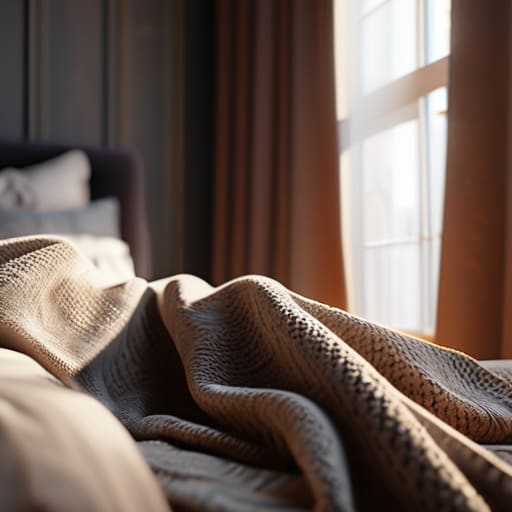
We often spend a fortune on aesthetic “sleep sanctuaries”—velvet curtains, heavy rugs, and those chunky knit throws that look stunning on Instagram—but from a physiological perspective, they are often just massive reservoirs for particulates. Every time you sit on that decorative pile of pillows or brush against a heavy drape, you’re essentially kicking up a cloud of triggers. If you find yourself waking up with a stuffy nose or a dry, scratchy throat, it isn’t necessarily a “medical condition”; it’s often just your respiratory system reacting to the debris living in your textiles.
If you want to actually improve your breathing, you have to prioritize function over fashion. This means moving toward allergy-friendly bedroom decor that doesn’t hold onto debris. I tell my patients to look at their surfaces: if it’s fabric-heavy and hard to wash, it’s a problem. Swapping out heavy drapes for easy-to-clean blinds and investing in dust mite proof mattress covers can make a more significant difference to your nocturnal respiratory effort than any expensive aromatherapy oil ever will.
The Truth About How Allergies Affect Bedroom Setup
We need to stop treating allergy management as an afterthought or something you only deal with when the pollen count is high. For many of my patients, the struggle isn’t just about the season; it’s about the micro-environment they inhabit for eight hours every single night. If you are waking up with a stuffed nose or a scratchy throat, you aren’t just “having a bad night”—your bedroom setup is likely acting as a continuous trigger for your immune system.
The reality is that most standard bedding is a playground for microscopic irritants. I often tell people that if they haven’t invested in dust mite proof mattress covers, they are essentially sleeping on a reservoir of triggers. It sounds clinical, but it’s the truth. Transitioning to hypoallergenic bedding materials isn’t about luxury or following a lifestyle trend; it’s about reducing the physiological load on your respiratory system while you try to rest. When your body is busy fighting off inhaled particulates, it can’t effectively transition into those deeper, restorative stages of sleep that we look for in a clinical study.
Stop Ignoring Dust Mite Proof Mattress Covers
I spend a lot of my time in the clinic listening to patients describe a specific kind of restless, “itchy” sleep—that feeling of being unable to settle because your nose is stuffed or your skin feels slightly reactive. Often, they’ve tried every expensive supplement under the sun, but they haven’t looked at the literal foundation of their sleep. If you aren’t using dust mite proof mattress covers, you are essentially inviting a microscopic colony to host a party right under your skin every single night.
I know, it’s unappealing to think about, but a standard mattress is a porous, warm, and humid sponge that is perfect for mite proliferation. You can buy all the hypoallergenic bedding materials you want, but if the mattress itself is the source, those fancy sheets are just a thin veil over the problem. Investing in a proper encasement is one of the few pieces of advice that actually carries weight in a clinical sense; it creates a physical barrier that is far more effective than simply “cleaning more often.” It’s about reducing indoor allergens in sleep spaces at the source, rather than just chasing the symptoms once you’ve already woken up feeling exhausted.
Hypoallergenic Bedding Materials Science vs Marketing Hype
If you’ve spent more than five minutes browsing online, you’ve seen the word “hypoallergenic” plastered across every duvet and pillow set in sight. I need you to understand something important: that label is almost entirely unregulated. It is often little more than a marketing term used to justify a higher price tag, rather than a clinical guarantee. In my years in the clinic, I’ve seen patients invest hundreds into “specialist” linens only to find their nocturnal congestion remains unchanged because the fabric weave wasn’t actually tight enough to stop microscopic triggers.
When we talk about reducing indoor allergens in sleep spaces, we have to move past the buzzwords and look at the physical barrier. True efficacy isn’t about a fancy brand name; it’s about the density of the weave. If you are looking for real results in managing seasonal allergy symptoms at night, you should be looking for specific certifications rather than just trusting a pretty label. You want materials that act as a physical blockade, not just something that feels “clean.” It’s about the science of the barrier, not the prestige of the packaging.
Will an Air Purifier for Bedroom Use Actually Work
I get asked this in clinic almost every week: “Roisin, if I just buy an air purifier, will my breathing improve?” My answer is usually a cautious, “Yes, but only if you stop treating it like a magic wand.” An air purifier for bedroom use can be a genuinely effective tool for managing seasonal allergy symptoms at night, particularly when pollen counts are high or if you have pets. It works by physically pulling particulates out of the air before you inhale them, which can certainly take the edge off that midnight congestion.
However, there is a massive caveat that most marketing departments won’t tell you. An air purifier is a reactive tool; it cleans the air that is currently circulating. It cannot reach the allergens that have already settled deep into your pillows or your mattress. If you aren’t also using dust mite proof mattress covers and cleaning your soft furnishings, you are essentially trying to bail out a sinking boat with a teaspoon while a hole remains open in the hull. It’s an excellent supplement to a broader strategy, but it isn’t a replacement for basic allergen control.
The non-negotiables: Small shifts that actually move the needle
- Stop the weekly laundry battle and switch to a high-heat cycle. If you aren’t washing your bedding at 60°C, you aren’t actually killing the dust mites; you’re just moving them around.
- Get rid of the “dust collectors.” That heavy, velvet curtain or that pile of decorative cushions on the bed? They are essentially sponges for allergens. If it isn’t easy to wipe down or wash, it shouldn’t be in your sleeping space.
- Check your ventilation, not just your air purifier. A purifier can only do so much if you’re sleeping in a stagnant, humid box. You need airflow to keep the humidity below 50%, which is the threshold where dust mites go from thriving to struggling.
- Vacuum with intention. If you aren’t using a vacuum with a HEPA filter, you’re likely just spraying fine particulate matter back into the air, which you’ll then proceed to inhale all night.
- Simplify your floor. I know, hardwood looks lovely, but if you have thick, high-pile carpets in the bedroom, you are essentially living on top of an allergen reservoir. If you can’t pull the carpet up, invest in a very high-quality, low-profile rug that is easy to clean.
The bottom line for your bedroom
Stop chasing “hypoallergenic” marketing labels and focus on the basics: a dust-mite-proof mattress cover and a room that isn’t a stuffy, stagnant trap for particles.
An air purifier isn’t a magic wand that lets you keep a dusty carpet or heavy curtains; it’s a supplement to, not a replacement for, actual cleanliness.
If your breathing is labored at night, don’t just assume it’s “bad sleep”—your environment is likely physically obstructing your respiratory ease, and fixing the setup is the first step to fixing the rest.
Frequently Asked Questions
If I switch to hypoallergenic bedding, how long will it actually take before I notice a difference in my breathing at night?
If you’re expecting an overnight miracle, you’ll be disappointed. Changing your bedding isn’t like taking an antihistamine; it’s more like cleaning out a long-standing infection. You might feel a slight ease in your nasal congestion within a few nights, but the real shift usually takes two to three weeks. It takes that long for the allergen load in your immediate environment to actually drop. Be patient—consistency matters more than speed here.
My air purifier says it’s working, but I’m still waking up with a stuffed nose—is the machine the problem, or is it something else in the room?
It’s rarely the machine itself; it’s usually the physics of the room. An air purifier is a localized tool, not a magic wand. If you’re sleeping in a room with heavy curtains, thick carpets, or a pile of laundry, the purifier is fighting a losing battle against the dust settling right next to your face. It can’t scrub the air faster than your pillows are shedding allergens. Check your placement—if it’s tucked in a corner, it’s useless.
Are there specific types of pillows or duvets that are actually better for respiratory health, or is it all just clever marketing?
It’s a bit of both, but mostly marketing. If you’re looking at “orthopaedic” or “ergonomic” claims, they’re often just fancy words for better support, which helps posture but won’t fix your sinuses. For respiratory health, the material matters more than the shape. Natural down is a nightmare for many; synthetic microfibres or tightly woven silk are much better at resisting dust mite buildup. Look for the certification, not the catchy name on the box.