I’ve spent seventeen years in sleep clinics, and if there is one thing I’ve learned, it’s that we are doing students a massive disservice by treating exam-season exhaustion like a medical mystery. I see so many young people—and their terrified parents—convinced they’ve developed chronic insomnia, when in reality, they are just caught in a cycle of caffeine, blue light, and a total collapse of circadian rhythm. The truth about how exam periods affect sleep is rarely about a neurological malfunction; it is almost always about a chaotic schedule and the misguided belief that sacrificing rest is the only way to succeed.
I am not here to sell you a magnesium supplement or a fancy new wearable that will only serve to make you anxious about your “sleep score.” Instead, I want to draw a clear line between genuine sleep disorders and the predictable, physiological fallout of a high-pressure academic season. I will show you how to distinguish between a brain that is genuinely broken and a brain that is simply overheated and underslept, providing you with the evidence-based tools to reclaim your rest without the clinical nonsense.
Why Your Exam Season Insomnia Is Likely Just a Bad Schedule

When students come into my clinic, they often present with a level of distress that suggests a profound, permanent shift in their biology. They describe a terrifying inability to sleep, convinced that their brain has simply “broken.” But more often than not, what I’m seeing isn’t a clinical disorder; it’s a textbook case of circadian rhythm disruption during finals. You haven’t lost the ability to sleep; you’ve just spent three weeks teaching your body that 3:00 AM is the new prime time for intense cognitive effort.
The problem is that the more you try to “force” sleep to compensate for a late-night study session, the more you reinforce the cycle of anxiety. This isn’t a failure of your nervous system; it’s the predictable result of a chaotic schedule. We talk a lot about the impact of sleep on memory retention—and it is massive—but the irony is that the very thing you’re doing to save your grades is sabotaging the brain’s ability to actually store the information you’re reading. You aren’t broken; you’re just out of sync.
The Truth About Circadian Rhythm Disruption During Finals
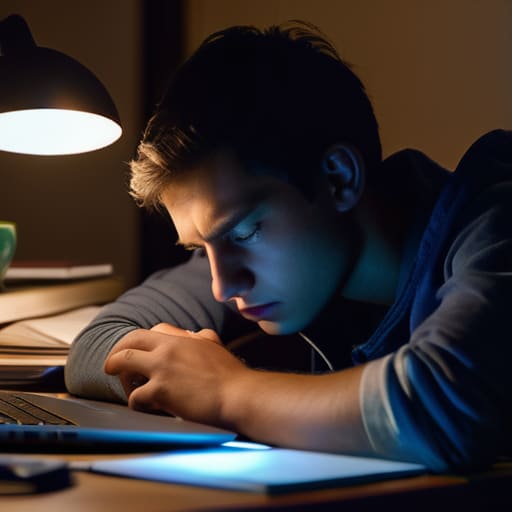
The problem isn’t just that you’re tired; it’s that you’re actively fighting your own biology. When you pull an all-nighter or shift your schedule to study until 3:00 AM, you aren’t just “sacrificing sleep”—you are triggering profound circadian rhythm disruption during finals. Your internal clock is a stubborn thing, calibrated by light and consistent timing. When you force yourself to stay awake during what should be your biological night, you create a physiological mismatch that no amount of caffeine can actually resolve.
This is where the real damage happens. Most students think they can outrun the exhaustion, but the all-nighter effects on brain performance are devastating. Sleep isn’t just downtime; it is the period when your brain performs essential maintenance, specifically the consolidation of what you just learned. When you skip those cycles, you aren’t just losing rest; you are actively sabotaging your ability to retrieve information during the exam itself. You might feel “wired” in the moment, but you are essentially trying to write an essay with a brain that hasn’t cleared its metabolic waste.
How Exam Periods Affect Sleep and Your Memory Retention
Here is the section on memory retention:
I often see students in clinic who are convinced they are “studying better” by staying up late. They think they are gaining an edge, but physiologically, they are doing the exact opposite. Sleep isn’t just a period of downtime; it is when your brain performs the heavy lifting of memory consolidation. When you pull an all-nighter, you are essentially trying to write new data onto a hard drive that hasn’t finished saving the previous day’s files. The all-nighter effects on brain performance are profound: you might physically sit with the textbook, but the neural pathways required to actually store that information are effectively offline.
Furthermore, the relationship between cognitive function and sleep deprivation is a downward spiral during finals. As you lose sleep, your ability to focus, reason, and solve complex problems degrades. You end up spending three hours on a task that would have taken forty minutes if you were rested. It isn’t a lack of intelligence or effort; it is a biological bottleneck. You cannot bypass the fact that a brain deprived of REM and deep sleep is a brain that cannot effectively retrieve what it has learned.
Why All Nighter Effects on Brain Performance Are Vastly Overrated
I’ve spent years watching the data from overnight studies, and if there is one thing I’ve learned, it’s that the “productive all-nighter” is a physiological myth. Students often treat sleep deprivation like a badge of honour, a sort of academic martyrdom, but the reality of all-nighter effects on brain performance is far less heroic than the caffeine-fueled bravado suggests. When you pull a total vigil, you aren’t actually “gaining” extra study hours; you are simply borrowing time from tomorrow at a predatory interest rate.
By the time the sun comes up, your prefrontal cortex—the part of the brain responsible for complex reasoning and logic—is essentially stumbling around in a fog. You might feel like you’re getting through the material, but your ability to synthesize information is shot. We see a massive decline in cognitive function and sleep deprivation during these windows; you might be able to read the words on the page, but your brain has lost the ability to actually anchor them. You aren’t studying; you’re just staring at paper while your neurons struggle to fire.
Stop Chasing Sleep Scores to Manage Academic Stress and Insomnia
I see it every week in the clinic: a student staring at their wrist with genuine anxiety because their wearable gave them a “sleep score” of 54. They are convinced they are failing, even when they feel relatively fine, or conversely, they feel exhausted but the app tells them they slept “perfectly,” leading to a profound sense of cognitive dissonance. Here is the clinical reality: your smartwatch is not a polysomnograph. It is a collection of accelerometers and heart-rate sensors trying to make an educated guess. It cannot tell the difference between the deep, restorative stages of sleep your brain needs for consolidation and the restless, shallow drifting that happens when you are high on cortisol and caffeine.
When you are managing academic stress and insomnia, the last thing you need is a piece of consumer electronics gaslighting you. Chasing a higher number on an app often creates a feedback loop of “orthosomnia”—anxiety about sleep perfection that actually keeps you awake. Instead of obsessing over a digital score, focus on the basics of sleep hygiene for students: a consistent wake time and a cool, dark room. If you feel alert and can focus during your lectures, you are likely doing fine, regardless of what your ring tells you.
Real Sleep Hygiene for Students Versus Useless Academic Myths
We need to stop treating “sleep hygiene” like a list of impossible chores. I see students every week who are exhausted because they’ve been told they need a perfect, darkened, temperature-controlled sanctuary and a strict 9:00 PM wind-down. That is nonsense. When you are in the thick of finals, you aren’t going to live like a monk. Real sleep hygiene for students isn’t about luxury; it’s about harm reduction. It’s about making sure that even if your schedule is a mess, you aren’t making it worse by drinking caffeine at midnight or trying to study in bed, which only teaches your brain that the place you sleep is actually a place for high-stakes anxiety.
The myth that you can “make up” for lost sleep on the weekend is equally damaging. You cannot simply bank sleep like currency. Trying to fix a week of chaos with a twelve-hour Sunday snooze only deepens your circadian rhythm disruption during finals, leaving you feeling like a zombie on Monday morning. Instead of chasing perfection, aim for consistency in your wake time. It sounds boring, I know, but it is the only way to stop the cycle of feeling perpetually “wired but tired.”
A clinician's checklist for surviving finals without losing your mind
- Fix your wake-up time before you try to fix your bedtime. If you’re waking up at 7:00 AM for a lecture one day and 11:00 AM the next because you stayed up studying, you aren’t suffering from insomnia; you’re just giving yourself permanent jet lag. Pick a time and stick to it, even on weekends.
- Lower the thermostat. When you’re stressed, your cortisol is up, and when your cortisol is up, your body temperature stays high. If your bedroom is a sauna, you won’t drift off, no matter how tired you are. Aim for a cool, dark room to give your physiology a fighting chance.
- Stop the “sleep debt” math. You cannot “make up” for three nights of four-hour sleep by sleeping for twelve hours on a Sunday. It doesn’t work that way, and trying to do so only further fragments your circadian rhythm. Aim for consistency rather than trying to balance a metabolic ledger that doesn’t exist.
- Put the wearable in a drawer. If you find yourself checking your Oura ring or Apple Watch at 3:00 AM to see if you’ve hit ‘REM’ yet, you are inducing the very anxiety that is keeping you awake. Your tracker is guessing based on movement; it is not a clinical polysomnogram. Trust your feeling of rest, not a proprietary algorithm.
- Use the “buffer zone” rule. You cannot transition from high-intensity revision straight into unconsciousness. Your brain needs a period of low stimulation—no screens, no active problem-solving—to signal to your nervous system that the “threat” of the exam has passed for the day.
The Bottom Line for Your Finals Week
Most of what you’re feeling isn’t a permanent sleep disorder; it’s the predictable physiological fallout of an erratic wake time and a high-stress environment.
Stop letting your wearable’s “sleep score” dictate your anxiety levels—a gadget can’t tell the difference between a bad night’s rest and the mental fatigue of a heavy study load.
Prioritise a consistent wake-up time and a cool bedroom over the myth of the productive all-nighter; your memory retention depends more on rhythm than on caffeine-fueled marathons.
Frequently Asked Questions
If my sleep tracker says I'm getting "poor quality" sleep during finals, should I be worried about a clinical issue or just trust my body's feeling?
Trust your body, not the wristband. Those “poor quality” scores are just algorithms guessing based on your movement and heart rate; they aren’t measuring your brain waves or your actual sleep architecture. If you feel exhausted, that’s real. But don’t let a red circle on an app convince you that you’ve developed a clinical disorder. You’re likely just experiencing the physiological fallout of high cortisol and an irregular schedule. It’s stress, not pathology.
Is there any way to actually fix my sleep schedule once the exam period is over, or has my circadian rhythm permanently shifted?
It hasn’t permanently shifted, I promise. Your circadian rhythm is incredibly resilient, but it’s currently caught in a loop of inconsistent cues. You can’t “force” sleep back into place by sleeping in until noon to “catch up”—that just tells your brain the day starts later. Instead, pick a realistic wake-up time and stick to it, even on weekends. Gradually pull your bedtime earlier. Consistency is the only way to reset the clock.
At what point does exam-related sleep deprivation stop being a "bad habit" and become a medical concern that requires a sleep study?
If your sleep issues vanish once the exams are over and your schedule stabilizes, it wasn’t a medical disorder; it was just a chaotic lifestyle. However, if you find that even with a consistent wake time and a cool, dark room, you’re still gasping for air, waking up with a pounding headache, or feeling utterly exhausted despite “sleeping” eight hours, that’s when we talk. That’s when we look for a clinical cause, not just a bad habit.