I spent a decade in darkened sleep labs, watching patients struggle against the very wires meant to help them, and if there is one thing I’ve learned, it’s that the wellness industry is peddling a massive, expensive lie. You’ll see influencers claiming that a “complete guide to sleep and exercise” requires a $500 wearable, a specific fasted cardio window, and a complex ritual of supplements. It’s nonsense. Most of the time, people aren’t failing because they lack a high-tech data dashboard; they are failing because they are trying to force a physiological rhythm that their lifestyle—and their bedroom temperature—simply won’t allow.
I’m not here to sell you a new gadget or a complicated biohacking routine. Instead, I want to give you the unvarnished truth based on seventeen years of clinical scoring and physiological reality. We are going to strip away the hype and look at how movement actually interacts with your circadian biology, separating the genuine metabolic benefits from the trendy nonsense. This is a no-nonsense approach to understanding how to move your body without sabotaging your ability to actually drift off when the lights go out.
Stop Guessing a Complete Guide to Sleep and Exercise

If you’re looking for a magical window of time to hit the gym that will instantly transform your physique, I’m going to disappoint you. There is no single “perfect” hour, but there is a physiological reality we often ignore: the relationship between circadian rhythm and workout timing. For most, training in the late afternoon aligns better with our natural body temperature peaks, which can aid performance. However, if you are a night owl forcing a 5:00 AM HIIT session, you aren’t just fighting your willpower; you are fighting your biology.
The real danger isn’t when you train, but how you handle the aftermath. I see so many people in the clinic who are obsessed with “pushing through” the fatigue, completely oblivious to the impact of sleep deprivation on muscle recovery. When you skimp on rest, you aren’t just feeling groggy; you are actively sabotaging the hormonal processes required to repair tissue. You can have the most sophisticated training programme in the world, but if you aren’t sleeping, you are essentially just breaking your body down without ever letting it rebuild.
Why Your Tracker Fails to Measure Real Muscle Recovery
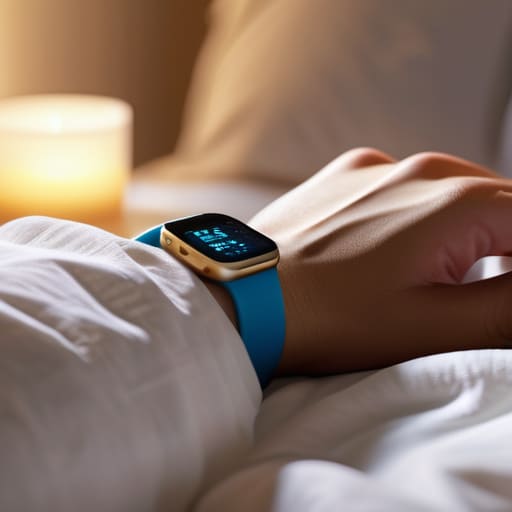
I’ve spent seventeen years watching people sleep through headboxes and sensors in a clinical setting, so I have a very low tolerance for the “sleep scores” spat out by your wrist. Your wearable is essentially making an educated guess based on movement and heart rate; it has no idea what is actually happening in your biochemistry. A tracker might tell you that you had a “good” night because you didn’t toss and turn much, but it cannot detect the subtle hormonal shifts that dictate whether your body is actually repairing tissue.
The real issue is that these devices ignore the complex impact of sleep deprivation on muscle recovery. You can have a high sleep score according to an algorithm, yet still be running on empty because your cortisol levels and sleep quality are out of sync. If your nervous system hasn’t shifted into a truly restorative state, your muscles aren’t getting the protein synthesis or growth hormone surges they require. You aren’t just “tired”—you are physiologically unready for your next session, regardless of what your shiny little watch tells you.
The Real Impact of Sleep Deprivation on Muscle Recovery
In the clinic, I see people who treat sleep like a luxury they can trim away to make more time for the gym. They don’t realise that while they are lifting weights, the actual “building” of muscle is happening while they are unconscious. When you skimp on rest, you aren’t just feeling tired; you are fundamentally disrupting the hormonal environment required for repair. Specifically, the impact of sleep deprivation on muscle recovery is driven by a spike in cortisol. If you are chronically underslept, your cortisol levels remain elevated, which acts like a metabolic brake on the protein synthesis you’ve worked so hard to trigger in your training sessions.
It isn’t just about the volume of hours, either. We need to look at how sleep cycles and physical training interact. It is during those deep, slow-wave stages that growth hormone is released in its most potent bursts. If your sleep is fragmented—perhaps because your bedroom is a sauna or your wake times are erratic—you miss those critical windows of physiological repair. You might be hitting your macros and your mileage, but without that deep restorative window, you are essentially spinning your wheels.
Syncing Your Circadian Rhythm and Workout Timing for Results
If you’re training like an Olympian but still waking up feeling like you’ve been hit by a bus, the problem might not be your training load, but your clock. We talk a lot about intensity, but we rarely talk about the biological timing that governs it. Your body operates on a strict internal schedule—your circadian rhythm—and trying to force a high-intensity session when your core temperature is dropping is like trying to start a car in sub-zero weather. When you ignore the natural ebb and flow of circadian rhythm and workout timing, you aren’t just working harder; you’re working against your own physiology.
I often see patients who smash a heavy lifting session at 9:00 PM, only to wonder why they can’t drift off. That spike in body temperature and the subsequent disruption to your cortisol levels and sleep quality creates a vicious cycle. You might feel “wired but tired,” but that’s just your nervous system struggling to downshift. To actually see the gains you’re sweating for, you need to stop treating your body like a machine that can be switched on and off at will. Consistency in your wake time is often more powerful than any pre-workout supplement.
How Cortisol Levels and Sleep Quality Sabotage Your Gains
Here is the physiological reality that most fitness influencers gloss over: you can have the most perfect training split in the world, but if your endocrine system is in revolt, you are essentially spinning your wheels. When you are chronically underslept, your body perceives this as a state of constant threat. This triggers a persistent elevation in cortisol levels and sleep quality begins to plummet in a downward spiral. Instead of your body entering that deep, restorative stage where growth hormone is released to repair tissue, it stays stuck in a high-alert, sympathetic state.
This isn’t just about feeling tired the next morning; it is about a fundamental shift in how your body handles fuel. High cortisol acts like a metabolic brake, encouraging your system to hold onto fat and, more frustratingly, break down the very muscle protein you’ve worked so hard to build. When we talk about optimizing athletic performance through rest, we aren’t just talking about “taking a day off.” We are talking about managing the hormonal environment so that your training actually translates into physical adaptation rather than just more systemic inflammation.
Optimizing Athletic Performance Through Rest and Sleep Cycles
If you’re training for something significant, you need to stop viewing sleep as “time off” and start seeing it as a physiological requirement for the work you do. In the clinic, I see plenty of people who treat their training like a religion but treat their sleep like an afterthought. The problem is that your body doesn’t do its best work while you’re lifting weights or running intervals; it does it when you’re unconscious. Specifically, the way you manage sleep cycles and physical training determines whether you are actually building tissue or simply breaking yourself down further.
During deep NREM sleep, your body is essentially running a high-level repair shop, flooding your system with growth hormone to fix the microscopic tears you created during your session. If you are consistently cutting these cycles short, you aren’t just tired; you are effectively sabotaging your own progress. Optimizing athletic performance through rest isn’t about sleeping more hours for the sake of a number on a tracker; it’s about ensuring you have enough uninterrupted cycles to allow for that critical hormonal cascade to happen. Without it, you’re just spinning your wheels.
Five Reality Checks for the Training Athlete
- Stop using your “Sleep Score” as a training metric; if you feel rested but your watch says you had poor recovery, trust your body, not the algorithm.
- Prioritise a consistent wake-up time over a consistent bedtime, especially on training days, to keep your circadian rhythm from drifting.
- Avoid high-intensity interval training (HIIT) within three hours of hitting the pillow; you can’t expect your core temperature to drop enough for deep sleep if you’ve just spiked it.
- Treat your bedroom temperature like a recovery tool—if it’s too warm, you’re sabotaging the very physiological repair your muscles are trying to do.
- Distinguish between “training fatigue” and “sleep debt”—one requires more rest, the other requires better sleep hygiene, and they are not the same thing.
The Bottom Line
Stop using your wearable’s “recovery score” as the final word on your training; it cannot see your hormonal shifts or actual muscle repair, only your movement and heart rate.
Timing your workouts is about more than just convenience—it’s about respecting your circadian rhythm to ensure your cortisol spikes when you need them and drops when you need to sleep.
True athletic progress happens during the physiological repair of sleep, not just the intensity of the gym, so treat your rest with the same clinical discipline you apply to your training.
Frequently Asked Questions
If my wearable says I had a "poor" sleep score after a heavy leg day, should I actually change my training intensity or just ignore the data?
Ignore the score, but listen to your body. That “poor” rating is just an algorithm guessing based on your movement; it can’t see if your nervous system is actually fried. Instead of tweaking your training based on a digital number, look at your physical readiness. Are you stumbling through your warm-up? Is your resting heart rate elevated? If you feel fine, keep training. If you feel heavy and sluggish, dial it back. Trust your physiology, not your wrist.
Is it actually possible to train effectively in the early morning if my natural rhythm doesn't kick in until midday?
It’s possible, but you have to stop fighting your biology. If your rhythm doesn’t peak until midday, an early session is a massive physiological stressor. You aren’t just “tired”; your core temperature is low and your coordination is lagging. If you must train early, keep it low-intensity or technical. Don’t try to hit a personal best when your brain is still in a sleep fog. Respect your chronotype, or you’ll just end up injured.
How can I tell if my muscle soreness is just standard training fatigue or a sign that my sleep deprivation is actually hindering my physiological recovery?
Look at the pattern, not just the pain. Standard DOMS (delayed onset muscle soreness) usually peaks at 48 hours and fades predictably. If that soreness feels heavy, unrelenting, or is accompanied by a systemic “fog” that doesn’t lift after a coffee, you aren’t just sore—you’re under-recovered. If your resting heart rate is creeping up and your muscles feel tender to the touch for days on end, your sleep debt is likely sabotaging your physiological repair.