
I spent a decade in darkened sleep labs, watching patients twitch and gasp while tethered to a headbox, and if there is one thing I’ve learned, it’s that the wellness industry is selling you a fantasy. You’ve been told that “optimising” your life requires expensive supplements, blue-light blocking glasses, and a dozen different apps to track your REM cycles, but most of that is just expensive noise. We need to stop treating sleep like a luxury performance metric and start looking at the messy, biological reality of how sleep and wellbeing interact. The truth is often much simpler—and much more frustrating—than a high-tech sleep score suggests.
I’m not here to sell you a magnesium gummy or a new wearable. My promise to you is a bit more clinical, but hopefully a lot more useful: I am going to help you strip away the hype and find out if your struggle is a genuine physiological disorder or just a predictable reaction to a chaotic lifestyle. We are going to look at what the science actually says, separate the habits from the pathologies, and finally figure out why you feel the way you do.
Stop Chasing Sleep Scores How Sleep and Wellbeing Interact
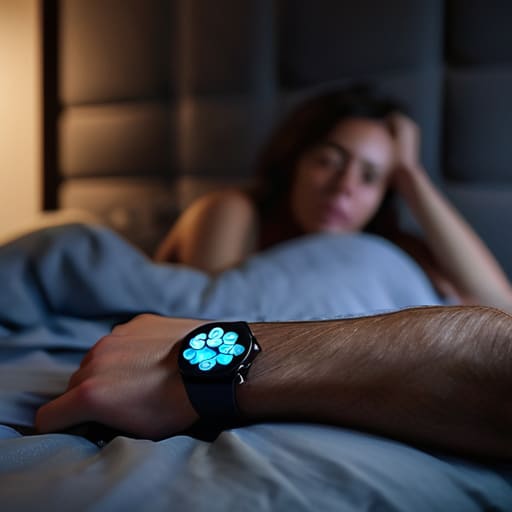
I see it every week in the clinic: a patient staring at their smartwatch with a look of genuine distress because their “sleep score” was a 62 last night. They are convinced they are cognitively declining, when in reality, they are just experiencing the anxiety of a bad night’s rest. We need to stop treating these consumer-grade numbers as gospel. Your wearable isn’t measuring your brain waves or your respiratory effort; it’s making an educated guess based on how much you move. When you obsess over a fluctuating number, you create a feedback loop of stress that actually prevents the very rest you’re chasing.
The truth is that there is a complex bidirectional relationship between sleep and mental health. It isn’t a one-way street where “bad sleep causes bad moods.” Instead, it’s a cycle: poor sleep impairs your ability to handle stress, and that heightened stress, in turn, makes it harder to settle into deep, restorative stages. If you are constantly stuck in a state of hyperarousal, you aren’t just “tired”—you are experiencing the physiological effects of sleep on mood in real-time. We have to address the biology, not the gadgetry.
The Bidirectional Relationship Sleep and Mental Health Are Inseparable

In the clinic, I often see patients who arrive convinced their anxiety is the primary cause of their sleeplessness. While that is frequently true, it is rarely a one-way street. We have to talk about the bidirectional relationship between sleep and mental health, because it is a feedback loop that can quickly spiral. If you are struggling with low mood, you might find yourself staying up late to reclaim some sense of personal time—what we call revenge bedtime procrastination—which then wreaks havoc on your ability to regulate your emotions the following day.
It isn’t just “feeling a bit moody” because you’re tired. There is a profound impact of sleep deprivation on emotional regulation that happens at a neurological level. When you are deprived of those deep, restorative stages of sleep, your amygdala—the brain’s emotional alarm system—becomes hyper-reactive. Essentially, your brain loses its ability to put things into perspective, making every minor stressor feel like a catastrophe. We aren’t just talking about being “cranky”; we are talking about a physiological inability to process the world calmly, which makes the distinction between a lifestyle habit and a clinical issue even more vital to get right.
Why Sleep Deprivation Ruins Your Emotional Regulation
When I’m sitting in clinic with a patient who is visibly fraying at the edges, I don’t just see someone who is tired; I see someone whose brain has lost its ability to brake. There is a very specific physiological reason for this. When you are chronically underslept, the communication between your prefrontal cortex—the logical, “adult” part of your brain—and your amygdala, which handles your emotional alarms, begins to break down. Without that connection, you aren’t just sleepy; you are emotionally raw. Small inconveniences feel like catastrophes because the impact of sleep deprivation on emotional regulation is essentially a breakdown in your brain’s ability to filter out noise.
It isn’t just “feeling a bit moody.” It is a fundamental shift in how your nervous system processes the world. We see this clearly in the physiological effects of sleep on mood: the brain loses its capacity for nuance, leaving you stuck in a cycle of irritability or sudden, overwhelming anxiety. You aren’t failing at managing your stress; your brain simply lacks the metabolic resources to do the heavy lifting required for stability.
Circadian Rhythm and Psychological Wellness More Than Just Timing
We tend to talk about the circadian rhythm as if it’s just a fancy way of saying “go to bed at a reasonable hour,” but it is so much more than a clock on the wall. It is a complex, biological orchestration that dictates when your cortisol spikes and when your melatonin should begin its gentle ascent. When that rhythm is fractured—whether by shift work, blue light, or simply the chaos of a modern schedule—it creates a profound disconnect between your body’s internal expectations and your external reality. This isn’t just about feeling groggy; it is about the physiological effects of sleep on mood that occur when your brain is essentially trying to run a marathon while the sun is still setting.
If your internal timing is out of sync, your psychological resilience is the first thing to crumble. You might find yourself snapping at a colleague or feeling an inexplicable sense of dread, not because your life is falling apart, but because your biology is in a state of constant, low-level emergency. Understanding the link between circadian rhythm and psychological wellness means recognizing that stability in your biological timing provides the bedrock for emotional stability. You cannot “mindset” your way out of a circadian mismatch; you have to respect the rhythm.
The Physiological Effects of Sleep on Mood and Stress
When I’m sitting in clinic, I often see patients who are convinced their anxiety is a purely psychological phenomenon. They describe a racing mind or a constant sense of dread, and while that’s often true, we have to look at the hardware first. Sleep isn’t just a period of “down time”; it is a period of intense neurochemical housekeeping. When you miss out on those deep, slow-wave stages, your body fails to clear out metabolic waste and, more importantly, fails to reset your cortisol levels. You end up walking around with a biological stress response that is permanently stuck in the ‘on’ position.
This is where the physiological effects of sleep on mood become undeniable. Without enough restorative sleep, your amygdala—the brain’s emotional alarm system—becomes hyper-reactive. It starts treating a spilled coffee or a blunt email like a genuine threat to your survival. You aren’t just “tired”; your brain has lost its ability to buffer against the friction of daily life. It’s a physical breakdown in your capacity for restorative sleep and stress management, turning minor inconveniences into full-blown emotional crises.
Real Sleep Hygiene for Mental Wellbeing Not Just Habit Tracking
We need to stop treating “sleep hygiene” like a checklist of expensive supplements or a mandate to meditate for an hour before bed. When I sit across from a patient in the clinic, the conversation rarely starts with their lavender pillow spray; it starts with their routine. Real sleep hygiene for mental wellbeing isn’t about performing rituals to “earn” sleep; it’s about reducing the physiological friction that keeps your nervous system on high alert. If your bedroom is a humid, bright box and your wake-up time fluctuates by two hours every weekend, no amount of magnesium will fix the underlying chaos.
The goal is to create an environment that supports restorative sleep and stress management rather than one that requires constant mental effort to manage. This means stabilizing your anchors: a consistent wake time and a cool, dark room. We aren’t chasing a perfect “sleep score” on an app; we are trying to prevent the biological volatility that makes your days feel unmanageable. If you can stabilize the physical environment and the timing, you stop fighting your own biology, which is often the first step in reclaiming your mental clarity.
Five ways to stop fighting your biology and start supporting your brain
- Fix your wake time before you worry about your bedtime. If you’re trying to “force” sleep at 10 PM but don’t get up until 9 AM on Saturdays, you aren’t fighting insomnia; you’re just confusing your internal clock and making your mood unpredictable.
- Cool the room, don’t just dim the lights. You can have the most expensive blackout curtains in the world, but if your bedroom is a sauna, your core temperature won’t drop enough to trigger deep, restorative sleep, leaving you feeling emotionally frayed the next day.
- Stop checking the “data” in the middle of the night. Looking at a sleep score on your wrist at 3 AM is a recipe for cognitive arousal; you are effectively telling your brain that sleep is a performance to be judged rather than a biological process to be experienced.
- Distinguish between “tossing and turning” and clinical apnea. If you feel like you’re gasping for air or waking up with a pounding headache, that isn’t anxiety—it’s a physiological event that no amount of “mindfulness” or lavender oil is going to fix.
- Prioritise light exposure over “sleep supplements.” Before you reach for a pill to fix your mood, check if you’re getting natural light in your eyes shortly after waking; it’s the most effective way to anchor your circadian rhythm and stabilize your emotional baseline.
The Bottom Line
Stop treating your wearable’s “sleep score” as a medical truth; it’s a noisy approximation that often causes more anxiety than it solves.
Distinguish between lifestyle-driven sleep issues—like irregular wake times and warm rooms—and clinical disorders that require professional intervention.
Prioritise biological consistency over “perfect” sleep hygiene; regulating your circadian rhythm is more effective for your mental health than chasing an arbitrary number of hours.
Frequently Asked Questions
If I'm already feeling anxious, is there a way to tell if my anxiety is causing the sleeplessness or if the lack of sleep is what's driving the panic?
It’s the classic “chicken or the egg” problem, and honestly, it’s often both. But here is how I distinguish them in clinic: if your anxiety spikes only when your head hits the pillow—racing thoughts about the day or the fear of not sleeping—it’s likely anxiety driving the insomnia. However, if you feel a sense of dread or physiological “jitters” all day because you’re running on four hours of broken rest, the sleep deprivation is likely hijacking your nervous system.
My wearable says I'm getting plenty of sleep, but I still feel mentally exhausted; why is there such a massive gap between my data and my actual mood?
Because your wearable is guessing, not measuring. Those devices are remarkably good at detecting when you’re still, but they are notoriously poor at distinguishing between actual restorative sleep and just lying there in a state of quiet wakefulness. If you feel mentally drained, it’s likely because your sleep architecture is fragmented—perhaps by micro-arousals or breathing issues—even if you’re “asleep” for eight hours. Trust your brain, not your wrist.
I've tried all the "sleep hygiene" tips like avoiding screens, but my mental health is still tanking—could I have a clinical disorder that lifestyle changes simply won't fix?
If you’ve tidied up your habits and your mental health is still sliding, listen to me: stop blaming yourself for “not trying hard enough.” There is a massive difference between poor sleep hygiene and a clinical disorder like sleep apnea or restless leg syndrome. Lifestyle changes won’t fix a physiological breathing struggle or a neurological glitch. If the basics are in place and you’re still drowning, it’s time to stop tweaking your routine and start seeking a clinical assessment.