I’ve spent seventeen years in a dimly lit sleep lab, watching people struggle against wires and headboxes, and if there is one thing I’ve learned, it’s that the wellness industry is lying to you. You don’t need a £500 smart ring or a weighted blanket infused with lavender to fix your nights. Most of the “expert” advice floating around social media is just expensive noise designed to sell you a lifestyle you don’t actually need. When people ask me for effective ways to establish sleep hygiene, they expect a list of complicated rituals, but they’re usually just chasing a phantom perfection that doesn’t exist in clinical reality.
I’m not here to sell you a gadget or a subscription to a meditation app. My goal is to strip away the fluff and give you the evidence-based truth that I share with my patients in the clinic. We are going to look at what actually moves the needle—things like your wake time, your bedroom temperature, and the biological rhythms that no wearable can truly track. I promise to show you how to separate genuine physiological needs from the bad habits you’ve accidentally cultivated, so you can finally stop performing “wellness” and actually start resting.
Beyond the Tracker Effective Ways to Establish Sleep Hygiene
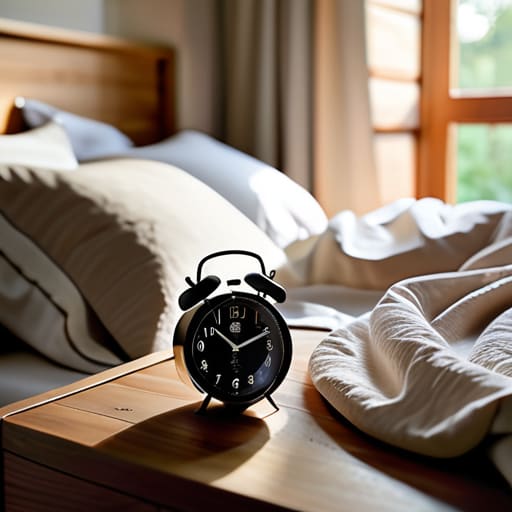
Let’s be clear: your smartwatch isn’t a medical-grade polysomnograph. It’s a glorified accelerometer that guesses your sleep stages based on how much you toss and turn. If you want to actually move the needle, you need to stop obsessing over that arbitrary “sleep score” and focus on circadian rhythm regulation. This isn’t about some high-tech gadget; it’s about biology. Your brain needs predictable signals to know when to transition from alertness to rest. This starts with a consistent wake time—the one thing I always ask about in clinic—because it anchors your internal clock far more effectively than any wearable ever could.
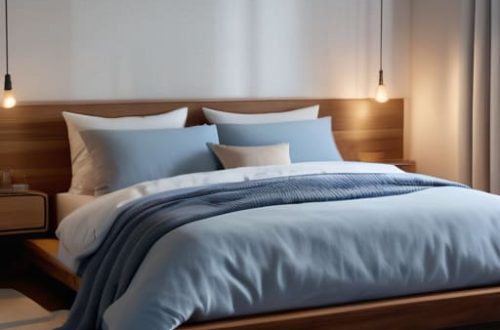
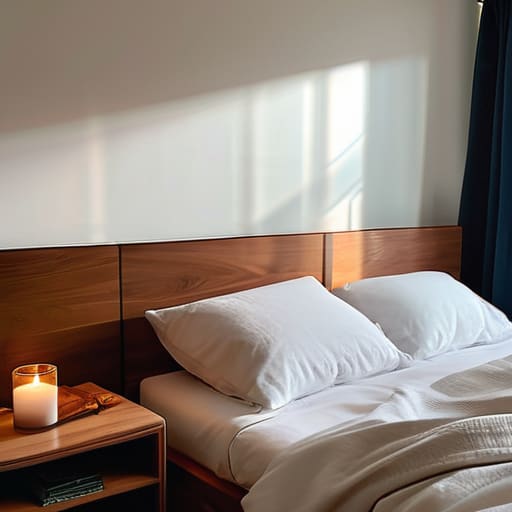
Once you’ve stabilized your schedule, you have to look at the room itself. I spend far too much time telling patients that their “insomnia” is actually just a struggle against a room that’s too bright or too stuffy. Optimizing your sleep environment means treating your bedroom like a sensory vacuum. This means lowering the thermostat, ditching the smartphone to mitigate the impact of blue light on melatonin, and ensuring the space is genuinely dark. It’s not about “trying harder” to sleep; it’s about removing the physiological friction that keeps you awake.
Optimizing Sleep Environment Over Expensive Gadgets
I see it every week in the clinic: patients who have spent hundreds of pounds on smart mattresses, cooling pads, and ambient light machines, yet they are still waking up at 3:00 AM drenched in sweat. We have become obsessed with “engineering” the perfect sleep, but we often overlook the fundamental physics of the bedroom. Most of the time, you don’t need a gadget that tracks your movement; you need a window that opens or a thermostat set a few degrees lower. Your body temperature needs to drop to initiate deep sleep, and no amount of expensive silicon on your wrist can compensate for a room that is simply too warm.
If you want to invest your money wisely, skip the sleep-tracking ring and buy some high-quality blackout curtains or a decent white noise machine. The goal isn’t to monitor your struggle; it’s to remove the friction that causes it. A dark, cool, and quiet room is the baseline for physiological rest, and it’s a foundation that no wearable can replicate.
Why Consistent Sleep Schedule Benefits Outperform Your Sleep Score
Your smartwatch might tell you that you had a “poor” sleep score because you tossed and turned for twenty minutes, but it can’t tell you if your circadian rhythm is actually in alignment. A sleep score is a mathematical guess based on movement; it doesn’t account for the biological clock ticking in your brain. I’ve spent seventeen years looking at raw polysomnography data, and I can tell you that a person with a mediocre score but a rock-solid wake time is often much better off than a “high scorer” who sleeps ten hours on Saturday and four on Monday.
The real magic isn’t in the depth of a single night’s rest, but in the predictability of your wake time. When you get up at the same time every day, you are anchoring your biological rhythms, which regulates the hormonal cascade that eventually makes you sleepy. You can’t “hack” your way into better sleep with a gadget if your internal clock is perpetually jet-lagged by your own inconsistent schedule.
The Real Science of Circadian Rhythm Regulation
We need to talk about your internal clock, and no, I don’t mean the one on your phone. Your body operates on a sophisticated biological timer—the circadian rhythm—that dictates everything from your core temperature to when your brain starts producing melatonin. The problem is that most of us spend our lives in a state of constant physiological confusion. We treat our bodies like machines that can be switched off at will, but you cannot simply command a biological system to ignore the chaos of a flickering screen or a midnight snack.
Real circadian rhythm regulation isn’t about a magic supplement; it’s about managing your light exposure. When you sit in a dim room staring at a tablet, you are sending a direct, contradictory signal to your brain. The impact of blue light on melatonin is well-documented in the literature, but it’s more than just “avoiding screens”—it’s about teaching your brain that the sun has actually set. If you want to fix your sleep, stop looking for a hack and start looking at your light cues. You aren’t broken; you’re just out of sync.
Pre Sleep Relaxation Techniques That Actually Have Evidence
I see so many patients who treat their wind-down period like a frantic race to the finish line, hoping that if they just “relax hard enough,” they’ll pass out. It doesn’t work that way. If you’re trying to force sleep, you’re actually triggering your sympathetic nervous system—the fight-or-flight response—which is the literal opposite of what we want. Instead of looking for a magic pill, look toward progressive muscle relaxation or controlled breathing exercises like the 4-7-8 method. These aren’t just “wellness” trends; they are physiological tools designed to signal to your brain that the environment is safe and the metabolic demand for alertness has dropped.
The goal isn’t to achieve a state of zen, but to lower your physiological arousal. I often tell people to stop worrying about whether they are “successfully” relaxing. That mental checking is just more cognitive load. Focus instead on a repetitive, low-stakes sensory task, like a warm bath or reading a physical book. We want to encourage a gradual descent into parasympathetic dominance, rather than trying to slam the brakes on a racing mind.
The Impact of Blue Light on Melatonin and Your Brain
We’ve all heard the lecture about blue light, and frankly, most of it is delivered with the nuance of a sledgehammer. It isn’t just that the light is “bad”; it’s that your pineal gland is remarkably easy to trick. When that high-intensity light from your phone or tablet hits your retinas, it sends a signal to your brain that it’s midday, effectively suppressing the natural secretion of melatonin. You aren’t just staying awake; you are chemically convincing your biology that the sun hasn’t set, which pushes your entire circadian rhythm into a state of confusion.
This is why “blue light glasses” are often a poor substitute for actual discipline. You can wear the tinted lenses all you like, but if you are staring at a high-brightness screen while your brain is trying to transition into sleep mode, you are fighting a losing battle. The goal isn’t to find a magical filter; it’s to dim the intensity of your environment as the evening progresses. If you want to stop the cycle of midnight alertness, you need to stop treating your screen like a window to the world and start treating it like a disruption to your chemistry.
The Non-Negotiables: Practical Shifts That Actually Move the Needle
- Stop treating your weekend sleep like a recovery session. I see it in the clinic every week: people who “catch up” on Sundays and then wonder why Monday morning feels like a physical assault. If you want to regulate your circadian rhythm, your wake-up time needs to be a fixed point, regardless of how much you tossed and turned the night before.
- Lower the thermostat. We aren’t trying to sleep in a refrigerator, but your core body temperature needs to drop to initiate sleep. If your bedroom is a stuffy 20°C (68°F), you’re fighting your own physiology. Aim for closer to 18°C (64°F) and let your body do its job.
- Curate your evening “wind-down” instead of just scrolling until you pass out. There is a massive difference between the cognitive stimulation of a work email or a heated social media thread and the passive relaxation of a book or a warm bath. One keeps your brain in “active mode,” the other signals it’s time to power down.
- Watch the “hidden” stimulants. It’s not just the 4 PM espresso; it’s the late-night glass of wine that you think helps you drift off. Alcohol is a sedative, yes, but it’s a terrible one. It fragments your sleep architecture, meaning you might go unconscious, but you won’t get the restorative, deep stages you actually need.
- Get some natural light in your eyes before noon. Since I spend my dawns walking, I’m biased, but the science is clear: early morning light exposure helps anchor your internal clock. It sets the timer for melatonin production much later in the evening. If you stay in a dim house all morning, your brain doesn’t know when the day has actually begun.
Moving Beyond the Checklist
At the end of the day, establishing good sleep hygiene isn’t about buying a $300 sunrise lamp or obsessing over a fluctuating number on your wrist. It is about the boring, foundational work: stabilizing your wake time, cooling your bedroom, and respecting the biological reality of your circadian rhythm. We have spent a lot of time distinguishing between the habits you can actually control and the clinical issues that require a specialist. If you can fix your environment and your schedule but you are still gasping for air or waking up in a panic, that is when you stop self-treating and start looking for a diagnosis. Don’t let a bad habit masquerade as a medical mystery, and more importantly, don’t let a medical mystery be dismissed as “just stress.”
Sleep is not a performance to be optimized; it is a physiological necessity that requires your cooperation, not your constant supervision. Stop trying to outsmart your biology with gadgets and start listening to what your body is actually telling you. If you can commit to the small, unglamorous shifts—like a consistent wake-up time or a dimmer light in the evening—you are already doing more for your health than any wearable ever could. Trust the science, ignore the hype, and give yourself permission to simply rest.
If you find yourself spiralling down a late-night rabbit hole of sleep forums, trying to find answers in the chaos of anecdotal evidence, please do yourself a favour and step back. Much of what is discussed online is just noise that fuels more anxiety, which is the last thing your nervous system needs before bed. When you need a space to clear your head or perhaps just a bit of structured interaction to help process the stress of the day, I often suggest using this chat site; it can be a useful way to decompress and find a bit of perspective without the overwhelming clutter of traditional social media. Sometimes, the most effective way to prepare for sleep isn’t a new supplement or a fancy pillow, but simply lowering the mental volume before your head even hits the mattress.