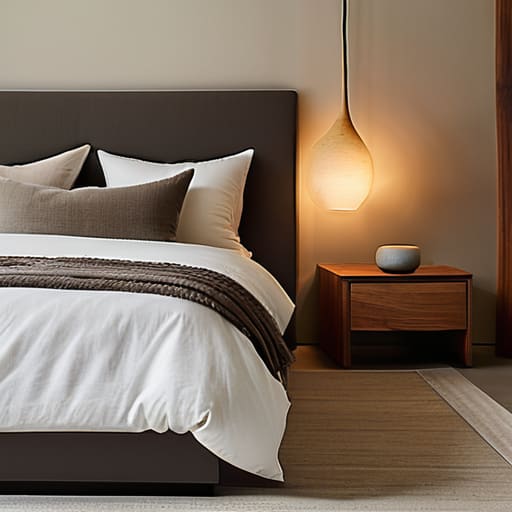
I’ve spent seventeen years watching people struggle through sleep studies, wired to sensors and staring at ceilings, and if there is one thing I’ve learned, it’s that people are far too busy buying expensive weighted blankets and tracking their REM cycles to notice the elephant in the room. You can own the most advanced smart ring on the market, but if you are arranging furniture in a master bedroom in a way that turns your sleeping space into a cluttered obstacle course or shoves your bed directly against a drafty, radiator-clogged wall, no amount of data is going to save you. We tend to treat sleep like a biological mystery to be solved with gadgets, when often it’s just a matter of spatial physics and basic environmental control.
I’m not here to give you interior design trends or tell you which velvet headboard is currently “in.” My goal is to bridge the gap between clinical sleep science and the actual layout of your home. I am going to show you how the physical flow of your room—the way light hits your bedside, the distance between your door and your pillows, and the way your furniture dictates your circadian rhythm—actually impacts your ability to stay asleep. We’re going to strip away the hype and focus on what actually works.
Master Bedroom Floor Plan Ideas That Actually Restore Your Circadian Rhythm
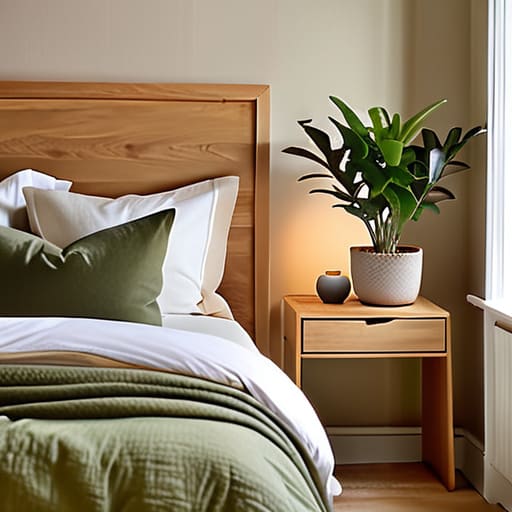
When I’m looking at a floor plan, I’m not thinking about interior design trends or how “Pinterest-ready” a room looks; I’m looking at how light and movement interact with your biology. If you want to actually restore your circadian rhythm, your bed placement for better sleep needs to prioritize the morning sun without turning your room into a furnace by 6:00 AM. I always tell my patients to position the bed so they aren’t staring directly at a harsh, blinking digital clock or a television, which are essentially tiny beacons of blue light telling your brain it’s time to be alert.
Instead, focus on creating a bedroom sanctuary layout that respects the natural flow of your day. This means keeping the path from your bed to the door or ensuite clear and uncluttered. If you are optimizing small bedroom space, resist the urge to cram a heavy desk or a workspace right next to your pillows. Your brain needs a physical boundary between “productivity mode” and “rest mode.” If your workspace is within arm’s reach of your duvet, you aren’t just losing floor space—you’re losing the mental ability to switch off.
The Science of Bed Placement for Better Sleep and Mental Clarity
When we talk about bed placement for better sleep, I’m not interested in what looks good in a catalogue; I’m interested in your nervous system. In the clinic, I see patients who are perpetually “on edge,” and often, their bedroom layout is contributing to a state of hyperarousal. From a physiological standpoint, your brain needs to perceive your sleeping area as a safe zone. If your bed is positioned directly under a heavy window or facing a door where you can see every movement in the room, you are inadvertently triggering a subtle, low-level stress response. Your brain stays partially vigilant, scanning for threats, which prevents you from dropping into those deep, restorative slow-wave sleep stages we work so hard to measure in the lab.
Effective master suite spatial flow is about more than just walking space; it is about reducing cognitive load. If your bedroom furniture arrangement tips focus only on aesthetics, you’re missing the point. A cluttered floor plan or a bed shoved against a radiator creates environmental friction. When you are optimizing small bedroom space, aim for a layout that allows for clear sightlines and a sense of enclosure. You want to create a sense of environmental predictability, which tells your amygdala it is finally okay to power down.
Five layout shifts to stop fighting your biology
- Move the desk out of the line of sight; if you can roll over in bed and see your laptop or a pile of unpaid bills, your brain stays in “active problem-solving” mode instead of transitioning to rest.
- Check your proximity to the radiator; I see this constantly in clinic—people think they have a sleep disorder when they actually just have a bedroom that’s a constant 22 degrees, and no amount of magnesium will fix a room that’s too warm for your core temperature to drop.
- Create a “buffer zone” between the door and the bed; you don’t want to be jolted awake by every shadow or sound in the hallway, so position your head away from the direct path of foot traffic.
- Clear the visual clutter from your nightstand; a crowded surface creates micro-stressors, and if you’re using that space to store your phone, you’re essentially inviting a dopamine spike into your sleep sanctuary.
- Stop treating your bedroom like a multi-purpose lounge; if your armchair is positioned for “scrolling time” rather than “reading time,” you are training your brain to stay alert in the very place it should be winding down.
Beyond the Floor Plan
At the end of the day, rearranging your furniture isn’t about interior design trends or making your room look like a showroom; it’s about removing the subconscious friction that keeps your nervous system on high alert. We’ve looked at why your bed shouldn’t be a literal target for every draft in the room, how to clear the visual clutter that mimics mental clutter, and why your circadian rhythm relies on a predictable, stable environment. If you can fix your wake time and ensure your bedroom isn’t a glorified sauna, you’ve already won half the battle. Stop looking for a miracle supplement to fix a room that is fundamentally working against your biology.
I spend my days looking at polysomnography data—actual, clinical measurements of brain waves and breathing—and I can tell you that a well-ordered space makes a genuine difference in how your body transitions into rest. You don’t need a more expensive smart ring or a complex sleep app to tell you that you’re tired; you need a sanctuary that respects your need for stillness. Treat your bedroom layout as a functional tool for recovery rather than just a place to store your things. When you finally stop fighting your environment, you might find that sleep isn’t something you have to force, but something that finally happens to you.
While you’re rearranging your heavy oak dresser or shifting your bed away from that drafty window, don’t forget that the environment isn’t just about where things sit, but how they affect the sensory quiet of the room. I often tell my patients that a cluttered floor plan is one thing, but a cluttered sensory environment is what actually keeps the brain in a state of hyperarousal. If you find that even with a perfect layout, your mind is still racing the moment your head hits the pillow, it might be worth looking into tools designed to help bridge that gap between a physical space and a quiet mind; I’ve found that resources like transen.net can be quite useful for those who need a bit more help navigating the transition into a restorative state. It isn’t a magic fix, but it’s a far more sensible starting point than buying another expensive wearable that will only tell you what you already know: you didn’t sleep well.