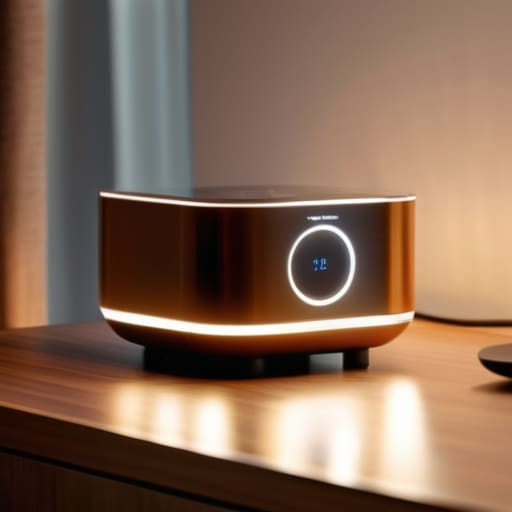
I spent ten years in a darkened sleep lab, watching patients breathe through tubes and wired to a headbox that measured the actual electrical activity of their brains. Now, I see people in my clinic clutching their wristbands like holy relics, convinced that a glowing number on a screen is the absolute truth. It’s exhausting. Most of these gadgets are selling you a polished illusion of data, and frankly, when we look at how smart bedroom devices perform, the reality is often a far cry from the marketing brochures. They aren’t measuring your sleep; they are guessing at it, and they are often guessing wrong.
I’m not here to tell you to throw your tech in the bin, but I am here to tell you to stop letting it dictate your anxiety. In this article, I’m going to strip away the hype and explain what these sensors actually see—and what they miss entirely. I will show you how to distinguish between a meaningful metric and a digital distraction, so you can stop obsessing over a “sleep score” and start focusing on the things that actually help you wake up feeling human.
Understanding How Smart Bedroom Devices Perform
To understand how these gadgets actually function, we have to draw a hard line between environmental control and biological measurement. Most of what you see marketed as “sleep technology” falls into two camps. One camp focuses on sleep environment optimization—things like smart lighting that mimics a sunset to support your circadian rhythm, or thermostats that adjust the temperature as the night progresses. These are actually quite useful; they tackle the physical variables that often disrupt a decent night’s rest.
The other camp, however, is where I start to get uneasy. These are the wearables and under-mattress sensors that claim to tell you exactly how much REM or deep sleep you achieved. In my clinic, we use polysomnography—wires attached to your scalp, chest, and legs to measure brain waves, heart rate, and breathing. That is a measurement. Your ring or your watch is merely performing a sophisticated version of educated guesswork based on movement and heart rate variability. They are useful for spotting trends over months, perhaps, but they cannot see the architecture of your sleep. If you are looking for a clinical diagnosis, a piece of consumer hardware is not going to give it to you.
Key Things to Know
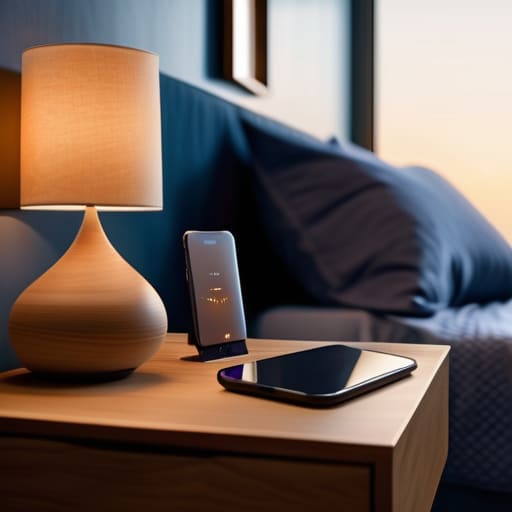
First, let’s clear up a common misconception: there is a massive difference between monitoring your sleep and actually improving your sleep environment. Most of the gadgets on the market are designed to watch you, not help you. While smart lighting circadian rhythm settings can be a genuine help in signaling to your brain that the day is ending, many other devices are just digital noise. If a device tells you that you had “poor quality sleep” without explaining the physiological reason—like a spike in respiratory effort or a temperature fluctuation—it isn’t providing clinical insight; it’s just providing anxiety.
Secondly, if you are looking into sleep environment optimization, focus on the variables that actually move the needle. This means temperature control and light. I often see patients who have spent hundreds on fancy wearables but haven’t bothered to check if their bedroom is a stifling 20 degrees Celsius. A smart thermostat that lowers the temperature as you drift off is infinitely more useful than a ring that tells you that you didn’t hit your REM targets. Focus on the environment, not the data points.
Practical Tips and Steps
If you are going to invest in a smart home, stop trying to turn your bedroom into a high-tech laboratory and start focusing on the basics of sleep environment optimization. Most people I see in clinic are struggling because their environment is working against their biology. Instead of chasing a perfect “sleep score” on an app, use your technology to automate the things that actually matter. This means using smart lighting circadian rhythm settings to gradually dim the lights and shift to warmer tones an hour before you intend to sleep. It’s about signal, not data; you want to tell your brain that the day is ending, not give it more blue light to process.
Secondly, stop overcomplicating your setup. You don’t need a dozen interconnected gadgets to see an improvement. If you use a smart thermostat, set it to drop the temperature slightly in the early hours of the morning. A cool room is a physiological necessity for deep sleep, and automation is much more effective than willpower when you’re exhausted. Focus on creating a consistent, predictable environment rather than a complex ecosystem that requires constant troubleshooting.
Common Mistakes to Avoid
The biggest mistake I see is people treating their gadgets like a replacement for clinical insight. They fall into the trap of chasing a higher number on an app, thinking that if their “sleep score” is low, they’ve failed. This leads to a frantic kind of hyper-vigilance that is the absolute enemy of rest. If you spend your morning obsessing over a graph, you aren’t improving your sleep; you’re just training your brain to be anxious about it.
Another pitfall is over-complicating your setup in the name of sleep environment optimization. I often see patients who have turned their bedrooms into high-tech command centres, filled with various sensors and glowing LEDs. They think they’ve achieved peak smart lighting circadian rhythm control, but they’ve actually just introduced more variables and more potential for failure. If your smart home ecosystem requires a software update or a reset just so you can dim the lights, the complexity is likely outweighing the benefit. Remember, the most effective sleep environment is one that is quiet, dark, and—most importantly—uncomplicated.
Final Thoughts
Look, I’m not telling you to throw your gadgets in the bin. If a smart thermostat can keep your room at a consistent, cool temperature throughout the night, it’s doing more for your sleep than any app ever could. Effective sleep environment optimization is about managing the variables we can actually control—light, temperature, and noise. If your tech helps you automate those, use it. Just don’t let it become a new source of anxiety.
The danger lies in mistaking data for wisdom. A device can tell you that you moved less or stayed still longer, but it cannot tell you if your sleep was restorative. We need to stop obsessing over the “score” and start looking at the environment. If you want to lean into a smart home ecosystem integration, focus on things like smart lighting that supports your circadian rhythm rather than a wristband that tells you you’ve slept poorly. Use the tools to fix your surroundings, not to monitor your neuroses. At the end of the day, your body is a much better judge of its own rest than a piece of silicon.
How to actually use your data without losing your mind
- Stop obsessing over the ‘Sleep Score.’ It’s a proprietary number cooked up by an algorithm in a Silicon Valley office, not a clinical measurement. If it tells you you’ve had a ‘poor’ night when you feel fine, trust your body, not the app.
- Use your tracker to spot trends, not nightly drama. One bad night isn’t a medical crisis; it’s just a Tuesday. Look for patterns over weeks—like whether your heart rate stays elevated after a late meal—rather than panicking over a single dip in your data.
- Don’t mistake ‘time in bed’ for ‘sleep.’ Most wearables are decent at sensing movement, but they can’t tell the difference between you lying still in a state of hyperarousal and you actually being asleep. If you’re awake and frustrated, the tracker might still give you credit for sleep.
- Check the hardware, not just the software. A ring, a watch, and a bedside sensor all use different methods (optical vs. movement) to guess what you’re doing. If you switch devices, expect your ‘baseline’ to shift entirely; it’s not your sleep that changed, it’s the math.
- Use the data to trigger real-world changes, not just more monitoring. If your device shows your respiratory rate is erratic, don’t just stare at the graph—take that specific data to your GP. Data is only useful if it leads to a conversation or a change in your environment.
The Bottom Line
A “sleep score” from a wearable is a mathematical guess based on movement and heart rate, not a clinical measurement of your brain waves or actual sleep stages.
Stop chasing a perfect number on an app; focus instead on the basics that actually move the needle, like a consistent wake-up time and a cool, dark room.
If you suspect you have a genuine sleep disorder, stop troubleshooting with gadgets and go see a professional—a tracker cannot diagnose apnea or restless leg syndrome.
Frequently Asked Questions
If my tracker says I had poor sleep, but I feel fine, should I trust the device or my own body?
Trust your body. Every single time. I’ve spent seventeen years looking at polysomnograms—the gold standard—and even those don’t always capture how a person feels. Your tracker is using movement and heart rate to make an educated guess about your sleep stages, but it’s not reading your brain waves. If you feel rested and functional, you had good sleep. Don’t let a proprietary “sleep score” manufacture anxiety where none exists.
Are there any specific metrics—like heart rate or movement—that these devices actually get right, or is it all just guesswork?
They aren’t entirely useless, but let’s be precise. They are decent at tracking movement—if you’re tossing and turning, the accelerometer knows. They’re also reasonably good at heart rate trends, which can hint at your autonomic state. But the moment a device tries to tell you exactly how many minutes of REM you had? That’s where we enter the realm of educated guesswork. It’s a proxy, not a polysomnogram. Don’t mistake a trend for a diagnosis.
Can using these devices actually make my sleep worse by causing me to obsess over my nightly data?
It absolutely can. In the clinic, I see it all the time: patients who become more exhausted by their “sleep score” than by their actual lack of rest. It’s a feedback loop. You wake up feeling fine, see a 60% score on your wrist, and suddenly your brain decides you’re depleted. That anxiety triggers a physiological stress response that makes sleep even harder to catch. If your data is dictating your mood, it’s no longer a tool; it’s a stressor.