I spent a decade in the dark, hunched over monitors in a quiet hospital ward, watching the brainwaves of people who were convinced they were broken. I’ve seen the frantic searches for a “complete guide to insomnia” that promise everything from magnesium tinctures to expensive, glowing smart-mattresses, but most of it is just expensive noise. If you are currently staring at a wearable device that tells you your sleep score was a 42/100, let me tell you something: that gadget isn’t measuring your health, it’s just measuring your anxiety. Most people I see in the clinic aren’t suffering from a mysterious neurological failure; they are simply fighting against a bedroom that is too warm or a schedule that has no anchor.
I am not here to sell you a lifestyle brand or a new supplement. My promise is much more practical: I am going to help you separate genuine clinical disorders from bad habits. We are going to look at what a real sleep study actually detects, why your wake-up time matters more than your bedtime, and which pieces of advice actually hold up under scientific scrutiny. This is about finding actual evidence, not just following the latest wellness trend.
Stop Guessing a Complete Guide to Insomnia and Real Disorders
When you come into my clinic, you aren’t usually looking for a lecture on blue light filters; you’re looking for an answer to why your brain won’t shut off. There is a massive, frustrating gulf between “trouble sleeping” and a clinical sleep disorder. Most people I see are struggling with the fallout of poor circadian rhythm regulation—essentially, their bodies have lost the plot because their schedules are a moving target. They aren’t “insomniacs” in the medical sense; they are just living in a state of constant biological jet lag.
However, we cannot ignore the people for whom the standard advice fails. If you are doing everything “right” and still waking up gasping or feeling like you haven’t slept a wink, we need to look deeper. We have to distinguish between lifestyle-driven fatigue and the physiological reality of something like the impact of sleep apnea on rest. One requires a change in habits, while the other requires medical intervention. My job is to help you stop guessing so you can stop wasting time on remedies that were never meant for your specific problem.
Why Your Tracker Lies and What Sleep Studies Actually Prove
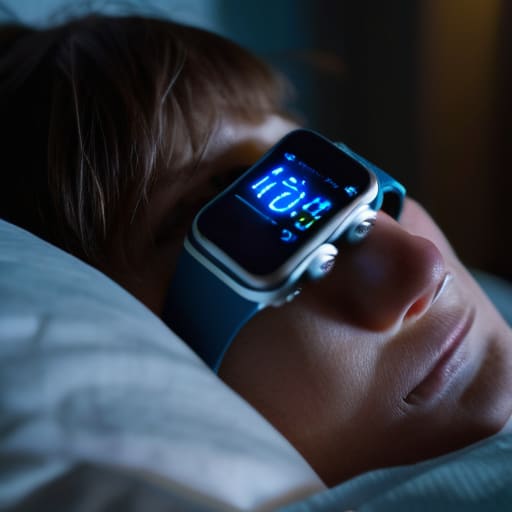
I see it every week in the clinic: a patient arrives, visibly exhausted, clutching their smartwatch like a holy relic, convinced their “sleep score” was a 42 last night. I hate to be the one to break it to you, but your wrist-worn gadget is essentially guessing. These wearables use heart rate variability and movement to estimate sleep stages, but they cannot see what is actually happening in your brain. They don’t know the difference between you lying still because you’re asleep and you lying still because you’re paralyzed by anxiety. They are marketing tools, not medical devices, and obsessing over them often does more damage to your mental state than the lack of rest itself.
When we perform a clinical sleep study, we aren’t guessing. We are measuring EEG patterns, airflow, and oxygen saturation to see the physiological truth. This is how we identify the impact of sleep apnea on rest, something a Fitbit will almost certainly miss until you’re gasping for air in the middle of the night. While a tracker might tell you that you “slept poorly,” a real study tells us why—whether it’s a neurological issue, a breathing obstruction, or a fundamental breakdown in your circadian rhythm regulation. One is a data point; the other is a diagnosis.
The Messy Schedule Trap and Circadian Rhythm Regulation
The problem isn’t always that you can’t sleep; it’s that your body has no idea when it’s supposed to. I see this constantly in the clinic: patients who are exhausted because they treat their wake-up time like a suggestion rather than an anchor. You might go to bed at 10 PM on Tuesday and 1 AM on Friday, thinking you’re “catching up” on the weekend. In reality, you are just performing a slow-motion collision with your own biology. This constant shifting makes circadian rhythm regulation nearly impossible, as your internal clock is perpetually trying to find a North Star that you keep moving.
When your schedule is this fragmented, no amount of expensive magnesium or “sleep hygiene practices” will fix the underlying drift. You aren’t necessarily suffering from a clinical pathology; you are suffering from biological inconsistency. We spend so much time looking for complex medical answers when the culprit is often just the lack of a predictable morning. If you don’t establish a consistent wake time—regardless of how poorly you slept the night before—you are essentially fighting a losing battle against your own hormones.
Beyond Sleep Hygiene Practices When Lifestyle Fixes Fail
If you’ve spent the last six months dimming the lights at 8 PM, swapping your coffee for chamomile, and buying every expensive linen sheet on the market, only to still find yourself staring at the ceiling at 3 AM, listen to me: it isn’t your fault. We have been conditioned to believe that sleep is a matter of willpower and “good habits,” but there is a massive difference between poor sleep hygiene practices and a physiological breakdown. When you have a genuine clinical issue, telling you to “stop looking at screens” is like telling someone with a broken leg to just walk more carefully. It’s patronising, and more importantly, it’s ineffective.
For many of my patients, the culprit isn’t a late-night snack or a bright room; it’s something much more structural. We might be looking at the profound impact of sleep apnea on rest, where your breathing is fighting your brain for oxygen, or perhaps a neurological glitch that keeps your arousal system stuck in the ‘on’ position. In these cases, you don’t need more lavender oil; you need evidence-based clinical intervention, such as specialized cognitive behavioral therapy for insomnia techniques (CBT-I) or a formal respiratory assessment. Stop trying to “lifestyle” your way out of a medical condition.
The Real Causes of Chronic Sleep Deprivation and Apnea
When we talk about the actual causes of chronic sleep deprivation, we have to move past the idea that it’s just “stress” or “too much caffeine.” While those certainly don’t help, they are often just the surface layer. In my years in the clinic, I’ve seen how people become trapped in a cycle of trying every natural remedy for sleep disorders they find on Instagram, only to realize they are fighting a physiological battle they weren’t equipped for. If your brain isn’t physically able to transition through the necessary sleep stages, no amount of chamomile tea is going to fix the underlying mechanics.
Then there is the more structural side of things, which is where the real danger lies. The impact of sleep apnea on rest is often underestimated because, frankly, most people don’t realize they are stopping breathing in the middle of the night. They just think they’re “bad sleepers” or “tired people.” It isn’t a lack of willpower or poor habits; it is a physical obstruction or a neurological failure to maintain an airway. When you’re dealing with apnea, you aren’t just “tired”—you are experiencing a series of micro-awakenings that shatter your restorative sleep architecture.
Evidence Based Help Cbt I Techniques vs Melatonin Supplementation
If you’ve spent any time scrolling through wellness forums, you’ve likely been bombarded with a dizzying array of natural remedies for sleep disorders. Most of it is noise. You’ll see people swearing by magnesium, tart cherry juice, or a specific melatonin supplementation guide that promises to reset your brain overnight. Let’s be clear: melatonin is a hormone, not a sedative. It can help nudge your circadian rhythm regulation if your timing is genuinely off, but it isn’t a magic “off” switch for a racing mind. Using it as a crutch to mask poor habits is like putting a band-aid on a broken limb.
When we talk about actual, clinical progress, we have to look at cognitive behavioral therapy for insomnia techniques (CBT-I). This isn’t about “trying harder” to sleep; it’s about retraining the physiological and psychological response to your bed. While supplements might offer a temporary chemical nudge, CBT-I addresses the underlying mechanics of why you can’t drift off. It is the gold standard for a reason. If you want to move beyond mere survival and actually fix the architecture of your rest, you need to stop looking for a pill and start looking at the patterns.
Five ways to stop fighting your bed and start fixing your sleep
- Stop treating your wake-up time as a suggestion; if you want to regulate your circadian rhythm, you need a consistent anchor point, even on Saturdays.
- Lower the thermostat before you reach for a sleep aid; a bedroom that’s too warm is a physiological barrier to deep sleep that no amount of melatonin can override.
- Put the wearable in a drawer if it’s making you anxious; a “poor sleep score” is an algorithmic guess, not a clinical measurement, and obsessing over it only fuels the insomnia cycle.
- Learn to distinguish between “tiredness” and “sleepiness”; if you aren’t actually sleepy, don’t lie in bed performing mental gymnastics, or you’ll just train your brain to associate the mattress with frustration.
- Audit your light exposure with clinical intent, not just “blue light filters”; getting bright, natural light in your eyes shortly after waking is far more effective than any evening ritual.
The Bottom Line
Stop letting a wrist-worn gadget dictate your anxiety levels; your wearable’s “sleep score” is a mathematical guess, not a clinical measurement of your brain waves or respiratory health.
Distinguish between a lifestyle problem and a medical one—if your wake-up time is a moving target and your bedroom is too warm, you don’t have insomnia, you have a broken routine.
If you have a genuine physiological disorder like apnea, “sleep hygiene” and herbal teas will not save you; you need clinical intervention, not another wellness trend.
Frequently Asked Questions
If my sleep tracker says I’m getting plenty of sleep but I still feel exhausted, should I be looking for a clinical disorder like apnea?
If your tracker says you slept eight hours but you feel like you’ve gone ten rounds in a boxing ring, listen to your body, not the gadget. A wearable measures movement and heart rate; it doesn’t measure sleep architecture or whether you’re gasping for air every ninety seconds. That discrepancy is a massive red flag. It suggests your sleep is fragmented or shallow—classic signs of something like apnea. Stop looking at the score and start looking at your breathing.
I’ve tried all the standard "sleep hygiene" advice like cutting out caffeine and dimming the lights, but nothing works—what is the next logical step?
If you’ve already dimmed the lights and cut the caffeine and you’re still staring at the ceiling, stop trying to “fix” your habits and start looking at your biology. The next logical step isn’t another herbal tea; it’s professional diagnostic clarity. You need to determine if this is a behavioral pattern or a physiological disruption, like sleep apnea or restless leg syndrome. Book a consultation or request a formal sleep study. We need data, not more guesswork.
How do I know if my sleep issues are actually a circadian rhythm problem caused by my schedule, or if I have a genuine medical condition that needs a sleep study?
The easiest way to tell is to look at your wake time. If you can sleep perfectly well if you just stay in bed until noon, you don’t have a clinical disorder; you have a schedule problem. But if you are gasping for air, waking up with a pounding headache, or feeling exhausted despite a consistent routine, that’s when we need to get you into the lab. One needs a calendar; the other needs a clinician.