I spent a decade in the dark, sitting in dimly lit sleep labs while the rhythmic, mechanical hiss of ventilators and the sudden, terrifying silence of a patient stopping breathing became my nightly soundtrack. I’ve seen the look in a person’s eyes when they realise they aren’t just “tired”—they are actually suffocating in their sleep. Most of the information you find online when searching for a complete guide to sleep apnoea is either terrifyingly vague or peddles expensive gadgets that do nothing more than track your movement. There is a massive, frustrating gap between being told you have “snoring problems” and actually receiving a diagnosis that changes your life, and I am tired of seeing patients caught in that middle ground.
In this guide, I am stripping away the marketing fluff and the pseudo-science. I’m going to tell you exactly what a clinical sleep study actually looks for, how to tell if your symptoms are a lifestyle habit or a genuine respiratory disorder, and how to navigate the healthcare system without being fobbed off. This isn’t about “sleep hygiene” or buying a silk eye mask; it is about the clinical reality of your breathing.
Is It Just Fatigue or a Complete Guide to Sleep Apnoea
I see this distinction play out in my clinic every single week. Patients walk in, exhausted and defensive, convinced they’ve just developed a “bad habit” or that they’re simply failing at being an adult. They describe a heavy, dragging sensation—that pervasive daytime fatigue and sleep disorders often share—and they assume it’s just the price of a busy life. But there is a massive, clinical difference between being tired because you stayed up too late scrolling through your phone and being exhausted because your airway is physically collapsing every thirty seconds.
If you are merely “tired,” you usually feel better after a decent nap or a consistent routine. If you have obstructive sleep apnoea, no amount of caffeine or early bedtimes will fix the underlying mechanical failure. One is a matter of lifestyle; the other is a physiological struggle for oxygen. We can’t just guess here. To move past the guesswork, we have to look at the actual data through a formal sleep study process to see if your brain is actually waking up hundreds of times a night just to remind you to breathe.
Why Your Tracker Fails to Spot Obstructive Sleep Apnoea Causes
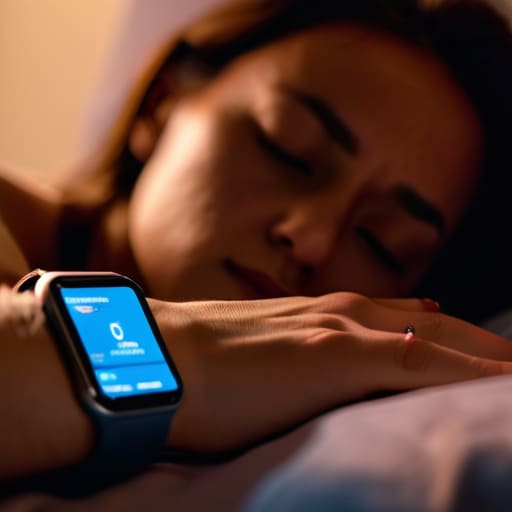
I see it every week in the clinic: a patient arrives clutching their smartwatch, distraught because their “sleep score” is a dismal 45. They are convinced they have a profound disorder, when in reality, the device is merely guessing based on how much you tossed and turned. Here is the hard truth: your wearable is a motion sensor, not a medical diagnostic tool. It can tell if you are still, but it has absolutely no way of knowing if your airway has collapsed or if you are experiencing the micro-arousals that define obstructive sleep apnoea causes.
A tracker measures movement and heart rate variability, but it cannot detect the physiological struggle for breath. It doesn’t see the oxygen desaturation or the way your chest heaves to compensate for a blocked airway. While these gadgets are fine for spotting a late-night snack or a bout of restless legs, they are useless for distinguishing between simple daytime fatigue and sleep disorders that require clinical intervention. If you are relying on a wrist-based algorithm to tell you whether you need a CPAP machine, you are essentially trying to perform a complex surgical assessment with a blunt crayon.
Decoding the Sleep Study Process Beyond the Consumer Gadgets
When people hear “sleep study,” they often imagine a high-tech laboratory or, conversely, they think of those little rings and watches they wear to bed. But there is a vast, clinical gulf between a consumer gadget estimating your movement and the actual sleep study process used in a clinic. In my years in the lab, I’ve seen the difference between a device that guesses you’re restless and a polysomnography that actually records the moment your airway collapses. We aren’t just looking at how much you toss and turn; we are measuring the specific physiological shifts—the drops in blood oxygen and the micro-arousals—that signal the true obstructive sleep apnoea causes.
A clinical study is about data that actually matters for your long-term health, particularly when we consider the impact of sleep apnoea on heart health. We are looking for the biological truth of your breathing, not a “sleep score” generated by an algorithm that doesn’t know the difference between a dream and a respiratory event. It is the only way to move past guesswork and start discussing legitimate sleep apnea treatment options that actually work.
Daytime Fatigue and Sleep Disorders the Truth About Your Exhaustion
The problem with daytime fatigue and sleep disorders is that exhaustion is a terrible diagnostic tool. It is a non-specific symptom; it could mean you’re overworked, you’ve had too much caffeine after 4 PM, or you are literally stopping breathing fifty times an hour. When patients sit in my clinic, they often lead with how “tired” they are, but I have to look deeper. If your fatigue is accompanied by a sudden, jarring gasp for air or a morning headache that feels like a dull bruise behind your eyes, we are no longer talking about a bad habit or a lack of discipline. We are talking about a physiological failure.
This isn’t just about feeling sluggish during your afternoon meeting. If left unaddressed, the impact of sleep apnoea on heart health is significant, placing unnecessary strain on your cardiovascular system every single time your oxygen levels dip. We need to move past the idea that you can simply “power through” it with more coffee. If your exhaustion feels heavy, structural, and inescapable, it is time to stop guessing and start looking at the clinical reality of your breathing.
Navigating Sleep Apnea Treatment Options Without the Medical Fluff
Once you’ve moved past the diagnostic stage and actually have your results in hand, the conversation shifts from “what is happening” to “how do we fix it.” This is where people often feel most overwhelmed by the sheer volume of medical jargon. Let’s be clear: there is no one-size-fits-all solution. While CPAP is often the gold standard for treating obstructive sleep apnoea causes, it isn’t a punishment, and it certainly isn’t a failure on your part if you struggle with it initially.
The real decision-making usually comes down to lifestyle versus machinery. For some, managing weight or changing sleeping positions might offer relief, but for many others, we are looking at clinical interventions to prevent the long-term impact of sleep apnoea on heart health. If you are prescribed a machine, you’ll face the practicalities of choosing between a nasal mask vs full face CPAP—a choice that, frankly, determines whether you actually use the device or hide it in a drawer. My job is to help you find the tool that actually works for your life, rather than just following a prescription blindly.
Nasal Mask vs Full Face Cpap and Your Heart Health
When we sit down in clinic to discuss your results, the conversation often shifts from the diagnosis to the actual mechanics of living with the machine. This is where the debate of nasal mask vs full face CPAP usually begins. If you are strictly a nose-breather, a nasal mask is lighter and less intrusive, but if you have any congestion or a tendency to breathe through your mouth, a nasal mask will feel like a losing battle. Forcing yourself to use the wrong interface leads to mask leaks and, more importantly, poor compliance. If you aren’t wearing the device consistently because it’s uncomfortable, you aren’t actually addressing the physiological strain on your body.
This matters because the impact of sleep apnoea on heart health is not a theoretical concern—it is a measurable, systemic reality. Every time you stop breathing, your oxygen levels plummet and your sympathetic nervous system kicks into overdrive, spiking your blood pressure and putting immense strain on your cardiovascular system. Choosing the right CPAP interface isn’t about “comfort” in a luxury sense; it is about ensuring you actually use the therapy enough to protect your heart from the long-term damage of repeated nocturnal hypoxia.
Five things your GP might miss (but your sleep study won't)
- Stop self-diagnosing with your smartwatch. A wearable can tell you that you moved a lot or that your heart rate spiked, but it cannot tell if your airway collapsed. If you are waiting for a “low sleep score” to justify a clinical investigation, you are wasting time; you need a polysomnography that actually measures your oxygen saturation and respiratory effort.
- Watch for the “silent” symptoms. Everyone knows about the loud snoring, but in my clinic, I see far too many people who don’t snore at all but wake up with a pounding headache or a dry, parched mouth. If you’re gasping for air in your sleep, you might not even realize it’s happening, which is exactly why the clinical data matters more than your partner’s observations.
- Don’t let “lifestyle changes” become a way to dismiss a medical reality. If you’ve already tried cutting out the evening wine and fixing your sleep hygiene, but you’re still waking up feeling like you’ve been hit by a bus, stop trying harder. You can’t “willpower” your way through a physical airway obstruction.
- Understand the AHI, not just the “feeling.” When you finally get your results, don’t just look at whether you feel tired. Look at your Apnoea-Hypopnoea Index (AHI). That number is the clinical truth of how many times per hour your breathing actually stops or falters, and it is the only metric that determines how aggressively we need to treat you.
- Prepare for the reality of CPAP. If you are prescribed a machine, don’t view it as a failure of your body. It is a tool to stop the constant physiological stress of oxygen deprivation. The goal isn’t just to stop snoring; it’s to stop your heart from working overtime every single time you drift off.
The Bottom Line
Stop using your wearable’s “sleep score” as a diagnostic tool; a consumer gadget can track movement, but it cannot see your airway closing or measure the oxygen drops that define sleep apnoea.
There is a massive difference between “bad sleep hygiene”—like an irregular wake time or a warm room—and a clinical disorder that requires medical intervention. Don’t let a doctor tell you to “just relax” if you are actually gasping for air.
If you suspect you have sleep apnoea, the only way to stop the guesswork is through a formal sleep study. It is the only way to distinguish between lifestyle-induced fatigue and a genuine physiological struggle for breath.
Frequently Asked Questions
If my sleep study results come back as "mild" apnoea, do I really need to bother with CPAP, or can I just fix it with lifestyle changes?
“Mild” is a tricky label. In the clinic, I see people with mild apnoea who are still gasping for air and feeling like they’ve run a marathon every morning. If your apnoea is driven by weight or alcohol, lifestyle changes can be a game-changer. But if it’s structural—the shape of your airway or your anatomy—no amount of willpower will fix that. Don’t let a “mild” score trick you into ignoring your exhaustion.
I don't snore like my partner says I do; how can I be sure I'm actually stopping breathing at night?
The short answer is: you can’t be sure by yourself. Snoring is just the sound of vibration; it’s not the same as the airway actually closing. Many people with severe apnoea actually have “silent” events where the breathing stops without a single sound. If your partner says you gasp or pause, or if you wake up feeling like you’ve been hit by a bus, don’t rely on your own ears. You need a clinical study to see what’s actually happening.
Can I use a home sleep test instead of going into the clinic, and are the results actually reliable enough for a diagnosis?
It depends on what we’re looking for. If we’re just checking if you stop breathing occasionally, a home test is a convenient starting point. But if I suspect your oxygen levels are crashing or your sleep architecture is fragmented, those consumer-grade home kits are often too blunt an instrument. They miss the nuance I see on the clinic monitors. Don’t settle for a “maybe” from a device if you’re actually struggling to breathe.