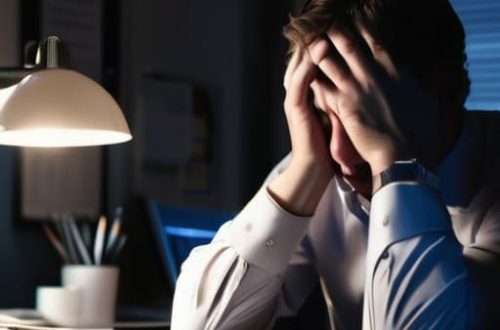
I spent ten years in a darkened sleep lab, watching patients wired to headboxes, and if there is one thing I’ve learned, it’s that the most significant variable in the room isn’t the EEG or the oxygen monitor—it’s the person’s own mind. We spend hundreds of pounds on magnesium supplements and silk eye masks, yet we completely ignore how expectations shape sleep experience. I’ve seen patients walk into my clinic convinced they are “broken” because their wearable gave them a dismal sleep score, only to find that their physiological data is actually fine; it’s the anxiety of the expected outcome that is keeping them awake.
I am not here to sell you a new gadget or a “sleep hack” that promises overnight miracles. Instead, I want to draw a line between the people who have a genuine clinical disorder and those who are simply trapped in a cycle of performance anxiety regarding their rest. I will show you how to strip away the noise of the sleep-tracking industry and understand the actual mechanics of your brain at night. We are going to separate the biological reality from the psychological myth, so you can finally stop fighting your own biology.
The Gap Between Your Tracker and Your Reality
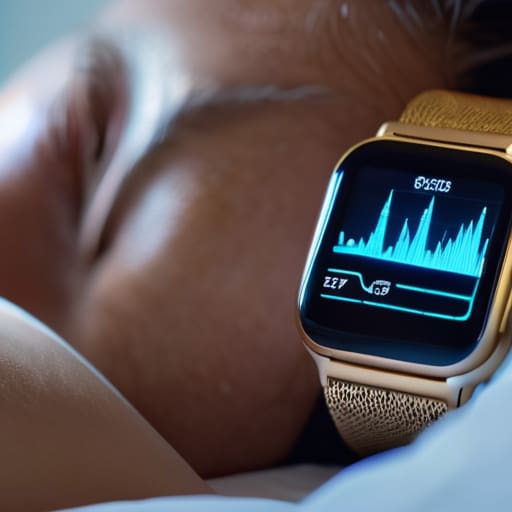
I spent a decade in darkened sleep labs, watching patients wired to headboxes, measuring actual brain waves and respiratory effort. I know what real sleep looks like on a monitor. When I see patients now, they often hold up their wrist like a holy relic, demanding to know why their app gave them a “sleep score” of 62 when they feel fine. The truth is, your wearable is not a medical device; it is a glorified motion sensor making an educated guess. It cannot see your brain activity, and it certainly cannot account for the massive gap between subjective sleep quality vs objective sleep.
This discrepancy creates a dangerous feedback loop. If your tracker tells you that you had a “poor” night, you begin to scan your body for fatigue, inadvertently triggering sleep onset anxiety the moment your head hits the pillow the next evening. You aren’t just tired; you are now performing a mental audit of your own exhaustion. This is where cognitive distortions in sleep take hold—you stop trusting your own physical sensations and start trusting an algorithm that doesn’t know the difference between you tossing to get comfortable and you actually waking up in a panic.
Subjective Sleep Quality vs Objective Sleep Why You Feel Exhausted
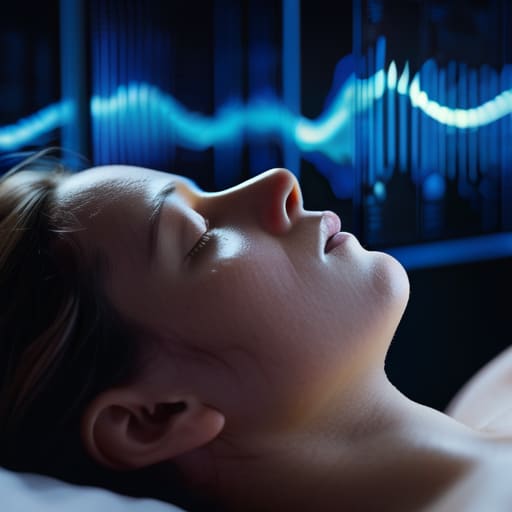
In the clinic, I often see patients who are convinced they haven’t slept a wink, even when their polysomnography shows perfectly normal architecture. This is the frustrating disconnect of subjective sleep quality vs objective sleep. You might spend the night tossing and turning, convinced you were awake for hours, only for the data to show you were actually drifting in and out of light sleep stages. It isn’t that you’re “making it up”; it’s that your brain’s monitoring system is stuck in overdrive.
This is where sleep expectancy theory comes into play. If you wake up at 3:00 AM and immediately think, “This is it, I’m going to be a wreck at work tomorrow,” you’ve already triggered a physiological response. That spike in cortisol and the resulting sleep onset anxiety create a feedback loop: you worry about not sleeping, which makes sleep impossible, which confirms your fear. It’s a cruel cycle where your brain becomes an unreliable narrator, reporting exhaustion that doesn’t always match the physiological reality of your rest.
How Expectations Shape Sleep Experience and Sabotage Rest
We have to talk about the mental loop that starts the moment you look at the clock. There is a specific kind of dread that sets in at 2:00 AM when you realize you aren’t asleep yet, and that dread is a physiological toxin. This is where sleep expectancy theory moves from a textbook concept into a lived nightmare; if you go to bed expecting a struggle, your brain remains in a state of high alert, scanning for the very wakefulness you fear. You aren’t just “not sleeping”—you are actively monitoring your failure to sleep, which triggers a sympathetic nervous system response that makes actual rest impossible.
This cycle is often fueled by cognitive distortions in sleep, where your brain convinces you that one bad night is proof of a permanent, broken system. You begin to treat the bed like a battlefield rather than a sanctuary. This isn’t just “stress”; it is a feedback loop where your anticipation of exhaustion becomes the very thing that ensures you stay exhausted. When you walk into my clinic, I see this constantly: patients who are physically capable of sleeping, but whose psychological sleep perception has become so skewed by anxiety that they have effectively trained themselves to stay awake.
The Nocebo Effect in Insomnia When Worry Becomes Reality
In the clinic, I often see patients who are convinced they are walking wounded, certain that a single bad night has permanently damaged their ability to function. This is where we see the nocebo effect in insomnia play out in real-time. Unlike the placebo effect, where a positive expectation yields a benefit, the nocebo effect is when your negative expectations actually manifest as physical symptoms. You aren’t just “worried” about sleep; your brain has begun to treat the bed as a site of threat. This creates a feedback loop of sleep onset anxiety that is incredibly difficult to break because, to your nervous system, the danger feels entirely real.
This isn’t just “all in your head”—it is a physiological response to cognitive distortions in sleep. When you spend your evening rehearsing how exhausted you will be tomorrow, you are priming your brain to stay hyper-vigilant. You are essentially training your amygdala to stay on guard precisely when you need to power down. We have to move away from the idea that you are “broken” and start recognizing that your anticipatory dread is often the primary driver of the very symptoms you are trying to escape.
Decoding Sleep Onset Anxiety and Cognitive Distortions in Sleep
When I sit across from a patient in the clinic, the conversation often shifts from how many hours they slept to how much they dread the moment they turn off the light. This is where sleep onset anxiety takes hold. It isn’t just “being tired”; it is a physiological state of hyperarousal. You aren’t lying in bed resting; you are lying in bed performing a mental audit of your failures. Your brain has begun to associate the mattress with a battlefield rather than a sanctuary, and once that association is made, the very act of trying to sleep becomes the primary obstacle to achieving it.
This is often fueled by cognitive distortions in sleep—those irrational, catastrophic thoughts that spiral the moment the room goes dark. You tell yourself, “If I don’t fall asleep in the next ten minutes, tomorrow is ruined,” or “I’ll never function on this little rest.” These aren’t just idle worries; they are psychological triggers that spike your cortisol and keep your heart rate elevated. You are essentially trying to force a biological process to happen through sheer willpower, which is about as effective as trying to force your heart to stop beating by staring at it.
Moving Beyond Psychological Sleep Perception and Sleep Expectancy Theory
We need to stop treating sleep as a purely mental battleground, even though that is exactly how it feels when you’re staring at the ceiling at 3:00 AM. While we’ve discussed how your brain can lie to you, we have to move past the idea that it’s all just “in your head.” Moving beyond simple sleep expectancy theory means acknowledging that there is a biological baseline that exists regardless of your mood. If you are convinced you will have a terrible night, you are primed for a struggle, but that doesn’t mean your body isn’t physically capable of entering deep, restorative stages.
The goal isn’t to just “think positive,” which is frankly useless advice. It is about decoupling your psychological sleep perception from your actual physiological state. In the clinic, I see patients who are convinced they slept zero minutes, yet their polysomnography shows they achieved adequate slow-wave sleep. We have to learn to trust the biology over the anxiety. When we bridge that gap, we stop feeding the cycle of hyperarousal and start allowing the nervous system to do its job without constant, anxious supervision.
How to Stop Outsmarting Your Own Brain (and Start Sleeping)
- Throw your tracker in a drawer for a week. If you wake up feeling fine but your ring tells you that you had “poor REM,” you are training your brain to ignore its own biological signals in favour of a flawed algorithm. Trust your body, not a piece of silicon.
- Stop the “Sleep Math.” When you lie there at 2:00 AM calculating exactly how many hours of sleep you’ll get if you drift off right now, you are triggering a physiological stress response. The math doesn’t matter; the panic does.
- Reclaim your wake time. I always ask what time you get up before I ask when you went to bed, because a consistent wake time is the anchor for your entire circadian rhythm. If you try to “make up” for a bad night by sleeping in, you are simply guaranteeing that you’ll struggle again tomorrow.
- Abandon the “Perfect Night” myth. Sleep isn’t a performance you pass or fail; it’s a biological process that fluctuates. When you go to bed expecting a perfect eight hours, you create a high-stakes environment that makes sleep nearly impossible.
- Lower the stakes of your bedroom environment. If your room is a humid, stuffy cave, no amount of “positive thinking” or sleep hygiene ritual will fix it. Fix the temperature first—keep it cool—so your brain doesn’t have to fight the environment before it can even begin to fight your anxiety.
Summary: Cutting Through the Noise
Stop letting a gadget dictate your morning; if your tracker says you had poor sleep but you feel functional, trust your body over the algorithm.
Distinguish between a clinical disorder and a lifestyle pattern—fixing your wake-up time and room temperature is often more effective than any “sleep hack.”
Break the cycle of sleep anxiety by acknowledging that your fear of not sleeping is often a bigger obstacle to rest than the lack of sleep itself.
Frequently Asked Questions
If my sleep tracker says I had a terrible night but I actually feel fine, should I trust my body or the data?
Trust your body every single time. I’ve spent seventeen years looking at polysomnography data—the gold standard—and even then, the numbers don’t always tell the full story. Your wearable is making an educated guess based on movement and heart rate; it isn’t measuring your brain waves. If you feel refreshed, you slept well. The moment you start questioning your own physical sensations because a piece of plastic on your wrist disagrees, you’re inviting the very anxiety that ruins sleep.
How can I tell if my struggle to sleep is a genuine physiological disorder or just a cycle of anxiety caused by my own expectations?
Look, if you’re lying there wondering if it’s “real,” you’re likely caught in a feedback loop. A physiological disorder—like sleep apnea or restless leg syndrome—usually follows a predictable physical pattern regardless of your mood. But if your sleep struggles fluctuate wildly based on how much you’ve been worrying about sleep that day, it’s likely psychological. If you can sleep fine on holiday but struggle every Tuesday night, your brain is the one driving the bus.
Is there a way to actually "unlearn" the fear of a bad night's sleep once it has already taken hold?
You don’t unlearn it by fighting it; you unlearn it by proving it wrong. When you lie there dreading the next day, your brain is treating a lack of sleep like a physical threat. To break the cycle, we have to stop “trying” to sleep. It sounds counterintuitive, but you need to reclaim the bedroom as a place of neutral rest, not a battleground. Focus on your wake time, keep the room cool, and stop checking the clock.