
I spent a decade in darkened sleep labs, watching patients twitch and struggle under a tangle of wires, and I can tell you this: nobody ever woke up from a night of sleep apnea or chronic insomnia thinking, “I just need a more expensive memory foam cushion.” Yet, the market is flooded with influencers claiming that a specific, high-tech pillow is the missing link to your wellbeing. If you are searching for a complete guide to pillows hoping to solve a fundamental physiological issue, you are likely chasing a ghost. Most people are trying to buy their way out of a neck ache that is actually caused by their mattress or their irregular wake times, and no amount of luxury goose down is going to fix a broken circadian rhythm.
I am not here to sell you on a specific brand or a lifestyle aesthetic. My goal is to strip away the marketing nonsense and tell you what actually matters from a clinical perspective. In this guide, I will help you distinguish between a simple comfort preference and a genuine ergonomic necessity. We are going to look at how your sleeping position dictates your needs, why most “orthopedic” claims are total nonsense, and how to choose something that actually supports your anatomy without breaking your bank account.
Why Your Current Pillow Is Likely Failing Your Sleep

The problem most people run into isn’t that they have a “bad” pillow; it’s that they are using a tool designed for a different version of themselves. I see this constantly in the clinic: a patient complaining of morning stiffness, convinced they need the best pillow for neck pain, when in reality, they’ve simply outgrown their current setup. Your pillow is meant to bridge the gap between your head and the mattress to maintain sleeping posture alignment. If that gap is too large or too shallow, your muscles spend the entire night performing a frantic, microscopic tug-of-war just to keep your airway open and your spine neutral.
It often comes down to a misunderstanding of pillow loft and firmness levels. You might be chasing the cloud-like luxury of down, only to find your head sinking straight to the mattress, or you might be wedging yourself onto a block of memory foam that refuses to breathe. We tend to treat pillow shopping like a fashion choice, but it is actually a matter of structural support. If your pillow doesn’t respect the specific geometry of your shoulder and neck, it isn’t a comfort issue—it’s a mechanical failure.
A Complete Guide to Pillows and What Actually Matters
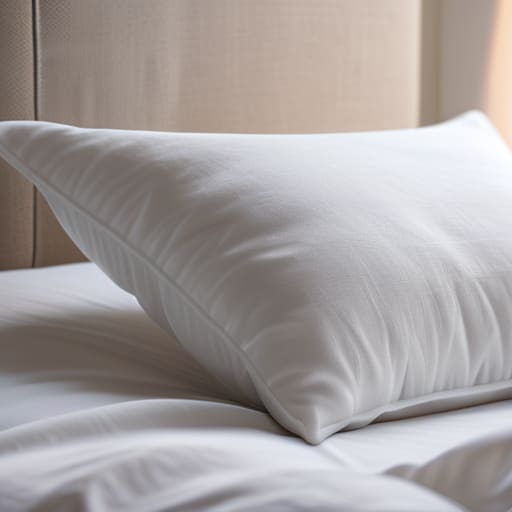
When you strip away the marketing jargon and the expensive packaging, a pillow is essentially just a tool for sleeping posture alignment. Its only real job is to fill the gap between your head and the mattress so your spine stays in a neutral line. If you are a side sleeper, you need something with enough substance to keep your neck from tilting toward the mattress; if you are on your back, you need something that won’t push your chin toward your chest. This is why understanding pillow loft and firmness levels is far more important than chasing a specific brand name.
I often see patients who have spent hundreds on “luxury” options, only to find they’ve made their discomfort worse. The debate of memory foam vs down pillows isn’t about which one is “better” in a vacuum, but which one matches your specific anatomy. A heavy, dense foam might provide the support a side sleeper needs, while a down pillow might offer the softness a back sleeper craves. There is no magic product, only the right geometry for your body.
Memory Foam vs Down Pillows Separating Hype From Support
When you look at the marketing for memory foam versus down pillows, you’re seeing two entirely different philosophies of support. Memory foam is often sold as the miracle cure for those seeking the best pillow for neck pain, promising a custom contour that mirrors your every move. In my experience, memory foam is excellent for stability, but it can be a double-edged sword; if the density is wrong, it can actually trap heat and create a “sinking” sensation that disrupts your ability to shift positions throughout the night.
Down, on the other hand, is the darling of luxury bedding, but it is frequently a lesson in disappointment for anyone needing actual structural support. It feels wonderful for the first ten minutes, but unless you are a very light sleeper who doesn’t move, down tends to compress into a pancake by 3:00 AM. This lack of consistent loft means your sleeping posture alignment suffers exactly when you need it most. If you are looking for a solution that actually lasts until your alarm goes off, you have to stop choosing based on how soft it feels in the shop and start looking at how it maintains its shape under the weight of your head.
Finding the Best Pillow for Neck Pain and Alignment
When I’m sitting in clinic with a patient who is convinced they have a structural spinal issue, the first thing I look at isn’t their X-ray—it’s how they’re positioned in bed. Most neck pain isn’t a mystery of biology; it’s a failure of sleeping posture alignment. If your head is tilting too far toward your shoulder or arching upward toward the ceiling, you are essentially asking your cervical spine to hold a stressful pose for eight hours straight.
The fix isn’t just “getting a better pillow,” though that’s what the marketing tells you. You have to match the pillow to your specific anatomy. If you are a side sleeper, you need a higher loft to fill that gap between your ear and the mattress; otherwise, you’re looking for specific side sleeper pillow recommendations that prioritize height over mere softness. For back sleepers, the goal is the opposite: a medium loft that supports the natural curve of the neck without pushing the chin toward the chest. It’s about finding the right balance of pillow loft and firmness levels to keep your spine a straight, neutral line.
Deciphering Pillow Loft and Firmness Levels for Your Body
When I’m sitting in clinic, I often see patients who have spent hundreds of pounds on the “best” rated pillow, only to find themselves waking up with a dull ache in their cervical spine. The mistake is almost always a misunderstanding of pillow loft and firmness levels. Loft is simply the height of the pillow; firmness is how much it resists your weight. If you are a side sleeper, you need a higher loft to fill the gap between your ear and the mattress, ensuring your sleeping posture alignment remains neutral. If the pillow is too thin, your head tilts down, straining the muscles; if it’s too thick, you’re tilting upward.
For those who sleep on their backs, a loft that is too high is just as problematic. You want something that cradles the neck without pushing the chin toward the chest. I often tell patients that the “perfect” firmness is entirely subjective to your body mass and your primary position. If you are a heavier person, you will compress the material more, meaning you likely need a firmer, higher-loft option to prevent your head from sinking straight to the mattress.
Side Sleeper Pillow Recommendations and Essential Sleeping Posture Alignmen
If you’re a side sleeper, your primary goal isn’t comfort—it’s maintaining a neutral spine. In the clinic, I see so many patients coming in with tension headaches or radiating shoulder pain, only to realize their pillow is essentially a thin slice of nothingness. When you lie on your side, the gap between your ear and the mattress is at its widest. If your pillow doesn’t fill that space, your head tilts downward, putting your cervical spine in a constant, awkward bend. This is where sleeping posture alignment becomes non-negotiable; you need a pillow that keeps your nose in line with the center of your chest.
For most, this means looking for a higher loft. This is where the debate of memory foam vs down pillows becomes practical rather than aesthetic. A down pillow might feel luxurious, but it often lacks the structural integrity to keep your head from sinking too deep, which ruins your alignment. I usually suggest a contoured memory foam or a firm, high-density synthetic option that provides the necessary resistance. You need something that holds its shape throughout the night, rather than a pillow that collapses by 3:00 AM.
Five Things Your Pillow Won't Fix (And How to Actually Test One)
- Stop treating the pillow as a standalone cure. If your bedroom is 22 degrees and your wake-up time fluctuates by two hours every day, the most expensive ergonomic pillow in the world is just an expensive way to be uncomfortable while you’re awake.
- Ignore the marketing “sleep scores” on your apps when deciding on a pillow. A wearable can tell you if you moved, but it can’t tell you if your cervical spine is actually aligned; you need to rely on how your neck feels at 10:00 AM, not a graph on your phone.
- Perform the “hand test” before you buy. When you lie on the pillow in the shop, if you feel a gap between your shoulder and your ear, or if your chin is being forced toward your chest, the loft is wrong regardless of what the box claims it’s designed for.
- Realise that “firmness” is a deceptive term. What one brand calls firm, another calls medium. Focus instead on the recovery time—how quickly the material pushes back when you move—because if it stays compressed, your alignment will vanish halfway through the night.
- Don’t be afraid to rotate or replace. Even the best medical-grade support loses its structural integrity over time. If you find yourself subconsciously stacking two pillows to get the height you need, your primary pillow has failed and is no longer doing its job.
The Bottom Line on Your Pillow Choice
Stop searching for a “miracle” material; whether it’s memory foam or down, the only thing that actually matters is whether the loft maintains a neutral spine for your specific sleeping position.
A pillow is a tool for alignment, not a cure for a clinical sleep disorder—if you are waking up gasping or unable to fall asleep despite perfect posture, the problem is likely physiological, not textural.
Avoid the “firmness trap” by testing how the pillow reacts to your weight; a pillow that feels great for five minutes in a shop is useless if it collapses halfway through a seven-hour sleep cycle.
Frequently Asked Questions
If I change my pillow to fix my neck pain, how long should I actually wait before deciding if it’s working?
Give it two weeks. I see this constantly in clinic: patients swap a pillow and expect instant relief by Tuesday. Your neck muscles and cervical spine aren’t just reacting to the pillow; they’re unlearning years of compensatory tension. You need a period of “re-adaptation.” If you’re still waking up with that familiar, sharp ache after fourteen nights of consistent use, the pillow isn’t the hero you hoped for—it’s likely the wrong tool for your alignment.
My sleep tracker says I'm tossing and turning all night; could a poor pillow choice be causing these micro-awakenings?
Your tracker isn’t measuring “tossing and turning”; it’s likely misinterpreting movement or subtle shifts in your breathing. That said, if your pillow doesn’t maintain neutral spinal alignment, your body will move to find relief from physical strain. It’s a feedback loop: a bad pillow causes discomfort, which causes movement, which your wearable then flags as “poor sleep.” Don’t obsess over the data points, but do check if your neck feels unsupported when you wake.
Is there any clinical evidence that expensive, high-end pillows actually improve sleep architecture, or is it all just marketing?
If you’re looking for a clinical study proving that a £200 silk-wrapped goose pillow fundamentally alters your REM cycles or sleep spindles, you won’t find it. It doesn’t exist. Expensive pillows aren’t “sleep medicine”; they are tools for spinal alignment. A high-end pillow is only “better” if its specific loft and density solve your physical discomfort. If your neck is aligned, you’ll sleep better—but that’s a matter of ergonomics, not some magical, expensive sleep architecture.