
Stop scrolling through those endless “top ten” lists of memory foam miracles and expensive organic silk covers. Most of the marketing you see is just noise designed to make you feel like your sleep quality is something you can buy your way out of with a premium price tag. I’ve spent seventeen years in a sleep clinic watching people struggle with neck pain and restless nights, and I can tell you that knowing how to choose a pillow isn’t about finding the most expensive one on the shelf; it’s about understanding the mechanical relationship between your spine and your sleeping position.
I’m not here to sell you a brand or a lifestyle. My goal is to strip away the fluff and give you the clinical reality of what actually matters: alignment, loft, and support. I will show you how to stop guessing and start looking at your own body’s requirements so you can find a setup that actually works. We are going to separate the marketing hype from the physiological necessity, ensuring you don’t waste another penny on a product that’s essentially just a very expensive way to wake up with a headache.
The Pillow Marketing Lie Why Your Current Setup Is Failing
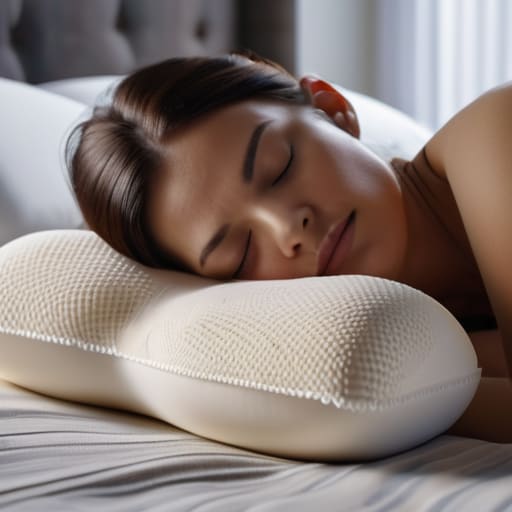
The problem is that most pillow advertisements are designed to sell you a feeling, not a function. You walk into a shop, press your face into a display model, and think, “That feels lovely.” But “lovely” is not a clinical metric. In the clinic, I see the fallout of these impulse buys: people arriving with chronic tension because they prioritised plushness over spinal alignment during sleep. A pillow that feels like a cloud at 10:00 PM often becomes a useless pancake by 3:00 AM, leaving your head tilting at an angle that your cervical spine simply wasn’t designed to handle.
We need to stop treating pillows like luxury bedding and start treating them like ergonomic tools. Whether you are debating memory foam vs down pillows or hunting for the perfect firmness, the decision shouldn’t be about how soft it is. It’s about whether the height—what we call the loft—actually fills the gap between your ear and your shoulder. If you’re a side sleeper, a pillow that is too low is just as damaging as one that is too high; both will leave you waking up with that familiar, dull ache that makes you wonder if you’ve suddenly aged a decade overnight.
How to Choose a Pillow Based on Spinal Alignment During Sleep
Forget the “cloud-like” descriptions you see in glossy adverts; your neck doesn’t care about fluff, it cares about geometry. When I’m looking at a patient’s sleep hygiene, I’m looking for how their body maintains a neutral line from the base of the skull to the small of the back. If you are a side sleeper, you need a specific pillow loft for side sleepers—one that is thick enough to fill the gap between your ear and the mattress, preventing your head from tilting downward. If the gap is too large or the pillow too soft, you aren’t resting; you’re straining.
The conversation usually shifts toward memory foam vs down pillows, but that’s a secondary concern to stability. Down feels lovely, but it collapses under the weight of a human head within twenty minutes, destroying your spinal alignment during sleep. If you wake up with that dull, nagging ache that radiates into your shoulders, your pillow isn’t providing the structural support your cervical spine requires. You aren’t looking for a luxury item; you are looking for a medical tool that keeps your vertebrae stacked correctly all night long.
Decoding Sleeping Positions and Neck Pain the Real Fix
If you’ve spent half your night shifting from your side to your back, trying to find a “sweet spot” that doesn’t exist, you aren’t alone. In the clinic, I see patients who are convinced they have a chronic neck issue, when in reality, they are simply fighting a losing battle against their own geometry. The relationship between sleeping positions and neck pain is almost entirely dictated by how much space exists between your ear and the mattress. If you are a side sleeper, your pillow needs to act as a bridge, filling that gap to keep your nose in line with your sternum. If the pillow is too thin, your head tilts down; too thick, and it tilts up. Either way, you’re straining muscles that should be at rest.
This is where the debate of memory foam vs down pillows actually matters. Down is lovely for aesthetics, but it lacks the structural integrity to maintain consistent spinal alignment throughout the night. For most people struggling with morning stiffness, I tend to steer them toward materials that offer a bit more “rebound” or density. You don’t need a luxury hotel experience; you need a specific pillow loft for side sleepers that won’t collapse into a pancake by 3:00 AM.
Memory Foam vs Down Pillows Separating Hype From Science
When you walk into my clinic, I see a lot of people who have spent hundreds of pounds on “luxury” down pillows, only to wake up with a neck that feels like it’s been in a car crash. The marketing makes down sound like the gold standard of comfort, but from a physiological standpoint, down is often terrible at maintaining spinal alignment during sleep. It’s highly compressible; you sink into it, the support vanishes, and suddenly your head is tilting at an angle that puts your cervical spine under constant tension. If you are a side sleeper, a down pillow that lacks sufficient pillow loft for side sleepers is essentially useless for keeping your airway open and your vertebrae neutral.
Memory foam, on the other hand, is often vilified because it can feel “stiff” or trap heat, but it serves a very specific clinical purpose. Unlike down, which offers unpredictable compression, memory foam provides a more consistent response to your body heat and weight. This makes it much better at managing sleeping positions and neck pain because it actually holds its shape. It doesn’t just “squish”; it distributes pressure. If you’re struggling with stability, you don’t need more fluff; you need a material that actually stays where you put it.
The Crucial Role of Pillow Loft for Side Sleepers
If you’re a side sleeper, the height of your pillow—what we call the loft—is arguably more important than the brand name printed on the case. When you’re lying on your side, there is a significant gap between your ear and the mattress. If your pillow is too flat, your head tilts downward toward the bed, pulling your cervical spine out of its natural curve. Conversely, a pillow that is too thick will shove your head upward toward the ceiling. In both scenarios, you aren’t just “uncomfortable”; you are actively straining the muscles and nerves in your neck all night long.
Achieving proper spinal alignment during sleep requires finding a loft that perfectly fills that gap, acting as a bridge between your shoulder and your skull. This is where many people stumble when comparing memory foam vs down pillows. While a down pillow might feel luxurious, it often collapses under the weight of your head, losing its height halfway through the night. For side sleepers, I generally look for something with more structural integrity—a loft that stays consistent from 2:00 AM to 6:00 AM—to ensure your neck isn’t doing overtime while you’re trying to rest.
Matching Best Pillow Materials for Neck Support to Your Body
When we talk about the best pillow materials for neck support, we have to stop treating “comfort” as a universal metric. In the clinic, I see patients who have spent hundreds of pounds on high-end memory foam because a tech influencer told them to, only to find they’ve actually exacerbated their issues. The truth is that material choice is inseparable from your physical build. If you have broader shoulders, a thin, down-filled pillow—no matter how expensive—will likely fail you because it won’t provide the necessary height to maintain spinal alignment during sleep. You’ll end up collapsing into the mattress, putting your cervical spine at a literal angle all night.
Conversely, if you are a smaller-framed sleeper, a dense, high-resilience foam might feel like sleeping on a brick, forcing your head into an unnatural position. It isn’t just about the “feel”; it’s about how the material responds to your specific weight and pressure. You need to match the material’s ability to rebound or contour to your body’s unique geometry. If the material can’t hold its shape against your weight, you aren’t getting support; you’re just getting a temporary cushion that disappears by 3:00 AM.
Five Real-World Rules for Not Wasting Your Money
- Stop chasing the “luxury” label and start measuring your shoulder width. If you’re a side sleeper, the distance from your neck to your shoulder is your real blueprint; if the pillow doesn’t fill that gap, your spine is going to spend the night in a curve, no matter how many threads the casing boasts.
- Test for “rebound” rather than just “softness.” A pillow that feels like a cloud for five seconds but collapses into a pancake by 3:00 AM is useless; you need something with enough structural integrity to maintain your alignment until your alarm goes off.
- Check the temperature regulation, not just the fluff. I see so many patients struggling with sleep fragmentation because they’ve bought a massive, heat-trapping memory foam block that turns their pillow into a furnace—if it doesn’t breathe, you won’t stay asleep.
- Don’t ignore the “loft” test. Grab your current pillow and see if it actually supports your head or if your head is just sinking through to the mattress; if you’re waking up with a dull ache at the base of your skull, your loft is almost certainly too low.
- Treat your pillow like a piece of clinical equipment, not a decorative accessory. It has a shelf life. If you find yourself constantly “fluffing” and repositioning just to get comfortable, it’s not a sleep problem—it’s a hardware failure, and it’s time to bin it.
The Bottom Line on Finding Your Match
Stop looking for the “best” pillow in the shop; look for the one that keeps your spine in a straight line from your hips to your head, regardless of what the packaging promises.
Your sleeping position dictates everything—a pillow that feels like a dream for a back sleeper will likely leave a side sleeper with a throbbing neck by 3:00 AM.
Material is secondary to support; whether it’s memory foam or down, if the loft doesn’t bridge the gap between your ear and your shoulder, you’re just buying expensive padding for a problem that won’t go away.
Frequently Asked Questions
If my pillow feels comfortable right now, does that actually mean it’s supporting my spine, or am I just getting used to the discomfort?
It’s a classic trap. Your body is incredibly good at adapting to suboptimal conditions—it’s called habituation. You might feel “comfortable” simply because your muscles have learned to brace against the lack of support, or because you’ve subconsciously adjusted your posture to compensate. But comfort is a feeling; spinal alignment is a mechanical fact. If you wake up with a dull ache or a stiff neck, your brain might be happy, but your vertebrae are paying the price.
I’ve seen people talk about "orthopaedic" pillows online—is there any clinical evidence that these actually work, or is it just another marketing term?
“Orthopaedic” is a massive marketing buzzword that carries almost zero clinical weight. In a sleep lab, we don’t use that term; we talk about spinal alignment and cervical support. While some contoured foam pillows can help maintain a neutral neck position for specific people, there’s no magic “orthopaedic” property that fixes sleep. It’s often just a fancy way to charge you an extra thirty pounds for a shape that might actually be too aggressive for your anatomy.
How often am I actually supposed to replace my pillow before it stops providing real support, regardless of how clean it looks?
Forget how clean the case looks; your pillow has a shelf life that has nothing to do with laundry. If you’re a side sleeper, I’d say every 18 months. If you’re a back sleeper, you might squeeze another two years. The real test isn’t a stain—it’s the “fold test.” If you fold it in half and it doesn’t spring back to shape, the internal structure has collapsed. It’s no longer a pillow; it’s just a lump of dead foam.