
I’ve spent seventeen years in dimly lit sleep clinics, watching patients struggle through the night while tethered to a dozen different sensors, and if there is one thing I’ve learned, it’s that we are terrible at explaining the weirdness of the human brain. I often see people clutching their phones, terrified by some fringe theory they read online about demons or spiritual incursions, when the reality of how sleep paralysis happens is far more biological—and, frankly, much more interesting. It isn’t a supernatural visitation; it is simply a glitch in the transition between being awake and being in REM sleep, where your brain decides to flip the “on” switch before it has finished the “off” sequence for your muscles.
I’m not here to sell you a supplement or a wearable that promises to “fix” your soul. My goal is to strip away the terror and the pseudoscience to show you exactly what is occurring in your nervous system during those frozen moments. I will explain the physiological mechanics behind the paralysis, why your brain hallucinates a presence in the room, and how to distinguish a one-off glitch from a pattern that actually requires clinical intervention.
Beyond the Terror Understanding How Sleep Paralysis Happens

To understand why this feels so visceral, we have to look at the biological “glitch” occurring in the brain. Normally, as you transition into REM sleep, your brain triggers a state of muscle atonia during sleep. This is a protective mechanism designed to prevent you from physically acting out your dreams and accidentally kicking your partner or falling out of bed. In a perfect world, this paralysis stays tucked away until you are fully unconscious. But when sleep cycle disruptions occur—often due to irregular schedules or sheer exhaustion—the timing gets muddled. You find yourself conscious, yet your body is still firmly in that “shutdown” mode.
The terror isn’t just in the stillness, though; it’s in the sensory overload. When you wake up mid-glitch, your brain is caught in a tug-of-war between being awake and being in REM. This often triggers hypnagogic hallucinations, where your mind projects dream-like imagery into the real world. Because your amygdala—the brain’s emotional alarm system—is hyper-active during this transition, it interprets this confusion as an immediate, existential threat. You aren’t just seeing things; your brain is actively manufacturing fear to match the physical sensation of being unable to move.
The Biological Glitch Muscle Atonia During Sleep Explained
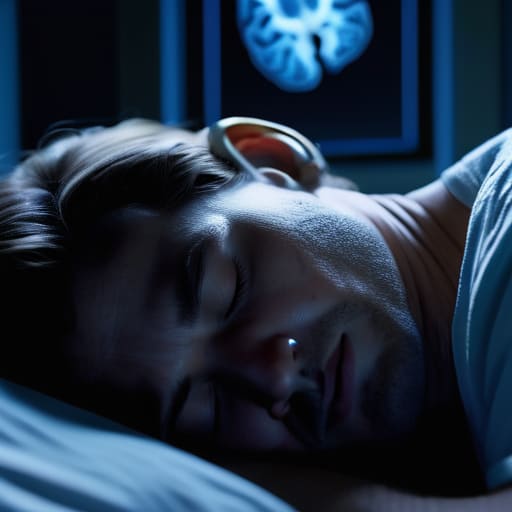
To understand why you feel pinned to the mattress, we have to talk about muscle atonia during sleep. This isn’t some malfunction; it’s actually a highly sophisticated safety mechanism. When you enter REM sleep—the stage where most dreaming occurs—your brain sends a signal down the spinal cord to effectively “paralyse” your voluntary muscles. This prevents you from physically acting out your dreams and potentially punching a wall or jumping out of bed mid-nightmare. It is a brilliant evolutionary safeguard designed to keep you safe while your mind wanders.
The problem arises when there is a glitch in the timing. In a typical night, the transition between wakefulness and REM is a smooth, coordinated handoff. But during an episode, you experience a sudden dissociation between consciousness and motor control. Your mind has flicked the light switch on, but the body is still stuck in the REM shutdown sequence. This is often accompanied by intense amygdala activation, which is the brain’s alarm system firing off because it perceives the lack of movement as a threat. You aren’t broken; your brain is simply trying to protect you from a dream you aren’t even aware you’re having.
Amygdala Activation Why Your Brain Triggers a Fear Response
Now, here is where the experience shifts from a physical inconvenience to a genuine psychological nightmare. While your body is stuck in that state of muscle atonia during sleep, your brain isn’t just idling; it’s actually in a state of hyper-vigilance. Specifically, your amygdala—the brain’s ancient, primitive alarm system—is firing on all cylinders. In a normal sleep cycle, the amygdala is relatively quiet, but during these specific disruptions, it wakes up in a state of high alert. Because you are conscious but unable to move, your brain interprets this sudden vulnerability as a life-threatening emergency.
This intense amygdala activation in sleep paralysis is what bridges the gap between a simple “glitch” and the terrifying sensations people report. When the alarm system goes off and there is no obvious external threat to explain the fear, your brain does something remarkably efficient: it invents one. It scans your immediate environment to justify the terror you’re feeling, often manifesting as shadows in the corner of the room or a heavy pressure on your chest. It isn’t a ghost or a demon; it is simply your brain trying to make sense of a biological mismatch.
Hallucinations vs Reality the Truth About Hypnagogic Hallucinations
This is where the experience shifts from a mere physical glitch to something truly visceral. When you’re stuck in that halfway house between wakefulness and REM, your brain isn’t just awake; it’s actively projecting. These are known as hypnagogic hallucinations, and they are essentially your dream imagery bleeding into the physical world. Because your eyes might be partially open or your mind is processing sensory input from the room, the brain tries to make sense of the shadows or the weight on your chest by weaving them into a narrative. It isn’t a sign of a breaking mind; it is simply a mismatch in timing between your internal dream state and your external environment.
I often see patients who are genuinely shaken, convinced they’ve seen something “otherworldly” in the corner of their room. In the clinic, we look at this through the lens of sensory integration. You aren’t losing your grip on reality; you are experiencing a vivid, involuntary bridge between sleep and wakefulness. Understanding this distinction between sleep paralysis and lucid dreaming is vital. In a lucid dream, you are the architect of the scene; in paralysis, you are a captive audience to a brain that is still very much in the middle of its nightly storytelling.
The Distinction Between Sleep Paralysis and Lucid Dreaming
It is easy to see why people get these two mixed up, especially when you’re lying there in the dark, feeling like you’re hovering somewhere between worlds. The distinction between sleep paralysis and lucid dreaming often comes down to your level of agency. In a lucid dream, you are the director; you realize you’re dreaming and can often steer the narrative, fly, or change the scenery. It’s a controlled, albeit surreal, expansion of consciousness.
Sleep paralysis, however, is a complete loss of control. Instead of the playful exploration of a lucid dream, you are met with the heavy, suffocating reality of muscle atonia during sleep. Your mind is awake, but your body is still firmly locked in that physiological shutdown mode designed to keep you from acting out your dreams. While a lucid dreamer might feel a sense of wonder, someone experiencing paralysis is often dealing with intense amygdala activation, which turns a simple neurological glitch into a fight-or-flight crisis. One is a mastery of the dream state; the other is being a prisoner within it.
Fixing Sleep Cycle Disruptions Through Better Sleep Hygiene
Now, I can’t give you a magic pill to stop the paralysis, but we can certainly look at the environment that invites it. Most of the time, these episodes aren’t a spontaneous neurological failure; they are triggered by sleep cycle disruptions caused by a chaotic schedule. If your wake time is swinging wildly from Tuesday to Thursday, your brain loses its rhythm, making it far more likely that you’ll drift into that awkward, halfway-between-awake-and-asleep state where the glitch occurs.
The most effective approach to sleep hygiene for preventing episodes isn’t about buying expensive lavender sprays or fancy weighted blankets. It’s about consistency. I always ask my patients what time they get up, because a stable wake time regulates your circadian drive. If you are chronically sleep-deprived or sleeping in a room that’s too warm, you are essentially inviting your brain to misfire. By stabilizing your schedule and keeping your bedroom cool, you reduce the likelihood of that sudden, jarring transition where your brain wakes up while your body is still locked in muscle atonia during sleep. It’s about building a predictable foundation so your brain doesn’t have to improvise.
Practical Ways to Short-Circuit the Glitch
- Stop fighting the paralysis. I know it feels like an instinct to thrash or scream, but when you’re stuck in that halfway state, fighting only ramps up your amygdala’s panic response. If you can, try to focus on small, rhythmic movements—like wiggling a single toe or your tongue—to signal to your brain that you are actually awake.
- Watch your sleeping position. In the clinic, we see a disproportionate number of sleep paralysis episodes occurring in the supine position—that’s sleeping on your back for the non-medical types. Gravity can slightly shift your airway, and that subtle physiological stressor is often enough to trigger the “glitch” between sleep stages.
- Stabilise your wake time. If your internal clock is a moving target, your sleep architecture becomes fragile. You can’t expect smooth transitions between REM and wakefulness if you’re waking up at 7:00 AM one day and 10:00 AM the next; consistency is what prevents these transitional “misfires.”
- Manage the sleep debt. Most people I see who experience frequent episodes are chronically underslept. When you are severely sleep-deprived, your brain tends to dive into REM sleep much more aggressively and irregularly, which significantly increases the likelihood of waking up while your muscle atonia is still engaged.
- Don’t let the “sleep score” dictate your anxiety. If you use a wearable, stop checking it the moment you wake up from an episode. A tracker might tell you that you had “poor quality sleep,” but it can’t tell you why. Obsessing over a digital number only increases the nighttime hyperarousal that makes these episodes more frequent.
The Essentials: What to Remember When the Night Gets Strange
Sleep paralysis isn’t a neurological breakdown; it’s a temporary “mismatch” in your sleep stages where your brain wakes up while your body is still in the protective, paralyzed state of REM.
The terror and the hallucinations are biological side effects—your amygdala is essentially firing an alarm because it can’t make sense of why you can’t move.
While it feels like a medical emergency, the fix is usually found in the boring stuff: stabilizing your wake times and ensuring your bedroom isn’t a sauna.
Frequently Asked Questions
If I’m experiencing sleep paralysis frequently, does that mean I have a clinical sleep disorder like narcolepsy?
It’s the question I get most often in clinic, usually delivered with a fair amount of dread. The short answer? Not necessarily. For many, it’s a symptom of fragmented sleep or a chaotic schedule. However, if it’s happening frequently alongside overwhelming daytime sleepiness, it could be a red flag for something like narcolepsy. Don’t panic, but do pay attention to the pattern. We need to look at the context, not just the episode.
Can certain medications or alcohol consumption actually trigger these episodes?
It’s a fair question, and the answer is a resounding yes. Alcohol is a particularly common culprit; it might help you drift off, but it wreaks havoc on your sleep architecture, causing fragmented transitions between stages that practically invite these glitches. Certain medications, especially those affecting neurotransmitters or blood pressure, can do the same. If you’re noticing a pattern, look closely at what you’re consuming before your head hits the pillow.
Is there a way to "break out" of the paralysis once it has already started?
When you’re trapped in that state, your instinct is to thrash, but fighting the paralysis usually just spikes your heart rate and ramps up the panic. Instead, try to focus on something tiny. Wiggle a single toe or try to move your eyes rapidly back and forth. It sounds trivial, but by targeting those smaller, independent muscle groups, you can often signal to your brain that the “shutdown” sequence is over and nudge yourself back into full wakefulness.