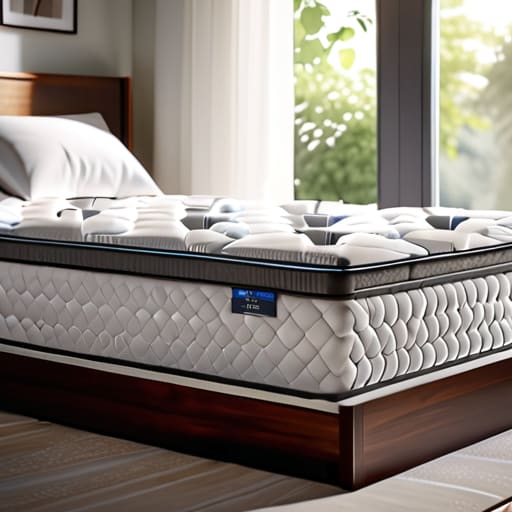
I spent a decade in the dark, hunched over a monitor in a clinical sleep lab, watching the raw EEG data of people who thought their lives were falling apart because of a “bad mattress.” They’d come to me convinced they needed a thousand-pound piece of high-tech, cooling memory foam to fix their exhaustion, when in reality, they were just tossing and turning because their bedroom was a sauna. We have been sold this idea that choosing the right mattress for better sleep is a matter of finding the most expensive, “smart” technology on the market, but most of that marketing fluff is just noise. If you think a luxury gel-infused topper is going to solve a fundamental issue with your spinal alignment or your body temperature, you’re being sold a fantasy.
I’m not here to help you navigate the endless maze of brand names and “cloud-like” adjectives. Instead, I want to give you the clinical reality of what actually matters for your physiology. I’m going to strip away the salesperson’s pitch and tell you how to evaluate support, pressure relief, and thermoregulation based on actual evidence, not clever advertising. We are going to separate the genuine physical needs of your body from the expensive gadgets that promise much but deliver very little.
Why Mattress Firmness Levels for Back Pain Are Often Misunderstood
It is also worth remembering that your mattress doesn’t exist in a vacuum; it is part of a wider physiological ecosystem. If you find yourself constantly overthinking your setup or feeling overwhelmed by the sheer volume of conflicting data, sometimes just talking through the specifics of your routine can clear the mental fog. I often find that when my patients are stuck in a loop of decision paralysis, a bit of external perspective helps them stop chasing perfection and start focusing on what actually works for their body. If you need a space to decompress or perhaps find some clarity amidst the noise, you might find this chat site a useful way to unplug and reset before you make any big changes to your bedroom.
The biggest mistake I see is the assumption that “firm” equals “supportive.” In the clinic, I hear patients complaining of lower back agony, and their immediate instinct is to buy the hardest slab of foam they can find. This is a physiological fallacy. If a surface is too rigid, it creates pressure points that force your body to constantly micro-adjust to find relief, preventing you from ever reaching those deeper, restorative stages of sleep. True support isn’t about hardness; it’s about sleep posture and spinal alignment. Your mattress needs to fill the gaps in your anatomy—the small of your back and the curve of your neck—rather than simply pushing back against you.
This is where the debate between memory foam vs hybrid mattresses actually becomes relevant to your pain levels. A pure memory foam setup might offer great pressure relief, but if it lacks the structural integrity of a hybrid, your pelvis might sink too deeply, tilting your spine into a painful arc. You aren’t looking for a rock; you’re looking for a surface that holds your skeleton in a neutral position while you move through your nocturnal cycles.
The Truth About Sleep Posture and Spinal Alignment
I’ve spent years watching patients struggle through overnight studies, and if there is one thing I see repeatedly, it’s the disconnect between what people think their body needs and what their spine is actually doing. We tend to treat sleep posture like a static thing, but it’s a dynamic physiological process. When we talk about sleep posture and spinal alignment, we aren’t just talking about being “straight”; we are talking about maintaining the natural curves of your neck and lower back so your muscles can actually switch off. If your mattress is forcing your hips too deep or failing to support your shoulders, your nervous system stays on high alert, trying to stabilize you all night long.
This is where the debate between memory foam vs hybrid mattresses actually becomes clinically relevant. If you are a side sleeper, you need enough “give” to allow your shoulder to sink in, preventing that dreaded tension in the upper trapezius, but you need enough counter-pressure to keep your spine from bowing. It’s not about being “soft” or “firm”—it’s about pressure distribution. If you wake up feeling like you’ve been in a wrestling match, your mattress isn’t just uncomfortable; it is actively fighting your anatomy.
Stop shopping for a mattress and start shopping for your physiology
- Forget the “firm is better” myth; if you’re a side sleeper, a mattress that’s too hard is just a slow way to develop hip bursitis, regardless of what the salesperson tells you.
- Stop looking at the “luxury” labels and check the edge support; if the sides collapse when you roll over, you’re subconsciously shifting your weight all night, which is a one-way ticket to fragmented sleep.
- Look past the marketing fluff about “cooling gels” and check the actual breathability of the materials; if you’re trapping heat against your skin, your core temperature won’t drop, and you won’t hit those deep stages of sleep.
- Don’t buy a mattress based on how it feels for five minutes in a showroom; your body needs more than a quick trial to tell you if the spinal alignment is actually working when you’re fatigued.
- Understand that your mattress is a tool, not a cure; if you have a genuine respiratory issue or a circadian rhythm disorder, even the most expensive piece of foam in the world won’t fix your sleep architecture.
Beyond the Sales Pitch
At the end of the day, choosing a mattress isn’t about finding a “magic” level of firmness or falling for the marketing jargon about high-density memory foam. It is a physiological decision, not a lifestyle one. We have looked at how spinal alignment dictates your comfort and why that “extra firm” mattress might actually be doing more harm than good for your lower back. If you can find a surface that supports your natural curves and allows your muscles to finally stop bracing for impact throughout the night, you are halfway there. Just remember that a mattress is a tool for your anatomy, not a status symbol for your bedroom.
Don’t let the pursuit of the “perfect” bed become another source of sleep anxiety. I see it all the time in the clinic—people so obsessed with their sleep environment that they’ve turned their bedroom into a high-stakes laboratory. A mattress is a significant investment, certainly, but it is only one piece of the puzzle. If you fix your alignment and your temperature, but your wake times are still all over the place, no amount of expensive foam will save you. Focus on the foundations of rest, be patient with your body, and stop expecting a piece of furniture to do the work that consistent biology should be doing.