
I spent my first decade in the NHS sleep clinic watching people tethered to headboxes, staring at monitors while they performed the most exhausting task imaginable: attempting to sleep. There is a specific, frantic kind of desperation in a patient who has tried every magnesium supplement, every weighted blanket, and every expensive app on the market, only to find themselves more wired than ever. They aren’t looking for a new gadget; they are trapped in a cycle of performance anxiety where sleep has become a chore to be conquered. If you are currently obsessing over your wearable’s data or rehearsing your bedtime routine like it’s a high-stakes exam, you need to learn how to stop trying too hard to sleep, because that very effort is the physiological engine driving your wakefulness.
I’m not here to sell you a lifestyle brand or a new way to optimize your circadian rhythm through sheer willpower. My goal is to help you strip away the noise and distinguish between a genuine clinical disorder and the self-inflicted exhaustion of sleep effort. I will give you the evidence-based truth about what actually works, what is just expensive placebo, and how to stop treating your bedroom like a battlefield.
The Effort Trap Why Trying Too Hard Prevents Sleep
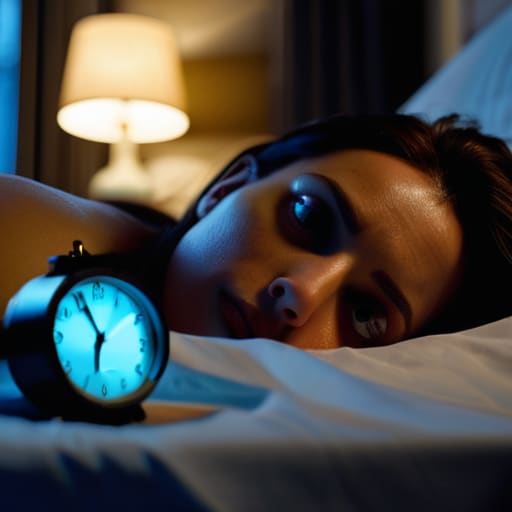
There is a specific kind of exhaustion that comes from performing the “labor” of sleep. I see it in my clinic every week: patients who have turned their bedroom into a high-stakes laboratory of wellness, ticking off every box from magnesium supplements to blackout curtains, yet they remain wide awake, staring at the ceiling. This is the trap. When you treat sleep as a task to be conquered through sheer willpower, you trigger a state of psychological arousal and sleep disruption that is incredibly difficult to break. You aren’t just tired; you are alert because your brain has flagged the act of sleeping as a problem that needs solving.
The more you monitor your breathing or count the minutes until your alarm goes off, the more you reinforce the idea that sleep is something you must earn. This cycle of hyper-vigilance is exactly what we aim to address in cognitive behavioral therapy for insomnia. Instead of adding more “to-do” items to your nightly routine, the solution often involves a counterintuitive surrender. Sometimes, the most effective way to invite sleep back in is to stop chasing it entirely and accept that, for tonight, you might just be lying in the dark.
Decoding Psychological Arousal and Sleep the Invisible Barrier

In my years in the clinic, I’ve seen patients who are physically exhausted but mentally vibrating. They describe it as a “racing brain,” but in clinical terms, we are looking at psychological arousal and sleep disruption. It isn’t just that you are thinking about your to-do list; it is that your nervous system has flagged the act of lying in the dark as a threat. When you begin to associate your bed with the frustration of being awake, you trigger a sympathetic nervous system response—the fight or flight mechanism—that is the absolute antithesis of sleep.
This is where the cycle becomes self-perpetuating. You aren’t just “tired”; you are hyper-vigilant. You start monitoring your own heart rate or counting the minutes until your alarm goes off, which only deepens the state of arousal. While many people search for quick-fix relaxation techniques for sleeplessness, these often fail because they are just more “tasks” added to your nightly checklist. If you want real relief, you have to address the underlying anxiety through structured approaches like cognitive behavioral therapy for insomnia (CBT-I), which teaches you how to dismantle that physiological tension rather than just trying to mask it with a breathing app.
Why Your Anxiety Is Sabotaging Sleep Onset Insomnia Relief
The problem with most “remedies” for sleep onset insomnia relief is that they treat the symptom rather than the driver. When you lie there, staring at the ceiling and mentally calculating how many hours of rest you’ll get if you fall asleep right now, you aren’t just tired; you are in a state of high alert. This is the physiological reality of anxiety: your body thinks it needs to stay awake to monitor a threat, even if that threat is just your own racing thoughts. You cannot “force” a biological process to happen through sheer willpower, and the harder you negotiate with your brain, the more it pushes back.
In the clinic, I often see patients who have become experts at various relaxation techniques for sleeplessness, yet they still struggle. They are performing “relaxation” as a task to be mastered, which only adds to the pressure. Instead of fighting the wakefulness, we often look toward strategies like cognitive behavioral therapy for insomnia (CBT-I), which focuses on breaking the cycle of fear. One of the most effective, if counterintuitive, methods is the paradoxical intention technique—essentially, giving yourself permission to stay awake. By removing the “goal” of sleep, you stop the frantic pursuit that keeps your nervous system on edge.
How to Stop Trying Too Hard to Sleep Effectively
The first step is to stop treating your bedroom like a training ground. If you are lying there mentally rehearsing your breathing or counting sheep, you are merely reinforcing the connection between your bed and your frustration. Instead of fighting the wakefulness, I often suggest the paradoxical intention technique. It sounds counterintuitive—and it is—but the goal is to stop the struggle by essentially giving yourself permission to stay awake. By removing the “goal” of sleep, you lower the stakes, which is often the only way to break the cycle of psychological arousal and sleep deprivation.
If the struggle feels deeply ingrained, you shouldn’t be looking for a new supplement; you should be looking at cognitive behavioral therapy for insomnia (CBT-I). This isn’t about “relaxing” in the way a spa brochure suggests; it’s about retraining your brain to stop viewing the night as a battlefield. We need to move away from frantic, last-minute relaxation techniques for sleeplessness and toward a more structured way of managing your relationship with the dark. It’s about reclaiming the bed as a place of rest, rather than a place of performance.
The Paradoxical Intention Technique Surrendering to the Night
If you’ve spent months lying in the dark, mentally rehearsing how much you need to sleep, you’ve already fallen into the trap of performance anxiety. This is where the paradoxical intention technique comes in. It sounds counterintuitive—bordering on madness, really—but it is a cornerstone of cognitive behavioral therapy for insomnia. Instead of lying there fighting to close your eyes, you do the exact opposite: you lie there with your eyes open, making a conscious, gentle effort to stay awake.
The goal isn’t to pull an all-nighter; it’s to strip away the “effort” of trying to sleep. When you stop treating sleep as a task to be completed, you lower the psychological arousal and sleep interference that keeps your brain in high gear. By giving yourself permission to simply exist in the dark without the pressure of drifting off, you stop the frantic internal negotiation. It is about relinquishing the struggle. When you finally stop demanding that sleep happens, it often finds its way to you through the back door.
Moving Beyond Relaxation Techniques Toward Cognitive Behavioral Therapy
I see it every week in the clinic: patients who have tried every breathing exercise, every lavender oil, and every guided meditation under the sun, only to find themselves staring at the ceiling at 3:00 AM, more frustrated than when they started. The problem is that most relaxation techniques for sleeplessness are being used as a defensive weapon. You aren’t relaxing; you are performing relaxation in an attempt to force a physiological state that simply won’t respond to coercion. It becomes just another task on your to-do list, adding to the very psychological arousal and sleep disruption you are trying to escape.
If you want to actually break the cycle, you have to move past these superficial fixes and look toward cognitive behavioral therapy for insomnia (CBT-I). Unlike a quick breathing app, CBT-I doesn’t just ask you to “calm down.” It addresses the underlying mechanics of how your brain has learned to associate your bed with struggle rather than rest. It’s about restructuring the thoughts that trigger your nighttime panic and, more importantly, retraining your body’s natural drive. We aren’t looking for a way to make yourself sleep; we are looking to remove the obstacles that are preventing sleep from happening naturally.
Five ways to stop performing for your pillow
- Stop treating your bedroom like a training ground. If you’re lying there mentally rehearsing breathing exercises or “trying” to relax, you aren’t resting; you’re performing. If you aren’t asleep after what feels like twenty minutes of tossing, get out of bed. Go sit in a dim chair in another room and do something mind-numbing until your body actually signals it’s ready. The bed should be for sleep and intimacy, not for a nightly battle of wills.
- Throw your sleep tracker in a drawer. I see this in clinic every week: people arriving with high-stress levels because their wearable told them they had “poor REM sleep.” Your watch is an accelerometer, not a polysomnograph. It cannot see your brain waves. Stop letting a piece of plastic dictate how you feel about your own biology; if you feel rested, you are rested.
- Fix your wake-up time before you worry about your bedtime. Most people try to “force” an earlier bedtime to compensate for a bad night, which only increases the pressure to perform. It doesn’t work. Set a consistent wake-up time—even on weekends—and stick to it. Let the sleep drive build up naturally throughout the day rather than trying to manufacture it by force at 10 PM.
- Lower the thermostat. You cannot “will” yourself into sleep if your core temperature is struggling to drop. A bedroom that is too warm is a physiological barrier that no amount of mindfulness can overcome. Aim for a cooler environment; it’s one of the few pieces of advice that actually has the physiological backing to support the transition into sleep.
- Stop the “sleep math.” If you find yourself calculating, “If I fall asleep right now, I’ll only get five hours and twelve minutes,” you have already triggered a sympathetic nervous system response. You are essentially prepping your body for a fight. When those calculations start, acknowledge them, and then consciously decide that the total number of hours matters less than the fact that you are currently resting.
The Bottom Line
Stop treating sleep like a task to be conquered; the more effort you exert to force sleep, the more you signal to your brain that the night is a period of high alert rather than rest.
Differentiate between “bad habits” and “disorders”—if your struggle is driven by an irregular wake time or a stuffy bedroom, lifestyle changes will help, but if it’s psychological arousal, you need clinical tools like CBT-I, not just another lavender pillow spray.
Ignore the “sleep scores” on your wearable; they are not clinical measurements, and obsessing over a fluctuating number is just another way of keeping your nervous system wired and awake.
Frequently Asked Questions
If I stop trying so hard to sleep, won't I just end up lying there staring at the ceiling for hours, which feels even more exhausting?
I hear this every single day in the clinic, and I get it—the thought of lying there in the dark, acutely aware of every passing minute, feels like a special kind of torture. But here’s the truth: the exhaustion you feel isn’t just from lack of sleep; it’s from the mental combat of trying to sleep. When you stop fighting, you stop fueling the arousal. We aren’t aiming for instant unconsciousness; we’re aiming to lower the stakes.
How can I tell if my struggle to fall asleep is just a bad habit of "trying too hard" or if I actually have an underlying clinical issue like sleep apnea?
It’s the question I get most often in clinic. If you find yourself staring at the ceiling, mentally rehearsing how to relax, you’re likely caught in that “trying too hard” cycle. However, if you’re waking up gasping, snoring loudly, or feeling like you’ve run a marathon despite eight hours in bed, that’s not a habit—that’s a physiological red flag. One is a struggle with the mind; the other is a struggle with your airway.
My wearable says I'm barely getting any deep sleep when I feel fine—should I be using that data to adjust my efforts, or should I just ignore it entirely?
Ignore it. Honestly, if you feel fine, the data is noise. These wearables aren’t clinical polysomnography; they aren’t measuring brain waves, they’re guessing based on movement and heart rate. When you start “adjusting your efforts” based on a flawed sleep score, you’re just feeding the very psychological arousal we’ve been talking about. If you feel rested, you are rested. Stop letting a piece of plastic on your wrist dictate your reality.