
I spent a decade in darkened sleep labs, watching patients struggle under a tangle of wires, and if there is one thing I’ve learned, it’s that the internet is doing you no favours. Most of the “expert” advice on how to manage sleep anxiety feels like it was written by someone who has never actually stayed awake until 3:00 AM staring at a ceiling fan. They tell you to buy a $300 ring to track your REM cycles or to drink chamomile tea like it’s a magic potion, when in reality, staring at your “sleep score” the moment you wake up is often the very thing fueling your panic.
I am not here to sell you a gadget or a lifestyle brand. I want to give you the truth from the perspective of someone who has spent seventeen years distinguishing between a bad habit and a clinical pathology. We are going to cut through the noise and look at what actually works, separating the physiological realities of your nervous system from the meaningless data your wearable is feeding you. This isn’t about “trying harder” to sleep; it’s about understanding the mechanics of your rest so you can finally stop fighting against it.
Understanding How to Manage Sleep Anxiety

When I sit across from a patient in the clinic, the first thing I notice isn’t their fatigue, but the tension in their shoulders. They aren’t just tired; they are bracing for the night. Managing this requires moving past the superficial “don’t look at your phone” advice and addressing the physiological feedback loop. If your brain has learned to associate the bed with a state of high alert, you can’t simply wish that away with a lavender pillow spray.
For many, the gold standard is cognitive behavioral therapy for insomnia (CBT-I). This isn’t about “relaxing”; it’s about retraining your brain’s relationship with your mattress. While basic sleep hygiene techniques—like keeping the room cool or dimming the lights—are necessary foundations, they often fail if you are trapped in a cycle of overcoming nighttime racing thoughts. You have to tackle the cognitive distortion that sleep is something you must “achieve” through sheer willpower. We need to stop treating sleep like a performance and start treating it like a biological process that requires the absence of threat.
Key Things to Know
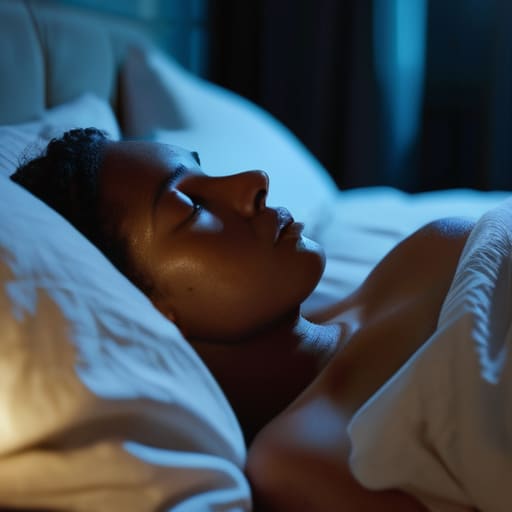
First, we need to draw a hard line between “feeling anxious about sleep” and having a clinical cycle of arousal. If you find yourself lying awake, heart racing, because you are terrified of the exhaustion waiting for you tomorrow, you aren’t just dealing with a bad habit. This is where cognitive behavioral therapy for insomnia (CBT-I) becomes the gold standard. Unlike the endless list of “tips” you see on Instagram, CBT-I actually retrains your brain to stop viewing the bed as a battleground. It moves you away from trying to force sleep and toward dismantling the mental architecture that keeps you awake.
Second, stop looking for a magic pill in your wellness apps. Most people try to fix their anxiety by layering on more complicated sleep hygiene techniques, like buying expensive weighted blankets or drinking magnesium tea, when the real issue is often a lack of boundaries between their “on” time and their “off” time. If you are constantly scrolling or working right up until your head hits the pillow, you aren’t giving your nervous system a chance to downshift. You need to focus on overcoming nighttime racing thoughts by creating a buffer zone that actually signals safety to your brain, rather than just adding more tasks to your nightly to-do list.
Practical Tips and Steps
First, let’s address the elephant in the room: the “trying harder” trap. If you are lying in the dark, mentally rehearsing your to-do list or panicking about the fact that you aren’t asleep yet, you are actually training your brain to associate your bed with alertness. This is where cognitive behavioral therapy for insomnia (CBT-I) becomes invaluable. It isn’t about “relaxing”; it’s about retraining the neurological link between your mattress and sleep. If your mind is spinning, get out of bed. Go to another room, keep the lights low, and do something mundane until you feel that genuine heavy-lidded pull.
Secondly, we need to distinguish between helpful rituals and obsessive checking. I see so many patients who have elaborate calming bedtime routines that have actually become triggers for more stress. If your “routine” involves checking your heart rate on your watch or calculating how many hours of sleep you’ll get if you drift off right now, you aren’t relaxing—you’re auditing. Instead, focus on sensory grounding. Use simple relaxation exercises for sleep, like progressive muscle relaxation, where the goal isn’t to force sleep, but simply to inhabit your body without the mental noise.
Common Mistakes to Avoid
The biggest mistake I see in the clinic is the attempt to “force” sleep through sheer willpower. People come to me exhausted because they’ve spent months trying to master every single one of the latest sleep hygiene techniques they read about on Instagram, only to find that the more they obsess over the “perfect” environment, the more wired they become. If you are lying in the dark, staring at the ceiling and mentally auditing your room temperature or your blue-light exposure, you aren’t relaxing; you are performing a task. Sleep is a physiological process that happens when you stop trying to control it.
Another trap is the reliance on “quick fix” gadgets. I cannot stress this enough: your smartwatch is not a diagnostic tool. Many patients arrive in my office in a state of high distress because their wearable gave them a “poor” sleep score, which then triggers a cycle of overnight racing thoughts. They are essentially treating a data point as a medical reality. If you find yourself spiraling because of a digital graph, stop. Instead of chasing a score, look toward more robust, evidence-based approaches like cognitive behavioral therapy for insomnia, which addresses the underlying patterns rather than just the symptoms.
Final Thoughts
If you’ve spent months staring at the ceiling, convinced that your brain has simply forgotten how to turn off, please know that you aren’t failing at being human. There is a profound difference between a temporary period of stress and a clinical pattern that requires professional intervention. While calming bedtime routines and better temperature control can fix many lifestyle-driven issues, they aren’t a magic wand for everyone. If you find yourself trapped in a cycle of dread every time the lights go out, it’s time to stop trying to “will” yourself into sleep and start looking for evidence-based support.
For many of my patients, the turning point isn’t a new gadget or a specific supplement, but rather engaging in cognitive behavioral therapy for insomnia (CBT-I). This isn’t about “trying harder”; it’s about retraining the neurological pathways that have become wired to associate your bed with alertness and frustration. Whether you are fine-tuning your habits or navigating a genuine disorder, the goal is the same: to move away from the frantic pursuit of a “perfect” night and toward a sustainable, peaceful relationship with rest.
Five ways to stop the midnight mental marathon
- Stop checking the clock. I see it in the clinic all the time—patients who wake up, see it’s 3:14 AM, and immediately begin a frantic mental calculation of how many hours of REM they’ve lost. Turn the clock to the wall. Knowing the time only feeds the anxiety; it doesn’t solve the sleep deficit.
- Get out of bed if the racing thoughts won’t stop. Your bed should be a sanctuary for sleep and intimacy, not a wrestling ring for your anxieties. If you’ve been tossing and turning for twenty minutes feeling your heart rate climb, get up. Go to another room, keep the lights low, and do something mind-numbing until your body actually feels heavy again.
- Ban the “sleep score” obsession. If you are using a wearable to track your anxiety, you are likely making it worse. These devices use proxies like movement and heart rate variability to guess your sleep stages; they are not clinical polysomnography. Seeing a “poor sleep score” on an app can trigger a cortisol spike that ensures you won’t sleep well tomorrow.
- Schedule your “worry time” during the daylight. If your brain waits until your head hits the pillow to process the day’s stressors, it’s because you haven’t given it a dedicated space to do so. Sit down with a pen and paper at 5:00 PM and write down everything that is making you anxious. Once it’s on paper, you can tell your brain, “We’ve dealt with this for today; we’ll pick it up tomorrow.”
- Focus on physiological cooling rather than mental suppression. You cannot “will” yourself into being calm, but you can manipulate your biology. A drop in core body temperature is a biological signal for sleep. Instead of trying to think your way out of anxiety, take a warm bath or lower your thermostat. It is much easier to trick your nervous system into relaxing than it is to command your mind to be silent.
The Bottom Line
Stop treating your wearable’s sleep score as gospel; a piece of plastic on your wrist cannot tell the difference between a genuine physiological disorder and a night of restless thinking.
Distinguish between lifestyle habits and clinical issues—if your anxiety is driven by an irregular wake time or a stuffy bedroom, “trying harder” to sleep will only make it worse.
If you have been told for years that your sleep struggle is “just stress” but your symptoms persist, stop listening to generic hygiene advice and seek a clinical assessment.
Frequently Asked Questions
If my sleep tracker says I had poor sleep quality, but I feel fine the next day, should I actually be worried about anxiety?
If you feel fine, you are fine. Please, listen to me: your wearable is not a medical device. It is essentially a glorified pedometer that uses algorithms to guess what your brain is doing. If your tracker says you had “poor quality” sleep but you aren’t dragging through your day, the data is noise. Don’t let a flashing red circle on your wrist create the very anxiety you’re trying to avoid. Trust your body, not the sensor.
How can I tell if my racing thoughts at night are just a bad habit or a clinical sleep disorder that needs a formal study?
It’s a fine line, isn’t it? If your racing thoughts are fueled by a frantic attempt to “catch up” on sleep because your wake times are all over the place, you’re likely dealing with a habit issue. But if you feel physically wired, or if your brain simply refuses to shut down despite a strict routine and a cool room, that’s different. If it feels like your nervous system is stuck ‘on,’ it’s time to stop guessing and seek a clinical assessment.
Is it better to try and "force" myself to relax with breathing exercises, or should I just get out of bed when the anxiety hits?
If you’re lying there with your heart racing, trying to “force” relaxation often backfires; it just turns breathing exercises into another stressful task you’re failing at. If the anxiety feels heavy, get out of bed. Go to another room, keep the lights low, and do something mindless until your body actually feels heavy again. We need to stop teaching your brain that the bed is a wrestling ring for your anxieties.