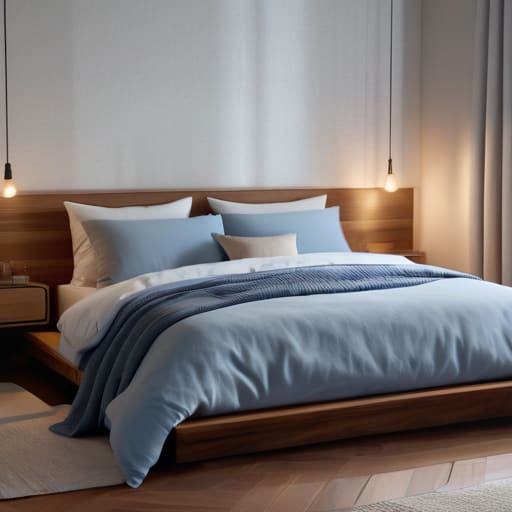
I spent a decade in the dark, hunched over a monitor in a clinical sleep lab, watching the raw data of hundreds of people struggling to find peace. I’ve seen every expensive “sleep hack” under the sun, and frankly, most of them are a waste of your money. People will spend hundreds on weighted blankets or specialized essential oil diffusers, thinking they are improving bedroom environment for better rest, when they really just need to turn the radiator down and stop checking their wrist for a “sleep score” that isn’t actually a measurement of anything.
I’m not here to sell you a lifestyle brand or a new gadget. My goal is to cut through the noise and tell you what actually matters from a physiological perspective. I want to help you distinguish between a bedroom that is genuinely sabotaging your sleep and a clinical disorder that no amount of blackout curtains can fix. We are going to look at the evidence, ignore the influencers, and focus on the practical, biological realities of how your space affects your ability to actually drift off.
The Real Impact of Bedroom Temperature on Sleep Quality

It is also worth remembering that optimizing your physical space is only half the battle; the mental clutter you carry into that room matters just as much. I often tell my patients that you can have the most expensive, temperature-regulating linen in the world, but if your mind is racing with the anxieties of the day, you won’t find rest. Sometimes, finding a sense of shared understanding is more effective than any blackout curtain. I’ve found that connecting with this community can be a wonderful way to find that emotional grounding that makes the bedroom feel like a sanctuary again, rather than a battlefield for your thoughts.
We often talk about “sleep hygiene” as if it’s a series of chores, but it’s actually about managing your biology. Your core body temperature needs to drop by about one degree Celsius to initiate sleep; it’s a physiological trigger, not a suggestion. When you’re tossing and turning because your duvet feels like a furnace, you aren’t experiencing a psychological struggle with sleep—you are experiencing a thermoregulatory failure. The impact of bedroom temperature on sleep quality is profound because if your body can’t shed that heat, your brain stays in a state of high alert, preventing you from drifting into those deeper, restorative stages.
This is where many people get stuck in a cycle of frustration. They try every breathing technique in the book, yet they still wake up at 3:00 AM sweating. The issue isn’t your mind; it’s your environment. I often tell my patients that bedding materials for temperature regulation—think breathable cotton or linen rather than heavy, synthetic microfibers—are far more effective than any expensive meditation app. If you can’t get your temperature down, you’re essentially trying to drive a car with the handbrake on.
Bedding Materials for Temperature Regulation Fact vs Fiction
You’ll see endless marketing claims suggesting that a specific “cooling” mattress topper or a high-tech weighted blanket is the magic bullet for your restless nights. I find that hard to swallow. In my experience, most people don’t need a £2,000 smart bed; they need to understand how bedding materials for temperature regulation actually interact with their skin. Synthetic fabrics like polyester are essentially plastic; they trap heat against your body, creating a microclimate that keeps your core temperature too high for deep, restorative sleep.
If you want to actually manage your thermal environment, look toward natural fibers. Linen and cotton are breathable because they allow for moisture wicking, which is vital when your body is trying to shed heat during the transition into sleep. I often tell my patients that optimizing sleep hygiene through bedroom design starts with the tactile reality of what you are lying on. If your duvet is a heavy, non-breathable synthetic trap, you aren’t battling insomnia—you’re just overheating. Stop chasing the latest gadget and start looking at the weave of your sheets.
Beyond the Thermostat: Four Things That Actually Matter
- Stop treating your bedroom like a multi-purpose lounge. If you’re scrolling through emails or watching high-octane thrillers in bed, you are training your brain to associate that space with alertness rather than physiological shutdown. Your bed is for sleep and intimacy; everything else stays in the living room.
- Light isn’t just about the darkness; it’s about the spectrum. That dim, amber-toned lamp in the corner is infinitely better for your circadian rhythm than the harsh, blue-heavy glare of a ceiling light or a tablet screen. If you can see your own hand clearly, it’s probably too bright for a wind-down.
- Auditory clutter is a silent sleep killer. You don’t necessarily need expensive “sleep machines,” but you do need consistency. If you live on a busy street, a steady, low-frequency white noise can mask those sudden, cortisol-spiking sounds—like a car door slamming—that jerk you out of a light sleep stage.
- Get rid of the visual chaos. I see this in clinic all the time: people who are mentally exhausted but their bedroom looks like a storage unit. A cluttered room creates a subtle, constant cognitive load. If your brain has to process a pile of laundry or a stack of paperwork the moment you lie down, it’s never going to fully transition into rest.
- The “Get Up” Rule. This isn’t about what you do at night, but what you do in the morning. Your bedroom environment is only half the battle; if you don’t have a consistent wake time, you’re fighting a losing war against your own biology. Even if you had a rubbish night, get up at the same time. It’s the only way to anchor your internal clock.
Before You Buy a New Mattress
At the end of the day, optimizing your bedroom isn’t about chasing the latest biohacking trend or buying a thousand-pound weighted blanket because a TikTok influencer told you to. It’s about the basics: getting your thermostat down to a reasonable level and choosing bedding that actually breathes rather than trapping heat against your skin. If you fix your temperature and your environment but you’re still lying there wide awake with a racing heart, please stop blaming your duvet. You cannot solve a physiological sleep disorder with better linen, and you shouldn’t have to. We have to be able to distinguish between a room that is too stifling and a brain that simply won’t switch off.
My hope is that you stop treating sleep like a performance metric to be managed and start treating it like a biological necessity that deserves the right conditions. Whether you are adjusting your environment to fix a simple habit or preparing yourself for a clinical conversation about a genuine disorder, remember that you deserve clarity. Don’t let the noise of the sleep industry make you feel like you’re failing at something as natural as resting. Get your room cool, get your bedding right, and if the struggle persists, seek out a professional who actually listens.