I spent my first decade in the NHS sleep clinic watching people struggle through the night, tethered to a headbox and terrified that their exhaustion was a sign of something catastrophic. Now, I see those same fears play out on smartphone screens. You’ve likely spent your evening scrolling through endless, conflicting threads, trying to figure out how to evaluate sleep advice online without losing your mind. Most of it is either expensive nonsense designed to sell you a new supplement or oversimplified “hacks” that ignore how actual human physiology works. It is exhausting to be told that your struggle is just a lack of discipline when, in reality, you might be navigating a genuine medical hurdle that requires actual clinical expertise, not a wellness influencer’s opinion.
I’m not here to sell you a subscription or a “sleep-optimized” lifestyle. My promise to you is much simpler: I am going to help you strip away the noise. We are going to look at what the science actually says, distinguish between a lifestyle habit and a clinical disorder, and finally figure out which pieces of internet wisdom are worth your time and which are just expensive distractions.
Why Most Online Sleep Advice Is Actually Useless for You
The problem with most online sleep advice is that it treats everyone like they’re starting from the same baseline. You’ll see influencers claiming that a specific magnesium supplement or a “sleep hack” involving blue-light glasses will fix your exhaustion, but they’re conflating lifestyle optimization with clinical pathology. If you are struggling because your bedroom is a sauna and your wake-up time shifts by two hours every weekend, a wellness trend won’t save you; you need better discipline and a thermostat.
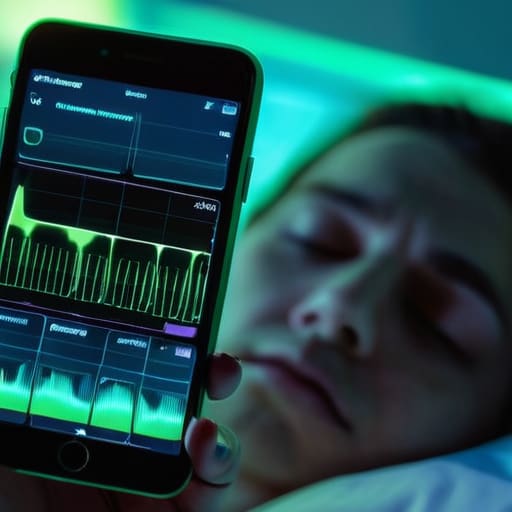
However, if you actually have sleep apnea or restless leg syndrome, all the “sleep hygiene” in the world is just rearranging deck chairs on the Titanic. This is where the danger lies: spotting misinformation in sleep hygiene becomes a matter of medical necessity. Most content creators are excellent at selling a lifestyle, but they are terrible at identifying pseudoscience in sleep health. They can’t tell you if your breathing is actually collapsing three times a minute, and they certainly won’t tell you that your $300 wearable is essentially guessing your sleep stages based on movement. They offer a one-size-fits-all solution for a problem that is often deeply, medically specific.
How to Evaluate Sleep Advice Online Without Falling for Hype
When you’re scrolling through a feed at 3:00 AM, everything looks like a solution. The problem is that the person selling you a “sleep-inducing” magnesium blend or a revolutionary breathing technique often has no idea what a polysomnogram actually looks like. To avoid the noise, you have to start verifying sleep expert credentials. Ask yourself: is this person a clinician who understands the physiological mechanics of sleep, or are they a lifestyle influencer who had one good night’s rest and decided to monetize it?
The easiest way to navigate this is to look for the distinction between scientific studies vs wellness trends. If an article claims a specific supplement will “reset your brain chemistry,” be skeptical. Real sleep science is rarely that dramatic; it’s usually about incremental changes to your circadian rhythm or managing respiratory events. Spotting misinformation in sleep hygiene becomes much easier when you realize that most “hacks” are just expensive ways to mask symptoms rather than addressing the underlying cause. If the advice sounds like a miracle, it’s probably just marketing.
Identifying Pseudoscience in Sleep Health and Trendy Wellness Miracles
When you’re scrolling through social media at 2:00 AM, it’s easy to fall for the “miracle” cure. You’ll see influencers claiming that a specific magnesium blend or a particular breathing pattern will instantly fix a decade of sleep issues. This is where identifying pseudoscience in sleep health becomes vital. Most of these “wellness miracles” are built on anecdotal evidence—someone’s personal feeling that worked for them—rather than rigorous, peer-reviewed data. In my clinic, I see the fallout of this: people spending hundreds on supplements that do nothing, while their actual underlying issue, like sleep apnea, goes untreated.
The real trick is evaluating sleep supplement claims by looking for what’s missing. If a product promises a “complete reset” or uses vague, scientific-sounding language without citing specific, large-scale clinical trials, be skeptical. Real science is often boring; it talks about incremental improvements and complex variables, not overnight transformations. If the advice sounds too good to be true, it almost certainly is. Don’t let a flashy marketing campaign replace the nuance of actual physiological science.
Verifying Sleep Expert Credentials vs Influencer Anecdotes
When you’re scrolling through a feed at 2:00 AM, it’s remarkably easy to mistake a charismatic person with a ring light for a medical professional. I see it constantly: an influencer with a “perfect” morning routine telling you that a specific magnesium brand or a certain breathing technique is the silver bullet for your exhaustion. They aren’t necessarily lying, but they are offering anecdotes, not evidence. There is a massive gulf between someone saying, “This worked for me,” and a clinician explaining the physiological mechanisms of sleep architecture. When you are verifying sleep expert credentials, look for those who speak in probabilities and nuances rather than certainties and miracles.
The real danger lies in the way wellness trends hijack the language of science to sell a lifestyle. An influencer might cite a “study,” but they often strip away the context—ignoring sample sizes, funding sources, or whether the results actually apply to humans. Spotting misinformation in sleep hygiene requires you to ask: Who is this person, and what is their incentive? A doctor in a clinic has an incentive to get you a diagnosis; a person selling a subscription has an incentive to keep you searching for a cure. Always prioritize the person who acknowledges what we don’t yet know over the one who claims to have solved it.
Scientific Studies vs Wellness Trends Finding the Real Evidence
When you’re scrolling through a wellness feed at 2:00 AM, the line between a peer-reviewed finding and a clever marketing campaign becomes incredibly thin. Most influencers will present a single, small-scale study—often performed on mice or a group of twenty college students—as if it were a universal law of human biology. This is where scientific studies vs wellness trends collide. A real clinical finding is usually boring; it’s nuanced, it carries caveats, and it rarely promises a “miracle cure” for your exhaustion. If an article claims a specific supplement will “reset your circadian rhythm overnight,” they aren’t sharing science; they are selling a product.
To navigate this, you need to practice a bit of critical thinking for health information. Ask yourself: is this claim addressing a physiological mechanism, or is it just leveraging a catchy buzzword? When I see patients, I look at their polysomnography data—the actual electrical activity of their brain and muscles. Trends, on the other hand, tend to focus on the surface level. If you find yourself evaluating sleep supplement claims that promise to bypass the need for consistent wake times or temperature regulation, walk away. Real science respects the complexity of the human body; wellness trends try to simplify it for profit.
Critical Thinking for Health Information and Evaluating Supplement Claims
When you start looking into evaluating sleep supplement claims, you’ll quickly notice a pattern: the more “miraculous” the promise, the thinner the evidence. I see it constantly in my clinic—patients coming in after spending a small fortune on magnesium blends or proprietary “sleep blends” that they saw on a sponsored Instagram reel. Most of these products are designed to sell a feeling, not to fix a physiological deficit. If a supplement claims to “reset your circadian rhythm” or “guarantee eight hours of deep sleep,” your internal alarm bells should be ringing. Real science is rarely that tidy, and it certainly doesn’t come in a pretty, pastel-colored bottle with a subscription model.
Effective critical thinking for health information means looking past the marketing jargon to see what is actually being studied. Are they citing a randomized, double-blind, placebo-controlled trial, or are they just quoting a handful of anecdotal testimonials? There is a massive gulf between a substance that might slightly assist relaxation and a clinical intervention for a sleep disorder. If you aren’t careful, you’ll end up chasing wellness trends that do nothing for your actual sleep architecture while potentially masking symptoms that a specialist needs to see.
Five ways to spot a sleep guru from a mile away
- Look for the “magic pill” trap. If someone is selling a specific supplement, a particular brand of weighted blanket, or a “secret” ritual as a cure-all, walk away. Real sleep science is rarely that tidy, and it certainly isn’t sold in a single subscription box.
- Check if they are conflating “lifestyle hygiene” with “clinical pathology.” There is a massive difference between someone who needs to stop scrolling on their phone at midnight and someone who has obstructive sleep apnea. If the advice treats every problem like it’s just a matter of “willpower” or “routine,” they aren’t talking to the people who actually need medical help.
- Demand to see the mechanism, not just the anecdote. An influencer saying, “I took this magnesium and now I sleep like a baby,” is a story, not science. A credible source will explain how a physiological process works—even if they are simplifying it—rather than just asking you to take their word for it.
- Beware of the “Optimization” obsession. Much of the online advice is aimed at people trying to squeeze an extra 2% of efficiency out of their REM cycles. If the advice makes you feel anxious about your “sleep score” or hyper-fixated on perfection, it’s likely more about wellness performance than actual health.
- Ask yourself: “Does this advice account for my individual biology?” If a piece of advice claims to work for everyone, everywhere, at all times, it is fundamentally flawed. Sleep is deeply personal and highly variable; anyone promising a universal blueprint is ignoring everything we know about human physiology.
The Bottom Line
Stop treating every “sleep hack” as a medical intervention; most online advice is just lifestyle management, and applying it to a clinical disorder is like trying to fix a broken leg with a better pillow.
Your wearable’s “sleep score” is a data point, not a diagnosis—if your tracker says you’re exhausted but your doctor says you’re fine, trust the clinical evidence over the algorithm.
Focus on the fundamentals first—consistent wake times and a cool room—before you spend a penny on supplements or gadgets that promise to fix a problem they aren’t actually measuring.
Frequently Asked Questions
If my wearable says I had a "poor sleep score" but I actually feel rested, should I trust the device or my own body?
Trust your body. Every single time. I’ve spent seventeen years scoring polysomnograms—actual medical data—and I can tell you that your wearable is essentially guessing based on movement and heart rate. It is not measuring your brain waves. If your device gives you a “poor score” but you wake up feeling refreshed and ready for the day, the device is wrong. Don’t let a piece of plastic on your wrist manufacture anxiety where none exists.
How can I tell if a supplement being pushed by a wellness influencer is actually backed by clinical research or just clever marketing?
Look, if an influencer is selling a “sleep gummy” or a proprietary blend, they aren’t selling science; they’re selling a lifestyle. Real clinical research happens in controlled settings, usually looking at specific dosages of single compounds, not a “magic mix” in a pretty bottle. Before you buy, ignore the glowing testimonials and search PubMed or Google Scholar yourself. If the only “studies” they link to are funded by their own brand, run the other way.
At what point does "fixing my habits" stop being the answer and actually become a medical necessity to see a specialist?
If you’ve spent a month tightening your wake-up time, cooling your room, and ditching the screen, but you’re still gasping for air mid-sleep or waking up feeling like you haven’t slept at all, stop playing detective. Habit hygiene is for lifestyle issues; it won’t fix obstructive sleep apnoea or periodic limb movement disorder. If your “bad habits” aren’t the culprit and your daytime fatigue is affecting your safety or sanity, it’s time for a clinical sleep study.