I spent my first decade in the NHS sleep clinic staring at EEG traces on a monitor while patients lay tethered to a headbox, dreaming of a magic number. I’ve seen the panic in their eyes when they realize they aren’t hitting some arbitrary target, and I’ve seen the frustration of those who have been told they just need to “try harder.” There is a massive, expensive industry currently trying to sell you the idea that there is a universal, golden quantity of rest, but the truth is that the search for how much sleep people actually need is often a distraction from the real issues. Most of the “optimized” sleep schedules you see on social media are nothing more than expensive guesswork that ignores your unique physiology.
I’m not here to give you a new set of rules to obsess over or to tell you that your wearable’s sleep score is a medical fact. Instead, I want to draw a line between the people who are simply struggling with poor sleep hygiene and those who are dealing with a legitimate clinical disorder. I will tell you what the science actually says, what my seventeen years of clinical experience has taught me, and how to stop chasing a number that might not even exist for you.
Forget the Eight Hour Myth How Much Sleep People Actually Need
If you’ve spent any time on social media lately, you’ve likely been told that eight hours is the magic number. It’s a tidy, convenient figure, but in my seventeen years in the clinic, I have rarely seen a patient who fits that mould perfectly. The truth is that there is significant individual sleep variability factors at play; some people are biologically wired to thrive on seven hours, while others genuinely require nine to function without a fog of cognitive impairment.
When I look at the scientific evidence for sleep needs, it becomes clear that we should be talking about ranges rather than rigid targets. Obsessing over hitting an exact timestamp is a fast track to anxiety, which—as anyone who has sat in my consulting room knows—is the enemy of rest. Instead of chasing a specific number, we need to look at how you actually feel during the day. Are you experiencing persistent sleep deprivation symptoms like midday crashes or irritability, or are you simply measuring your rest against an arbitrary, arbitrary standard? Your body usually knows its own requirements far better than a generic infographic does.
The Trap of Individual Sleep Variability Factors
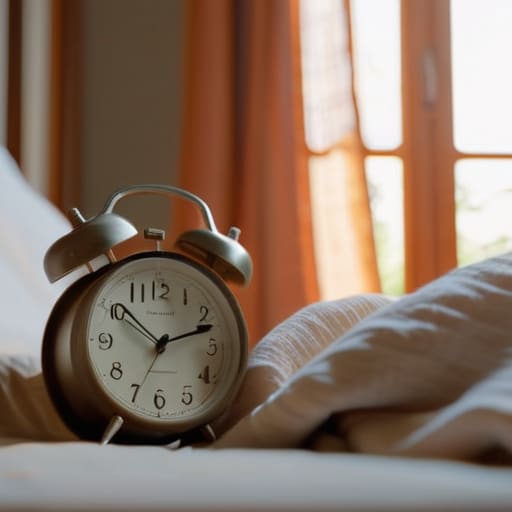
The problem with the “one size fits all” approach is that it ignores the messy reality of biology. In the clinic, I see people who are genuinely devastated because they can’t hit that arbitrary eight-hour mark, even though they feel perfectly fine. This is where individual sleep variability factors come into play. Your genetics, your metabolic rate, and even your age play a role in determining your baseline. While there is a general guideline for optimal sleep duration by age, trying to force yourself into a rigid window often does more harm than good by inducing unnecessary performance anxiety.
It isn’t just about the quantity of hours, either; it’s about how those hours interact with your internal clock. We have to look at the relationship between your circadian rhythm and sleep cycles to understand why one person feels refreshed after six hours while another is a zombie without nine. If you are obsessing over a number on a screen rather than how you actually feel when you stand up in the morning, you’re chasing a ghost. We need to stop treating sleep like a math equation and start treating it like a biological variable.
Optimal Sleep Duration by Age Beyond the Generic Advice
The problem with most health websites is that they hand you a single, static number and expect it to work for a toddler and a retiree alike. In the clinic, I see the fallout of this “one size fits all” approach every day. The optimal sleep duration by age isn’t a suggestion; it is a biological requirement that shifts as our brains and bodies evolve. A teenager isn’t just being “difficult” when they stay up late; they are navigating a massive shift in their circadian rhythm and sleep cycles that makes early rising a physiological battle.
As we move into middle age and beyond, the conversation changes. It’s rarely about needing more hours, but rather about the increasing fragility of those hours. You might find your sleep becomes more fragmented, which often leads people to mistake natural aging for chronic insomnia. This is where the distinction becomes vital: we aren’t just looking at the clock, but at how the impact of sleep quality on health changes as our architecture shifts. If you are trying to apply a twenty-year-old’s sleep schedule to a fifty-year-old’s biology, you are fighting a losing battle against your own nervous system.
Circadian Rhythm and Sleep Cycles Why Timing Matters More
It isn’t just about the quantity of hours you spend under the duvet; it’s about when those hours actually occur. You can sleep for nine hours straight, but if you’re fighting your internal clock, you’ll still wake up feeling like you’ve been hit by a bus. This is where the interplay between circadian rhythm and sleep cycles becomes vital. Your body operates on a biological timetable that expects consistency. When you constantly shift your bedtime to match a social calendar or a late-night Netflix binge, you aren’t just “sleeping late”—you are effectively inducing a state of permanent jet lag.
In the clinic, I see this often: patients who are obsessed with hitting a specific number of hours but ignore the fact that their sleep is fragmented and poorly timed. True rest requires moving through the necessary stages of light, deep, and REM sleep in a predictable sequence. If your timing is erratic, you disrupt these transitions, which is why you might experience lingering sleep deprivation symptoms despite “getting enough” rest. We need to stop treating sleep as a static block of time and start seeing it as a rhythmic, biological process.
Distinguishing Sleep Deprivation Symptoms From Genuine Disorders
This is where the clinical reality hits the fan. In my years in the clinic, I’ve sat across from countless people who are convinced they have a debilitating medical condition, only to find their “insomnia” is actually just a predictable consequence of lifestyle friction. If you are feeling foggy, irritable, or prone to mid-afternoon crashes, you are likely experiencing standard sleep deprivation symptoms caused by a mismatch between your lifestyle and your biology. It is often less about a broken brain and more about a broken routine—irregular wake times, too much blue light, or a bedroom that feels like a sauna.
However, we have to be careful not to sweep the real cases under the rug. There is a profound difference between being tired because your habits are messy and having a physiological issue like sleep apnea or restless leg syndrome. While most people can fix their rest by tightening up their environment, those with genuine disorders often find that even with “perfect” hygiene, they still wake up unrefreshed. We need to stop treating every bout of tiredness as a medical emergency, but we also need to stop telling people with legitimate pathologies that they just “need to try harder.”
The Scientific Evidence for Sleep Needs and Health Impact
When we look at the clinical data, we aren’t just talking about feeling a bit groggy on a Tuesday morning; we are looking at the physiological cost of chronic sleep debt. The scientific evidence for sleep needs is rooted in how our bodies manage metabolic waste and cellular repair. When you consistently undershoot your biological requirement, you aren’t just “tired”—you are actively disrupting your endocrine system and your glucose metabolism. I see the fallout of this in the clinic all the time: patients who have spent years treating their exhaustion as a personality trait, unaware that they are essentially running their engine on fumes.
It is also vital to understand the impact of sleep quality on health beyond just the number of hours spent unconscious. You can spend eight hours in bed, but if your sleep architecture is fragmented—if you aren’t moving through your necessary stages of deep and REM sleep—your brain isn’t actually doing the housekeeping it needs to do. We aren’t just looking for a duration; we are looking for restorative stability. Without it, the long-term risks to cardiovascular and cognitive health become very real, very quickly.
Stop Chasing the Number: Five Ways to Actually Measure Your Sleep
- Stop obsessing over the ‘eight-hour’ target. If you feel alert and functional during the day on seven hours, stop trying to force an extra sixty minutes of unconsciousness just because a generic infographic told you to.
- Use your wake-up time, not your bedtime, as your anchor. I ask this because your body doesn’t care when you closed your eyes; it cares when you consistently face the light. Consistency in your rising time does more for your sleep drive than any “sleep hygiene” ritual.
- Ignore your wearable’s “Sleep Score.” Those devices are measuring movement and heart rate variability, not brain waves. They are guessing, often poorly, and that guess is likely fueling your anxiety rather than solving your exhaustion.
- Learn to distinguish between “sleepiness” and “fatigue.” If you’re nodding off during a film, you’re sleep-deprived. If you feel heavy, unmotivated, and physically drained all day regardless of rest, we need to look at something more clinical than just a lack of hours.
- Audit your bedroom temperature before you audit your habits. You can try every magnesium supplement on the market, but if your room is a sauna, you aren’t going to get the deep, restorative stages of sleep your brain actually requires.
The Essentials
Stop chasing a magic number; your sleep needs are a moving target shaped by your age, your biology, and how consistent your wake-up time is.
Learn to distinguish between “lifestyle sleep debt”—caused by irregular schedules and warm rooms—and genuine clinical disorders that require medical intervention.
Ignore the “sleep score” on your wearable; it is a mathematical guess, not a medical measurement, and it often creates more anxiety than it solves.
Frequently Asked Questions
If my wearable says I only got five hours of sleep but I feel perfectly fine, should I be worried about a hidden sleep deficit?
If you feel fine, stop staring at the app. Your wearable isn’t measuring brain waves; it’s using movement and heart rate to make an educated guess. It’s often wrong. A “five-hour” reading is frequently just an error in detecting light sleep stages. If you’re alert, functional, and not relying on caffeine to survive the afternoon, you aren’t in a deficit. Trust your biology, not a glorified pedometer.
How can I tell if my daytime fatigue is just a result of a messy routine or if I actually have a clinical sleep disorder like apnea?
The easiest way to tell is to look at your wake time. If your fatigue fluctuates wildly based on whether you stayed up late or slept in, you’re likely dealing with a messy routine—a “social jetlag” that no amount of caffeine can fix. But if you are getting consistent hours and still waking up gasping, or if your partner says you sound like you’re choking in your sleep, that’s not a habit. That’s a clinical red flag.
Since sleep needs vary so much, is there a specific way to test my own biological requirement without sitting in a sleep lab?
You can’t replicate a clinical polysomnogram in your bedroom, and no, your Oura ring won’t tell you. If you want to find your baseline, try a “sleep vacation”: two weeks of consistent wake times, no caffeine after noon, and no weekend catching up. If you wake up naturally before your alarm and feel functional by midday, you’ve found your window. Don’t chase a number; chase a pattern of feeling alert.