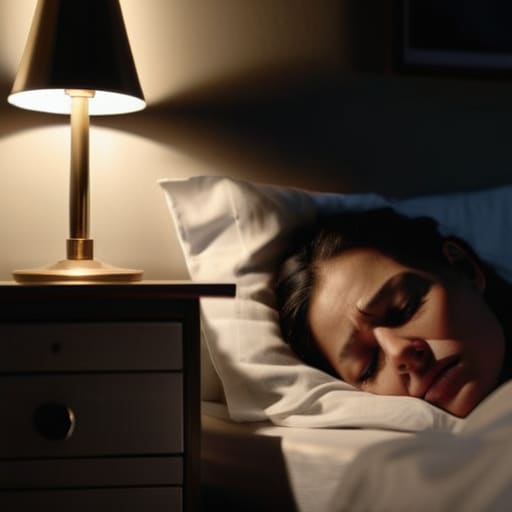
I spent a decade in the dark, watching patients struggle against the wires of a polysomnography machine, and if there is one thing I’ve learned, it’s that the “sleep hygiene” industry is selling you a lie. You don’t need more lavender oil, more expensive blackout curtains, or another $300 wearable telling you that you slept poorly. When people ask me how CBT for insomnia works, they are usually expecting some magical psychological trick to switch their brain off. It isn’t. It is a rigorous, often frustratingly practical recalibration of your relationship with your bed, designed to strip away the learned anxiety that turns a bad night into a chronic disorder.
I’m not here to give you a list of soothing bedtime rituals that won’t move the needle. Instead, I want to pull back the clinical curtain and show you the actual mechanics of this therapy. I will explain why your brain has become its own worst enemy and how we can use evidence-based tools to distinguish between a simple bad habit and a genuine medical issue. This is about reclaiming your sleep through logic and biology, not through more expensive gadgets or wishful thinking.
Understanding How Cbt for Insomnia Works

The problem with most “sleep hygiene” advice is that it treats the symptoms rather than the system. You can buy the most expensive blackout curtains and the softest linen sheets in the world, but if your brain has learned to associate your bed with the frustration of being awake, no amount of lavender oil will help. This is where we move beyond basic habits and into the actual mechanics of change.
CBT-I works by systematically breaking those associations. It isn’t just a list of “dos and don’ts”; it is a structured approach to retraining your nervous system. For instance, we use stimulus control therapy for insomnia to re-establish the bed as a place for sleep rather than a battlefield for your thoughts. If you aren’t sleeping, you get out of bed. It sounds brutal, but it’s the only way to stop the cycle of conditioned arousal.
We also tackle the mental loops that keep you wired. Through cognitive restructuring for sleep anxiety, we address those frantic, middle-of-the-night thoughts—the ones telling you that if you don’t sleep now, you’ll fail at work tomorrow. We aren’t just managing your mood; we are deconstructing the very fears that prevent your brain from letting go.
Key Things to Know

First, we need to clear something up: CBT-I is not just a fancy way of saying “get better sleep hygiene.” I see it all the time in the clinic—people following a checklist of dimming lights and avoiding caffeine, yet they are still staring at the ceiling at 3:00 AM. While those habits matter, they are secondary. The real heavy lifting happens through stimulus control therapy for insomnia, which aims to break that frustrating neurological link between your bed and the feeling of being wide awake and anxious.
Second, you should expect a bit of a challenge. Unlike a sleeping pill, which offers a chemical shortcut, this approach uses behavioral interventions for sleep disorders to retrain your brain. This often includes sleep restriction therapy explained as a way to consolidate your sleep by temporarily limiting your time in bed. It sounds counterintuitive—and it can feel quite punishing at first—but it is designed to build up your “sleep drive” so that when your head hits the pillow, your body actually knows what to do.
Practical Tips and Steps
If you’re looking to actually implement this, you have to stop treating your bedroom like a battlefield. One of the most effective components is stimulus control therapy for insomnia, which sounds clinical, but it’s really just about teaching your brain that the bed is for sleep, not for worrying about how much sleep you aren’t getting. If you’re lying there wide awake for twenty minutes, get out. Go to another room, do something boring in dim light, and only return when your body actually signals sleepiness. We need to break that neurological link between your mattress and your anxiety.
You’ll also likely encounter sleep restriction therapy explained as a way to consolidate your sleep. It sounds counterintuitive—and frankly, it feels a bit cruel—to spend less time in bed when you’re already exhausted, but it works by increasing your “sleep drive.” It’s not about deprivation; it’s about efficiency. By narrowing your window, we stop the habit of tossing and turning for hours, which is often what turns a bad night into a chronic problem. It’s rigorous, yes, but it’s far more effective than any “sleep score” on your wrist will ever be.
Common Mistakes to Avoid
The biggest mistake I see—and I see it constantly in the clinic—is the attempt to “fix” sleep by layering more and more sleep hygiene techniques on top of a broken schedule. People think that if they buy a silk eye mask or stop eating blueberries at 8 PM, they’ve solved the problem. They haven’t. Sleep hygiene is a foundation, not a cure. If you are struggling with genuine cognitive arousal, you don’t need a lavender diffuser; you need to address the mental loops. This is where cognitive restructuring for sleep anxiety becomes vital. It’s about dismantling the catastrophic thoughts—the “if I don’t sleep eight hours tonight, I’ll lose my job” cycle—that keep your nervous system in a state of high alert.
Another trap is the misuse of sleep restriction therapy. I often see patients trying to “force” sleep by spending twelve hours in bed, hoping to catch whatever rest they can. This is actually counterproductive. It dilutes your sleep drive and turns your bed into a place of frustration rather than rest. Instead of trying to engineer sleep through sheer willpower, we use stimulus control therapy for insomnia to re-associate the bed with sleep itself. You cannot negotiate with your biology, and you certainly cannot win a staring contest with your pillow.
Final Thoughts
If you’ve spent years feeling like you’re failing at sleep, please understand that it isn’t a character flaw. Most of the “advice” circulating online is just a collection of surface-level suggestions that don’t touch the root of the problem. While some people find relief through basic CBT-I sleep hygiene techniques, for those of us dealing with the psychological weight of sleeplessness, we need something more robust. We need to address the way your brain has learned to associate your bed with frustration rather than rest.
The real strength of this approach lies in its ability to rewire those faulty associations. Whether it is through stimulus control therapy for insomnia or tackling the racing thoughts that hit the moment the lights go out, these aren’t “quick fixes”—they are structural changes. It takes effort, and I won’t lie to you and say it’s easy, but the effectiveness of CBT-I vs sleep medication is well-documented in clinical settings. One offers a temporary chemical veil; the other offers a way to actually reclaim your nights. Don’t settle for just “trying harder.”
Five ways to tell if CBT-I is actually doing its job
- Stop looking at the clock; CBT-I works by breaking the psychological link between your bed and the frustration of being awake, so checking the time at 3:00 AM is actually counter-productive.
- Expect a temporary dip in total sleep time; part of the process involves sleep restriction to build up your “sleep drive,” which feels counterintuitive but is much more effective than trying to force sleep through sheer willpower.
- Focus on consistency over perfection; the goal isn’t to have a “perfect” night every night, but to stabilize your circadian rhythm by sticking to a set wake time, regardless of how much sleep you actually got.
- Watch for the shift in your “sleep effort”; you’ll know it’s working when you stop trying to sleep and instead start accepting the wakefulness, which paradoxically lowers the anxiety that keeps you upright.
- Distinguish between “sleep hygiene” and “sleep therapy”; while a cool room helps, CBT-I is about retraining your brain’s response to wakefulness, not just buying better blackout curtains.
The Bottom Line
CBT-I isn’t about “relaxing” more; it’s about retraining your brain to associate the bed with sleep rather than the frustration of being awake.
There is a massive difference between a lifestyle-driven sleep struggle and a clinical disorder, and CBT-I is specifically designed to address the former by fixing your sleep architecture.
Stop looking for a magic pill or a better wearable; the most effective way to reclaim your sleep is to systematically dismantle the habits that are keeping you wired.
Frequently Asked Questions
If I’m already exhausted, how am I supposed to manage the sleep restriction part of CBT-I without making things worse?
I know. It feels counterintuitive, almost cruel, to be told to spend less time in bed when you’re already running on empty. But here is the clinical reality: sleep restriction isn’t about deprivation; it’s about consolidating your sleep so it isn’t fragmented by hours of tossing and turning. It’s meant to be hard for a week or two to rebuild that drive. Just don’t drive or operate heavy machinery if you’re truly unsafe.
How can I tell if my sleeplessness is actually a medical issue like sleep apnea rather than something that CBT-I can fix?
If you’re gasping for air, waking up with a headache, or your partner says you sound like you’re choking, that’s not a “bad habit” for CBT-I to fix. That’s your airway. CBT-I tackles the psychological loop of insomnia, but it won’t clear a physical obstruction. If you feel exhausted despite “sleeping” eight hours, or if you’re snoring heavily, stop trying to “retrain” your brain and go get a formal sleep study.
My wearable says I'm sleeping fine, but I feel terrible; should I be following the data on my tracker or the principles of CBT?
Listen to your body, not your wrist. Your wearable is guessing based on movement and heart rate; it has no idea if your sleep was fragmented or if you spent four hours in a state of hyperarousal. A “sleep score” isn’t a clinical measurement. If you feel terrible, your sleep is not fine. Follow the principles of CBT-I to address the underlying patterns—that’s where the actual evidence lives, not in an algorithm.