I remember sitting in a darkened sleep lab at 3:00 AM, watching the EEG traces of a patient who had spent years being told they were just “lazy” or “unmotivated.” They weren’t failing at life; they were experiencing a neurological breakdown of the sleep-wake switch. It is infuriating to see people searching for answers online, only to be met with expensive, glorified wearable gadgets that claim to “detect” sleep disorders through a wristband. Let me be incredibly clear: a consumer smartwatch cannot tell you how narcolepsy is recognised in a clinical setting. It can show you that you’re tired, but it cannot see the specific, rapid-onset REM transitions that define this condition.
I’m not here to sell you a new app or a supplement to “fix” your energy. My goal is to pull back the curtain on what actually happens when you walk into a specialist clinic. I will explain the difference between a standard overnight study and the specific, often exhausting daytime testing required to find the truth. We are going to look at the actual diagnostic gold standards so you can stop guessing and start talking to your doctor with the facts in hand.
Why Your Tracker Cant Spot True Excessive Daytime Sleepiness Symptoms

I see it every week in the clinic: a patient clutching their smartwatch, showing me a “Sleep Score” of 85, yet they are physically struggling to keep their eyes open during a midday meeting. It is incredibly frustrating because these devices are fundamentally incapable of distinguishing between a restful night and the neurological reality of a sleep disorder. Your tracker is essentially a glorified pedometer for your wrist; it uses heart rate variability and movement to guess your sleep stages, but it has no way of knowing if your brain is actually functioning correctly once you are awake.
The real issue is that excessive daytime sleepiness symptoms aren’t about how much you slept, but about the catastrophic failure of your brain to maintain wakefulness. A wearable cannot detect the neurological “glitches” that characterize narcolepsy, nor can it flag the sudden muscle weakness triggers that occur when your emotions spike. While your watch tells you that you had eight hours of “rest,” it remains blind to the fact that your sleep architecture is broken. To get a real answer, you need more than a data trend; you need clinical MSLT narcolepsy testing to see how your brain actually handles the transition from sleep to wake.
The Truth About How Narcolepsy Is Recognised in Clinical Practice
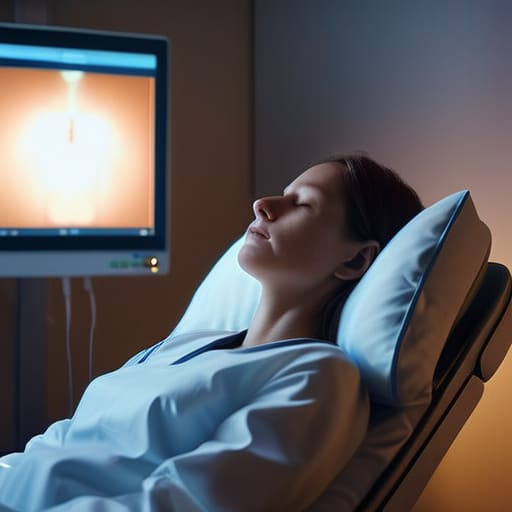
In the clinic, we don’t rely on how “tired” a patient feels, because everyone feels tired. To move beyond guesswork, we use specific sleep study diagnostic tests designed to map how your brain transitions between wakefulness and sleep. The gold standard is the Multiple Sleep Latency Test, or MSLT. We have you take several scheduled naps throughout the day to measure exactly how quickly you fall asleep and whether you enter REM sleep almost immediately. It is a grueling, tedious day of sitting in a darkened room, but it is the only way to differentiate a genuine neurological drive from simple sleep deprivation.
This is also where we perform the vital work of sleep apnea vs narcolepsy differentiation. Many patients are misdiagnosed with apnea because they snore or gasp, but the underlying mechanics are entirely different. While an apnea patient is being woken up by a breathing struggle, a narcoleptic patient is experiencing a breakdown in the brain’s ability to regulate the sleep-wake switch. We aren’t just looking for sleepiness; we are looking for the specific physiological signatures that prove the brain is misfiring.
Distinguishing Sleep Apnea vs Narcolepsy Why the Difference Matters
In the clinic, I often see patients who are exhausted by the sheer ambiguity of their own fatigue. They know they are struggling, but they don’t know if the culprit is their airway or their brain. This is where the distinction between sleep apnea vs narcolepsy becomes vital, not just for a label, but for the treatment path. If you have apnea, we are looking at physical obstructions that starve your brain of oxygen; if it is narcolepsy, we are looking at a neurological failure to regulate wakefulness. Treating one with a CPAP machine if the issue is actually neurochemical is a frustrating, expensive waste of time.
The diagnostic divide usually comes down to what happens while you are actually unconscious. For apnea, we look for respiratory events during overnight sleep study diagnostic tests. For narcolepsy, however, the overnight study is often just the baseline; the real heavy lifting happens the next day with an MSLT. This is where we differentiate between someone who is simply sleep-deprived and someone experiencing the specific neurological “glitches” of narcolepsy. Misidentifying the cause doesn’t just delay recovery; it leaves you fighting the wrong battle.
What Actual Sleep Study Diagnostic Tests Reveal About Your Brain
When we move from the clinic consultation to the actual lab, we aren’t just looking at whether you are “tired.” We are looking for the specific electrical signatures of your brain. In a standard overnight polysomnogram, I’m watching for the architecture of your sleep stages, but for narcolepsy, the real heavy lifting happens the next day. This is where MSLT narcolepsy testing comes in—a series of scheduled naps designed to see how quickly your brain transitions into REM sleep. In a neurotypical person, REM is a distant destination reached much later in the night; in someone with narcolepsy, the brain essentially skips the queue.
It isn’t just about how fast you fall asleep, though. We are looking for that tell-tale “sleep onset REM periods.” If your brain is dropping straight into REM during those daytime naps, it provides the objective data needed for formal sleep disorder identification. This is the gold standard that separates a person who is simply sleep-deprived from someone whose brain’s “on/off” switch is fundamentally broken. We aren’t guessing based on your mood; we are measuring the actual neurological impulse to dream.
Decoding Mslt Narcolepsy Testing the Gold Standard of Proof
If the overnight study tells us how well you sleep, the Multiple Sleep Latency Test (MSLT) tells us how you survive the day. This is where we move past the guesswork of “feeling tired” and into actual clinical proof. During MSLT narcolepsy testing, we have you take a series of scheduled naps throughout the day, typically every two hours. We aren’t just looking at how quickly you drift off—though a rapid sleep onset is a major red flag—we are looking at the quality of that sleep.
In a healthy individual, a nap is just a nap. But for someone with narcolepsy, we often see them plunging straight into REM sleep, sometimes within minutes. This is the physiological “smoking gun” that separates a simple sleep debt from a neurological issue. We also pay close attention to whether any sudden muscle weakness triggers occur during these naps, as that cataplexy is a vital piece of the puzzle. It is a demanding, often exhausting day of testing, but it is the only way to ensure we aren’t mislabeling your life-altering symptoms as mere fatigue.
Sudden Muscle Weakness Triggers and Real Sleep Disorder Identification
Then there is cataplexy—that sudden, jarring loss of muscle tone that often catches people completely off guard. It isn’t a “fainting spell,” and it isn’t a seizure, though it can feel terrifyingly similar. For many of my patients, it starts as a subtle drooping of the eyelids or a slight weakness in the knees, almost always triggered by intense emotion. Whether it’s a sudden burst of laughter at a dinner table or a moment of sharp frustration, these sudden muscle weakness triggers are a hallmark sign that we look for. In the clinic, I hear so many people describe “losing control” of their limbs, only to be told they are just stressed. If your muscles buckle when you laugh, you aren’t just tired; you are describing a neurological symptom that requires specific sleep disorder identification.
This is where the distinction becomes vital. While someone struggling with sleep apnea might feel like they are gasping for air, they won’t experience this specific neurological “short circuit.” When we move into the diagnostic phase, we aren’t just looking at how much you sleep, but how your brain manages the transition between being awake and being asleep. This is why we rely so heavily on MSLT narcolepsy testing to see if those sleep attacks are truly involuntary. We are looking for the brain’s inability to regulate those muscle-control switches, a nuance that no consumer wearable could ever hope to capture.
How to Prepare for a Real Conversation with Your Clinician
- Stop focusing on your “sleep score” and start tracking your daytime crashes; a doctor needs to know exactly when the sleepiness hits and what you were doing, not how many hours your watch says you spent in REM.
- Document your cataplexy with precision, because “feeling weak” is vague, but “my knees buckling when my partner tells a joke” is a clinical data point that moves the needle toward a narcolepsy diagnosis.
- Be honest about your caffeine and stimulant intake, even if it feels like you’re admitting to “cheating”—I need to know the baseline of how you are chemically managing your alertness before we can test your brain’s natural drive.
- Keep a diary of your “sleep inertia,” specifically noting if you feel physically drugged or disoriented upon waking, as this helps us distinguish between simple sleep deprivation and the neurological fragmentation of narcolepsy.
- Don’t let a GP dismiss you with “it’s just stress” or “try a better routine” without asking for a referral to a specialist; if your sleepiness is interfering with your ability to function safely, you deserve a clinical investigation, not a lifestyle lecture.
The Bottom Line on Narcolepsy Diagnosis
Stop looking at your wearable’s “sleep score” for answers; a consumer tracker cannot distinguish between a bad night’s sleep and the neurological inability to regulate wakefulness.
If you are experiencing sudden muscle weakness or uncontrollable daytime sleepiness, do not accept “stress” or “poor hygiene” as an explanation—these are clinical symptoms that require an MSLT, not a lifestyle change.
Real diagnosis happens in the lab, not on your wrist, by measuring the specific timing of your brain waves to see if your sleep-wake switch is actually broken.
Frequently Asked Questions
If my MSLT results come back inconclusive, does that mean I definitely don't have narcolepsy?
Not necessarily, and please don’t let an inconclusive MSLT result feel like a door slamming shut. In my clinic, I’ve seen many patients with clear narcolepsy symptoms struggle with a “borderline” test. The MSLT is a snapshot in time, not a crystal ball; things like recent illness, medication changes, or even a period of poor sleep hygiene can muddy the results. If the data is messy but your symptoms are loud, we look at the bigger picture.
Can someone actually have narcolepsy if they don't experience the sudden muscle weakness (cataplexy) part?
Yes, they absolutely can. We often use “narcolepsy” as a catch-all, but clinically, we distinguish between Type 1 and Type 2. Type 1 is what most people imagine—the sudden muscle weakness, or cataplexy, triggered by emotion. Type 2 narcolepsy lacks that physical collapse, which is exactly why so many patients get lost in the system. They’re left with overwhelming sleepiness but no “dramatic” symptom to point to, making a formal diagnosis much harder to pin down.
How long do I actually need to keep a sleep diary before a clinician will take my symptoms seriously?
If you show up to a clinic with three days of notes, I’ll likely tell you to go home and try again. To see the patterns—the real, messy reality of your sleep—I need at least two weeks of a consistent sleep diary. I’m looking for more than just a “bad night”; I need to see how your sleep architecture shifts over a fortnight. It’s the only way to separate a genuine neurological issue from a simple bout of irregular rhythm.