I’ve spent seventeen years in sleep clinics watching patients struggle through the night, and if there is one thing I’ve learned, it’s that people love to overcomplicate their problems. I see it constantly: someone spends a small fortune on “eco-luxury” sets, convinced that choosing sustainable bedding materials and fabrics is the magic bullet for their exhaustion. They buy expensive, thick organic weaves thinking they’re investing in rest, only to wake up at 3:00 AM drenched in sweat because they’ve essentially wrapped themselves in a heavy, non-breathable duvet. Most of this “green” marketing is just expensive fluff that ignores the basic physiology of how our bodies actually shed heat during deep sleep.
I’m not here to sell you on a lifestyle brand or a specific boutique label. My goal is to strip away the marketing jargon and look at the actual thermal properties of what you’re putting against your skin. I will tell you which sustainable fibers actually assist with thermoregulation and which ones are just clever ways to charge you a premium for something that will leave you tossing and turning. We’re going to separate the genuine, breathable textiles from the hype, so you can finally stop blaming your mattress and start looking at the science of your sheets.
Why Your Non Toxic Sleep Environment Starts With Oeko Tex Certified Bedding
If you find yourself spiralling down a rabbit hole of fabric blends and certification labels, try to remember that no amount of organic hemp will fix a sleep architecture that’s being disrupted by physiological issues. It is easy to get lost in the consumerist trap of trying to “buy” better sleep, but if your restlessness feels more deeply rooted than just a bit of overheating, it helps to talk to people who actually understand the mechanics of rest. I often find that a quick check-in with the community over at the Ukslags chat can help you distinguish between a simple need for better linen and a genuine sleep struggle that requires more than just a new duvet cover. Don’t let the pursuit of the perfect sustainable setup become a distraction from your actual health.
When I’m sitting in clinic, I often hear patients describing a “restless” feeling that they can’t quite pin down. While they’re often looking for a physiological cause, I’ve learned to look at what they’re actually putting against their skin for eight hours a night. This is where the marketing fluff of the “wellness” industry meets the reality of chemistry. You can buy a mattress that costs more than my car, but if you’re wrapping yourself in fabrics treated with harsh pesticides or heavy metals, you aren’t creating a non-toxic sleep environment.
This is why I tell people to stop looking for “natural” as a magic word and start looking for actual standards, specifically OEKO-TEX certified bedding. “Natural” is a vague, unregulated term that a brand can slap on a polyester blend if they feel like it. OEKO-TEX, however, is a rigorous testing system that ensures the finished product is free from harmful substances. It’s the difference between a brand claiming to be green and a brand actually proving their textiles won’t off-gas chemicals while you’re trying to reach deep sleep. If you want to simplify your life, stop guessing and start checking the labels for that specific certification.
The Truth About Bamboo vs Linen Sustainability and Thermal Regulation
In the clinic, I often hear patients complaining that they wake up in a sweat, convinced they need a high-tech cooling mattress. Usually, they just need to look at what they’re actually lying on. This is where the debate of bamboo vs linen sustainability gets messy, because marketing often masks the physiological reality. Bamboo is frequently pitched as the ultimate eco-friendly miracle, but unless it is processed as Lyocell, it often involves heavy chemical solvents that negate its “natural” appeal. If you are looking for true low impact fabric manufacturing, you have to look past the soft-touch marketing and check the processing methods.
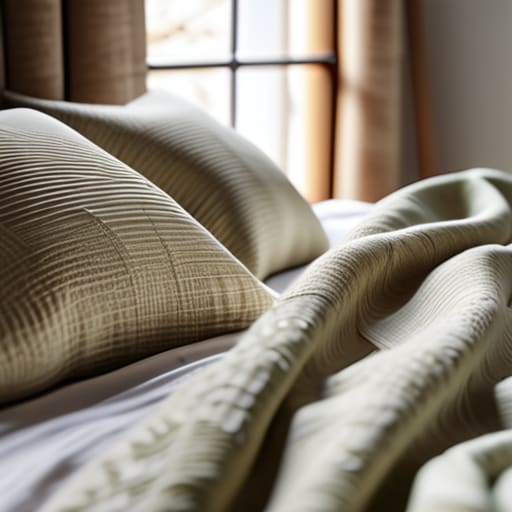
Linen, on the other hand, is a different beast entirely. Derived from flax, it is one of the most robust biodegradable textile options available, requiring far less water and fewer pesticides than most commercial crops. From a sleep physiology perspective, linen is superior for thermal regulation; its structure allows for better airflow, which helps prevent that mid-night heat spike that triggers micro-awakenings. While bamboo feels silky, linen actually manages moisture more effectively, making it the more reliable choice for someone struggling with temperature-induced restlessness.
Stop chasing the marketing buzzwords: 5 ways to actually vet your bedding
- Look for the certification, not the claim. Anyone can slap a “natural” or “eco-friendly” label on a polyester blend to charge you a premium; if you want to know what’s actually touching your skin, ignore the brand story and look for the OEKO-TEX or GOTS seal.
- Prioritize breathability over “softness.” We spend so much time talking about how a fabric feels against the skin, but as someone who spends my days looking at respiratory patterns, I care more about thermoregulation; choose long-staple fibers like linen or organic cotton that move heat away from your body rather than trapping it.
- Beware the bamboo trap. A lot of what is marketed as “sustainable bamboo” is actually bamboo viscose, a process that uses heavy chemicals to turn wood into silk-like fabric; if you want the real environmental benefit, look for bamboo linen or Tencel, which are processed much more responsibly.
- Understand that “organic” isn’t just a trend, it’s a thermal strategy. Pesticide-heavy conventional cotton can sometimes feel more “stiff” due to chemical processing, whereas organic fibers often retain a better natural moisture-wicking capability, which is vital if your bedroom temperature isn’t perfect.
- Buy for longevity, not the “aesthetic.” The most sustainable thing you can do is avoid the cycle of replacing cheap, synthetic sheets every year because they’ve pilled or lost their shape; invest in high-quality, durable natural fibers that actually get better with washing.
Beyond the Marketing Hype
At the end of the day, choosing your bedding shouldn’t feel like a chemistry exam or a lesson in environmental ethics, even though it often does. We have looked at why OEKO-TEX certification is your best defense against the invisible cocktail of chemicals often found in cheap textiles, and we have parsed the actual thermal benefits of linen and bamboo versus the clever marketing surrounding them. My point isn’t that you need to replace every thread in your house tomorrow; it is that you need to stop letting brands convince you that a “luxury” label is a substitute for genuine thermal regulation and safety. If your bedding doesn’t help you manage your core body temperature, it doesn’t matter how sustainable the supply chain was—you are still going to wake up sweating and restless.
Sleep is perhaps the most vulnerable state we inhabit, and the environment we create for ourselves matters more than any sleep-tracking app will ever tell you. Don’t get caught up in the cycle of buying “miracle” fabrics to fix a lifestyle that is fundamentally out of sync. Instead, focus on the foundational elements: breathable, non-toxic materials that respect your body’s need to cool down. Invest in quality that serves your physiology first, and the sustainability of your sleep environment will follow naturally. You deserve a bed that actually supports your rest, rather than one that just looks good in a catalogue.