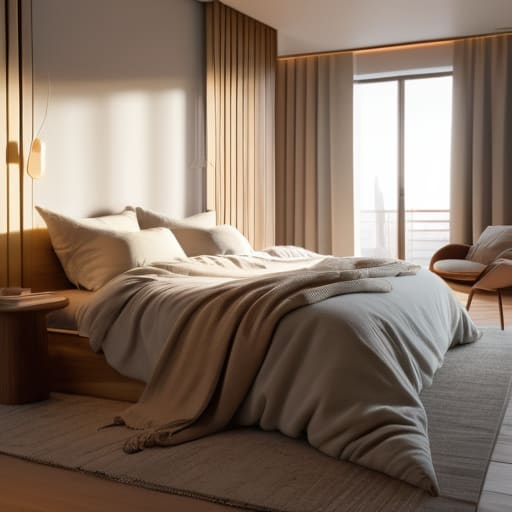
I spent a decade in the dark, sitting in windowless sleep labs while patients lay wired to headboxes, and if there is one thing I’ve learned, it’s that your brain is far more sensitive to environmental cues than any expensive wearable will ever tell you. People come to my clinic desperate for a new supplement or a high-tech gadget, but they’re often ignoring the most glaring issue: their bedroom has become a satellite office. If you are trying to figure out how to remove work from the bedroom while your laptop is still sitting on your nightstand, you aren’t just fighting insomnia; you are actively training your nervous system to stay in high alert during the very hours it should be powering down.
I am not here to sell you a luxury weighted blanket or a subscription to a meditation app. Instead, I want to talk about the physiological reality of your environment and why your “sleep hygiene” is failing you. I’m going to show you how to reclaim your sleeping space by separating your professional stress from your physical rest, using evidence-based boundaries rather than expensive gimmicks. We are going to look at why your brain needs a clear, sensory distinction between “doing” and “being,” so you can finally stop bringing the office into your dreams.
Your Laptop Is a Sleep Thief Why Your Bedroom Is Compromised
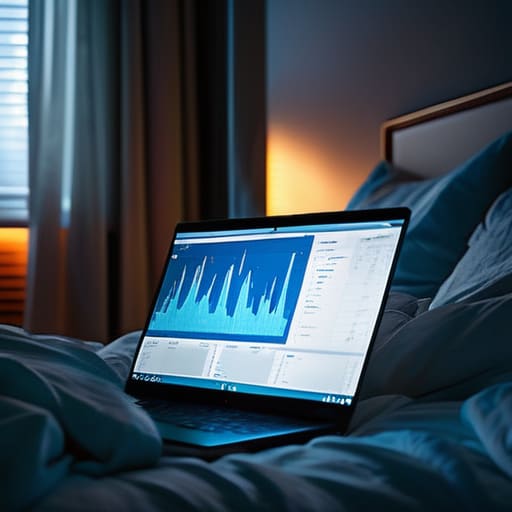
The problem isn’t just the blue light—though that’s a factor—it’s the physiological hijacking that happens when you answer a “quick” email under the duvet. When you bring your laptop into bed, you aren’t just working; you are destroying the psychological association with sleep. Your brain is an incredible pattern-recognition machine. If it learns that the space between your pillows is a place for spreadsheets, deadlines, and the low-level cortisol spike of a stressful inbox, it will stop viewing that space as a place for rest. You can’t expect your nervous system to flip from “high-alert professional” to “deep sleep” in the thirty seconds it takes to close a lid.
This is why the concept of mental separation of work and home is so vital for anyone working remotely. If you don’t have a spare room to act as a dedicated office, you have to be aggressive about boundaries. Even a small change, like a specific chair that is never used for anything but work, can help. If you keep working in your bedroom, you aren’t just tired; you are effectively training your brain to stay wired in the one place it should feel safe to let go.
The Science of Psychological Association With Sleep and Stress

In the clinic, I often see patients who are physically exhausted but mentally “racing” the moment their head hits the pillow. This isn’t just a lack of willpower; it is a physiological response rooted in psychological association with sleep. Your brain is an incredible pattern-recognition machine. If you spend your evenings hunched over a glowing screen in your duvet nook, your nervous system begins to associate that specific environment with alertness, problem-solving, and cortisol spikes. You aren’t just working; you are inadvertently training your brain to stay on guard in the very place it should feel safest to power down.
Breaking this cycle requires more than just a better pillow; it requires a strict mental separation of work and home. When the boundaries blur—as they so often do with remote work—the bedroom loses its status as a recovery zone and becomes a satellite office. This is why I am so insistent on the concept of a sanctuary. If you can’t physically move the desk out of the room, you must at least create a ritualistic “end” to the workday that signals to your brain that the period of high-stakes cognition is officially over.
How to Remove Work From the Bedroom for Mental Separation
If you can’t physically move your desk out of your sightline, you have to create a ritual of closure. I often tell my patients that the brain is an expert at pattern recognition; if you see your monitor from your pillow, your nervous system stays in a state of low-level vigilance. To achieve true mental separation of work and home, you need a physical “end” to the day. This might mean literally covering your workstation with a decorative cloth at 6:00 PM or, if you’re working from the dining table, packing your laptop into a drawer rather than leaving it out.
The goal is to signal to your brain that the “threat” of unfinished tasks has been contained. We talk a lot about improving sleep hygiene in the clinic, but that usually focuses on light and temperature. We forget that sensory cues matter just as much. If you are working from your bedroom, you are essentially inviting your boss into your sanctuary. By creating a dedicated workspace—even if it’s just a specific chair that isn’t your bed—you stop the bleed between your professional obligations and your biological need for rest.
Creating a Dedicated Workspace to Prevent Remote Work Burnout
If you are working from home, the temptation to use the dining table or, heaven forbid, the edge of the duvet as a desk is immense. But from a physiological standpoint, you are playing a dangerous game with your nervous system. When you lack a physical boundary, your brain never quite receives the signal that the “threat” of the workday has passed. This is where remote work burnout prevention actually begins—not with a fancy app, but with a physical door or a corner of the room that is strictly off-limits to your professional life.
Creating a dedicated workspace is about more than just ergonomics; it is about protecting the integrity of your rest. Even if you only have a small desk in the corner of a room, that space must be visually and mentally distinct from where you sleep. If you can see your monitor from your pillow, your brain remains in a state of low-level alertness, waiting for the next email to ping. By establishing this boundary, you are actively improving sleep hygiene through environmental control, ensuring that when you finally retreat to your bed, your mind isn’t still subconsciously scanning a spreadsheet.
Improving Sleep Hygiene by Reclaiming Your Bedroom Sanctuary
When we talk about improving sleep hygiene, the industry loves to obsess over things like “blue light filters” or specific herbal teas. While those aren’t harmful, they are often just expensive distractions from the structural reality of your environment. If your bedroom has become a catch-all for your professional life—a place where you answer “just one more email” or review a spreadsheet under the duvet—you have fundamentally broken the psychological association with sleep. You aren’t just tired; you are living in a space that your nervous system now identifies as a place of alertness and obligation.
Reclaiming your bedroom sanctuary requires more than just tidying up; it requires a hard boundary. This means physically removing the triggers of your professional identity. If you can’t move your desk out of the room, then you must at least hide the evidence. Use a screen or a folding partition, or even just a dedicated drawer for your work peripherals. The goal is to ensure that when you walk through that door, your brain receives a clear, non-negotiable signal: the workday is over.
Stop the Blurring Real Boundaries for Actual Rest
The problem with the “work from home” era is that the boundaries haven’t just blurred; they’ve evaporated. When your dining table becomes your desk and your desk becomes your bedside table, you lose the ability to signal to your nervous system that the day is actually over. This isn’t just about being “busy”; it is about the physiological impossibility of switching from high-cortisol problem-solving to deep, restorative sleep when your environment remains a constant trigger for your to-do list.
To fix this, you need more than just a tidy desk; you need a hard line. If you can’t move to a separate room, you must create a ritual of physical closure. This might mean literally putting your laptop in a drawer or covering your monitor with a cloth at 6:00 PM. It sounds trivial, but you are essentially performing a manual reset for your brain. By enforcing this mental separation of work and home, you stop the cognitive “leakage” that keeps your mind racing at 2:00 AM. True rest requires a clear signal that the office is closed, even if the office is only three feet from your pillow.
The practical toolkit for reclaiming your sleep space
- Establish a physical ‘end of shift’ ritual. When you close that laptop, you need a sensory signal that work is over—whether it’s physically moving your charger to another room or changing into specific ‘home’ clothes. You need to tell your nervous system that the period of high-alert cognitive processing has officially concluded.
- Implement a strict ‘no-screens’ buffer zone. I know, it sounds like the most basic advice in the book, but if you are scrolling through work emails or even just Slack on your phone while lying in bed, you are keeping your brain in a state of ‘anticipatory stress.’ You aren’t resting; you’re just idling at a high RPM.
- Hide the visual triggers. If your desk is visible from your pillow, your brain is constantly processing those unfinished tasks in the periphery. If you can’t move the desk, use a folding screen or even just a piece of fabric to shroud your workspace at night. If you can’t see the work, your brain has a much easier time letting go of it.
- Reclaim the bed for sleep and intimacy only. If you’ve started using your duvet as a makeshift desk for Zoom calls, you’ve effectively turned your sanctuary into a satellite office. The bed must remain a place where the brain associates comfort and unconsciousness, not spreadsheets and deadlines.
- Audit your lighting. Work often requires bright, blue-toned overhead light to keep us alert, but your bedroom needs the opposite. Swap out harsh task lighting for warm, dim lamps. If you can keep the ‘office light’ and the ‘sleep light’ entirely separate, you’ll find it much easier to transition between those two mental states.
The Bottom Line: Reclaiming Your Rest
Your brain is a master of association; if you treat your bed like a satellite office, you are effectively training your nervous system to stay in ‘alert mode’ the moment your head hits the pillow.
‘Sleep hygiene’ isn’t just about dimming lights; it is about physical and psychological boundaries that prevent your professional stress from bleeding into your restorative hours.
True rest requires a sanctuary, not a workspace—if you can’t separate your laptop from your linen, you aren’t just working late, you are actively sabotaging your ability to drift off.
Frequently Asked Questions
If I live in a studio apartment where my bed is literally three feet from my desk, how can I actually create that mental separation?
I hear this constantly in clinic. When your desk is staring you in the face from under the duvet, the psychological “switch-off” becomes nearly impossible. If you can’t physically move the desk, you must create sensory boundaries. Use a folding screen to hide the workspace at night, or even just a heavy cloth to drape over your monitor. If you can’t see the “office,” your brain has a much better chance of believing the workday is actually over.
My job requires me to be "on call" or check emails at night; is there a way to manage this without completely ruining my sleep associations?
If you’re on call, we have to stop pretending “perfect” sleep hygiene is possible and focus on harm reduction instead. Don’t check emails in bed; that’s a non-negotiable. If you must respond, do it in a chair in another room. Once the task is done, give your brain a fifteen-minute “buffer zone” of low-stimulation activity—no screens, just dim lights—to signal that the work emergency is over and the sleep window is back open.
Does the blue light from my laptop actually disrupt my sleep, or is the mental stress of the work itself the bigger issue?
It’s both, but we tend to obsess over the wrong one. Yes, blue light suppresses melatonin, but a flickering screen is a minor player compared to the cognitive load of an unanswered email. You can wear blue-light glasses all night, but if your brain is still processing a spreadsheet, you aren’t sleeping. The light is a biological nudge; the work is a psychological hijack. Address the stress first, or the light won’t matter.