
I’ve spent seventeen years in NHS sleep clinics, and if I had a pound for every time a patient came to me clutching a printout of their Oura ring’s “sleep score” as if it were gospel, I’d have retired a decade ago. These wearables are fine for counting steps, but they are terrible at telling you why you feel like a ghost during your 3 p.m. meeting. If you want to actually solve the puzzle of your exhaustion, you need to stop obsessing over digital percentages and learn how to keep a sleep diary that actually contains useful data.
I’m not going to give you a complicated, clinical spreadsheet that feels like a second job. Instead, I’m going to show you how to track the variables that actually matter—the ones that distinguish a simple bad habit from a genuine physiological disorder. My goal is to give you a no-nonsense framework to strip away the guesswork, so when you finally sit down with a specialist, you aren’t just guessing; you are providing evidence-based clarity.
Beyond the Tracker Why Your Sleep Score Is Lying
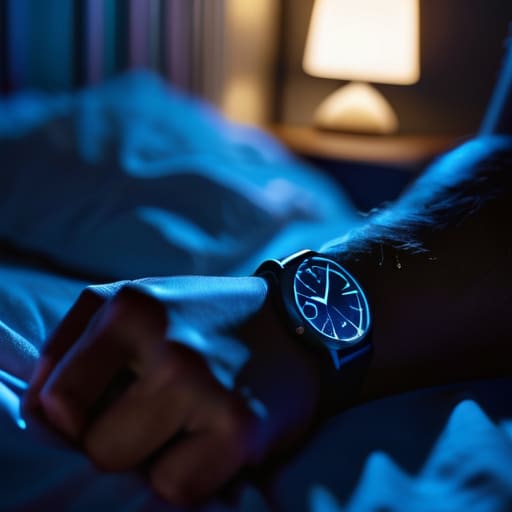
I see it every single week in the clinic: a patient arrives, visibly exhausted, clutching their smartphone like a lifeline, showing me a “Sleep Score” of 85 while they feel like they’ve been hit by a bus. It’s infuriating. These wearables are clever pieces of engineering, but they are not medical devices. They use heart rate variability and movement to guess what you’re doing, whereas a clinical study measures actual brain waves. When your watch tells you that you had “excellent deep sleep,” it isn’t actually seeing your neurobiology; it’s just making an educated guess based on how still you stayed.
If you want a true sleep quality assessment, you have to stop looking at those arbitrary numbers and start looking at your behavior. A tracker can tell you that you moved, but it can’t tell you that you spent forty minutes scrolling through stressful emails in the dark or that your bedroom temperature spiked at 3:00 AM. For real nocturnal habits monitoring, we need the context that a sensor simply cannot capture. You need to record the why behind the wakefulness, not just the fact that you were awake.
How to Keep a Sleep Diary That Actually Matters

Forget about complicated spreadsheets or trying to quantify every single minute of your night. If you want to provide something useful for a clinician, you need to focus on the variables that actually shift your biology. Start by noting your consistent wake-up time—because as I always say, that matters more than when you finally drifted off. Alongside that, record your sleep latency recording (how long it actually took you to fall asleep) and any mid-night awakenings. It’s not about being perfect; it’s about spotting the patterns that a piece of silicon on your wrist will never catch.
I also want you to look at the “why” behind the wakefulness. Don’t just write down that you slept poorly; note the temperature of the room, whether you had a glass of wine, or if you were staring at a blue-light screen right until your head hit the pillow. This kind of nocturnal habits monitoring is what actually allows us to distinguish between a lifestyle-driven issue and a physiological one. We aren’t looking for a data dump; we are looking for the context that tells us if your internal clock is simply out of sync.
Mastering Sleep Latency Recording Without the Guesswork
One of the biggest pitfalls I see when patients try to track their own data is the “I think I fell asleep around eleven” trap. In a clinical setting, we use polysomnography to see exactly when your brain waves transition from wakefulness to sleep, but for your diary, we need something more precise than a guess. When you are practicing sleep latency recording, you aren’t just noting when you closed your eyes; you are noting the gap between “lights out” and actual unconsciousness. If you lie there for forty minutes scrolling through news feeds, that isn’t sleep latency—that’s just being awake in the dark.
To make this useful for a sleep quality assessment, try to be honest about that transition period. If you can’t pinpoint the exact minute, note the time you turned off the lamp and then estimate how long you spent tossing, turning, or ruminating. This distinction is vital. It helps me differentiate between someone who has a physiological struggle to initiate sleep and someone who is simply struggling with nocturnal habits monitoring, like staying on their phone long after they should have been asleep.
Circadian Rhythm Tracking Finding Your Real Biological Clock
This is where we move past the simple “when did I fall asleep” data and start looking at the architecture of your day. Most of my patients think their problem is what happens between 11 PM and 7 AM, but as a physiologist, I know the battle is often won or lost much earlier. Circadian rhythm tracking isn’t about counting hours; it’s about spotting the patterns in your light exposure and meal timings that signal to your brain whether it’s time to be alert or to wind down.
In your diary, I want you to note more than just your nocturnal habits monitoring; I want to see the anchors of your day. What time did you see sunlight? When was your last heavy meal? If you are constantly shifting your wake time by two hours depending on how much caffeine you had the day before, you aren’t suffering from a mysterious ailment—you’re simply living in a state of permanent social jetlag. By documenting these rhythms alongside your sleep, we can finally determine if you have a genuine physiological misalignment or if you’ve just accidentally trained your body to never settle.
Nocturnal Habits Monitoring Separating Bad Rituals From Disorders
When I’m sitting across from a patient in the clinic, I’m not just looking for a list of symptoms; I’m looking for the “why” behind the exhaustion. This is where nocturnal habits monitoring becomes more important than any clinical test. I see so many people who are convinced they have a profound physiological issue, only to realize that their “insomnia” is actually a predictable reaction to their evening routine. If you are drinking a heavy glass of wine at 9 PM or scrolling through news feeds in a room that’s 22 degrees, you aren’t fighting a disorder—you are fighting your own choices.
The goal of your diary shouldn’t just be to log when you closed your eyes, but to map the environmental and behavioral triggers that precede the struggle. By documenting things like light exposure, caffeine timing, and even your last meal, you move away from vague complaints toward a genuine sleep quality assessment. You need to see if your restlessness is a biological malfunction or simply a consequence of a bedroom that is too bright, too loud, or too warm. We are looking for the patterns that separate a lifestyle habit from a medical necessity.
The Ultimate Sleep Quality Assessment for Clinical Clarity
When I’m sitting in the clinic with a patient, I’m not looking for a single number; I’m looking for the story the data tells. A proper sleep quality assessment isn’t about whether you felt “refreshed” on a scale of one to ten—though that’s a fine starting point—it’s about the relationship between your daytime impairment and your nighttime patterns. I want to see if your struggle to stay awake during a mid-afternoon meeting correlates with the specific gaps in your rest. We are looking for the clinical signal amidst the noise of your daily life.
To get that level of clarity, your diary needs to move beyond mere logging and into something resembling a diagnostic tool. You should be noting not just when you closed your eyes, but the presence of any physiological interruptions, such as gasping, palpitations, or sudden temperature shifts. This level of detail is what transforms a simple list of times into a meaningful record that can actually help a clinician distinguish between poor sleep hygiene tracking and a legitimate, treatable pathology. It’s about providing the breadcrumbs that lead us to the truth.
Five Rules for a Diary That Won't Waste Your Time
- Stop obsessing over the exact minute you drift off. Unless you’re in a clinical lab with EEG leads on your scalp, you aren’t measuring sleep latency; you’re measuring your anxiety about sleep. Just note the approximate time you actually closed your eyes and stopped trying to “will” yourself to sleep.
- Record your wake-up time before your bedtime. I know, it sounds backwards, but your biology is anchored by when you face the light, not when you crawl under the duvet. If your wake-up time is a moving target, your sleep diary is just a record of chaos, not a way to find a pattern.
- Be brutally honest about the “invisible” inputs. If you had a glass of wine at 8 PM or scrolled through news feeds until midnight, write it down. Don’t sanitize the data for yourself; we aren’t looking for a perfect lifestyle, we’re looking for the culprits that are sabotaging your physiology.
- Note the “Day After” reality. A diary that only looks at the night is half-blind. How did you actually feel at 11 AM? If you slept six hours but feel alert, that’s a different clinical picture than sleeping eight hours and feeling like you’ve been hit by a bus.
- Keep it low-tech to lower the stakes. If you use a complex app, you’ll end up treating it like a chore or, worse, another wearable to obsess over. A simple notebook by the bed removes the blue light temptation and makes the act of recording feel like a clinical observation rather than a digital performance.
The Bottom Line: What to Do With Your Data
Stop obsessing over the “score” on your wrist; a sleep diary isn’t about getting a grade, it’s about finding the patterns—like your wake time or room temperature—that are actually driving your exhaustion.
Use your diary to distinguish between a lifestyle habit you can change and a clinical disorder that requires a doctor; if your data shows consistent issues despite a steady routine, it’s time for a professional conversation.
Keep it simple and consistent: the goal isn’t to be a perfect data scientist, but to build a realistic map of your nights so you can stop guessing and start fixing what actually matters.
Frequently Asked Questions
If I’ve been using a wearable for months, do I need to start the diary from scratch, or can I just port my existing data over?
Don’t bother trying to port that data over. I know it feels like a waste of months of “effort,” but your wearable isn’t recording the things that actually matter to a clinician. It can’t tell me if you felt breathless at 3 a.m. or if you spent forty minutes staring at the ceiling ruminating. Start the diary from scratch. We need fresh, subjective data, not a collection of estimated sleep stages from a sensor.
How much detail do I actually need to include—is it worth noting every time I woke up for a glass of water, or will that just clutter the results?
Write it down, but don’t lose yourself in the minutiae. If you’re getting up once for water, note it; if you’re up four times because you’re tossing and turning, that’s a different story entirely. I don’t need a minute-by-minute log, but I do need to see the pattern. Those “minor” interruptions are often the very thing that distinguishes a restless habit from a genuine physiological issue. Keep it simple, but keep it honest.
If my diary shows a pattern of poor sleep, at what point does this become "enough evidence" to actually take to a GP or a specialist?
If your diary shows a consistent pattern for two to four weeks, you have enough. Don’t wait for a month of “perfect” data; if you’re seeing regular disruptions that impact your daytime functioning, that’s your signal. Bring the diary—not your smartwatch data, the actual diary—to your GP. It shows them the difference between a rough week and a clinical trend, which is exactly what they need to decide if you need a referral.