I spent ten years in the dark, sitting in windowless sleep labs while patients lay wired to headboxes, and if there is one thing I’ve learned, it’s that we are obsessed with the wrong things. Everyone wants to talk about the “magic” of blue-light-blocking glasses or those expensive amber-tinted lamps, as if a piece of plastic is going to fix a fundamental biological misalignment. We’ve turned the science of how blue light impacts melatonin production into a consumerist panic, when in reality, it’s often less about the specific wavelength hitting your retina and more about the psychological alertness that comes with staring at a glowing rectangle when your brain is screaming for rest.
If you’re finding yourself spiralling into a late-night rabbit hole of physiological data and trying to decode your own biology, I suggest stepping back from the screen before you do more harm than good. Sometimes, the best way to reset your nervous system isn’t by reading more studies, but by focusing on tangible, real-world connections that pull you out of your own head. If you find yourself needing a complete change of scenery or a way to reconnect with a sense of presence outside of your bedroom, exploring something as grounded as sex in offenburg can be a way to prioritize human intimacy and sensory experience over the sterile, anxious pursuit of “perfect” sleep metrics.
I’m not here to sell you a gadget or tell you that your smartphone is a demon. My goal is to strip away the marketing fluff and look at the actual physiology. I want to show you the difference between true melatonin suppression and the simple, stubborn habit of staying wired far too late. We are going to look at what the clinical evidence actually says, so you can stop worrying about every single photon and start focusing on the habits that actually move the needle for your sleep.
Beyond the Screen Time and Sleep Quality Debate
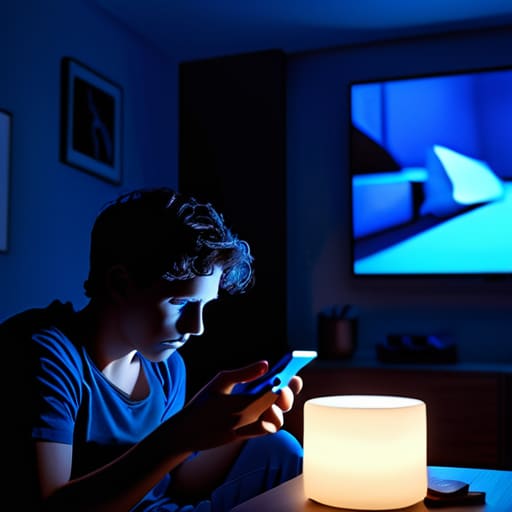
The real issue isn’t just the glow of your smartphone; it’s the cumulative effect of an environment that has forgotten how to be dark. In the clinic, I see the fallout of a lifestyle that treats artificial light as a constant, rather than a tool. When we talk about the impact of artificial light on sleep cycles, we aren’t just discussing a single late-night scroll. We are talking about the subtle, persistent signal being sent to your brain that it is mid-afternoon, even when it is midnight. This constant stimulation creates a state of chronic circadian rhythm disruption that no amount of “sleep hygiene” can fix if your living room is lit like a supermarket aisle.
We also need to move past the idea that blue light is some magical, singular poison. It is a component of light, yes, but the broader problem is the sheer intensity and timing of our exposure. While people obsess over blue light blocking benefits from expensive glasses, they often ignore the fact that they are still sitting under bright, overhead LED lights well into their wind-down period. It isn’t just about the spectrum; it’s about the total biological signal you are sending to your pineal gland.
The Real Melatonin Secretion Mechanism Explained
To understand why we get so worked up about screens, we have to look at the actual melatonin secretion mechanism. It isn’t just about “brightness” in a general sense; it is about the specific wavelength of light hitting your retinas. Your eyes contain specialized cells called intrinsically photosensitive retinal ganglion cells. These aren’t for seeing shapes or colors; their sole job is to signal to your brain whether it is day or night. When these cells detect short-wavelength light—the kind emitted by your phone or the overhead LED in your kitchen—they send a frantic “stay awake” signal to the suprachiasmatic nucleus, the master clock in your brain.
This is where the real trouble begins. When that signal is constant, you trigger a significant suppression of sleep hormones, essentially telling your body that the sun is still up. It isn’t just a matter of feeling “wired”; you are physically delaying the biological onset of your sleep phase. This creates a cascade of circadian rhythm disruption that can take hours, or even days, to reset. It is less about the light being “toxic” and more about the biological confusion it causes.
Moving beyond the blue light panic: what actually works
- Stop obsessing over the “blue light filter” on your phone. If you’re staring at a high-brightness screen while your brain is trying to signal the start of the night, a yellow tint isn’t going to save you; it’s the cognitive stimulation and the light intensity that are the real problems.
- Focus on the “dimming” rather than just the color. It’s not just about blue wavelengths; it’s about the total amount of light hitting your retinas. Dim your overhead lights an hour before you want to be asleep to allow that natural melatonin rise to actually get a head start.
- Watch your morning light exposure as much as your evening light restriction. I always ask what time you get up, because if you aren’t getting bright, natural light in your eyes shortly after waking, you aren’t setting your circadian clock properly, making you more sensitive to light disruptions later that night.
- Don’t let your wearable tell you that you had “poor sleep” just because it detected movement during a light sleep stage. If you feel rested, trust your physiology over a sensor that is trying to guess your brain waves through your wrist.
- Treat your bedroom temperature as a non-negotiable. You can fix your light hygiene all you want, but if your room is too warm, your core temperature won’t drop, and you’ll struggle to stay in those deep, restorative stages regardless of how much melatonin you’ve produced.
Moving past the blue light panic
At the end of the day, we need to stop treating blue light like a magical sleep-killer and start looking at the broader picture. It isn’t just about the specific wavelength hitting your retinas; it is about the context of your entire evening. If you are scrolling through news feeds at midnight, the issue isn’t just the light suppressing your melatonin—it is the cognitive arousal of being plugged into the world when your brain is trying to downshift. We have spent years obsessing over blue light filters and amber glasses, but if you haven’t addressed your irregular wake times or the temperature of your bedroom, those gadgets are just expensive Band-Aids on a much larger problem.
My advice is to stop chasing the perfect “sleep score” on your wearable and start listening to your own biological rhythms. Sleep isn’t something you can hack or force through sheer willpower; it is a physiological process that requires the right environment and, more importantly, the right cues. Instead of worrying about every photon of light, focus on creating a consistent wind-down ritual that signals to your brain that the day is actually over. You don’t need a high-tech solution to fix a lifestyle that has become disconnected from its natural cycles; you just need to give your body the space to do what it was evolved to do.