
I spent a decade in the dark, sitting in cramped sleep labs while patients lay wired to headboxes, their breathing patterns etched in jagged lines on my monitor. I’ve seen it a thousand times: people convinced they need a $500 weighted blanket or a complex sequence of “breathwork” apps just to stop their hearts from racing. There is this exhausting, expensive myth circulating that you can force your body into submission through sheer willpower or expensive gadgets. The truth is much less glamorous, and frankly, much more biological. We need to stop treating relaxation like a luxury purchase and start understanding the actual mechanics of how the nervous system settles when it’s stuck in a loop of high alert.
I am not here to sell you a lifestyle brand or a new wearable that will only give you more data to worry about. My promise to you is simpler: I will strip away the wellness industry’s fluff and tell you what the clinical evidence actually says. We are going to look at the physiological difference between a mind that won’t stop racing and a body that has forgotten how to downregulate, because the advice for one is useless for the other.
The Great Divide Restless Minds vs Regulating the Autonomic Nervous System

When I sit across from a patient in the clinic, I’m trying to figure out if they are dealing with a cognitive loop or a physiological one. There is a massive difference between a “restless mind”—the kind that replays a conversation from 2014 while you stare at the ceiling—and a body that simply refuses to exit a state of high alert. If your brain is racing, you’re dealing with thoughts. But if your heart is thumping and your breath is shallow even when your mind is quiet, you are dealing with the sympathetic vs parasympathetic nervous system imbalance. One requires mental redirection; the other requires biological intervention.
In my years scoring sleep studies, I’ve seen plenty of people who are mentally exhausted but physically “wired.” Their bodies are stuck in a loop of calming the fight or flight response becomes nearly impossible because their autonomic system is stuck in high gear. You can try all the mindfulness apps you want, but if your biology hasn’t received the signal that the “threat” has passed, those thoughts will just keep coming back. We have to stop treating these two things as the same problem.
Why Your Tracker Fails to Explain How the Nervous System Settles
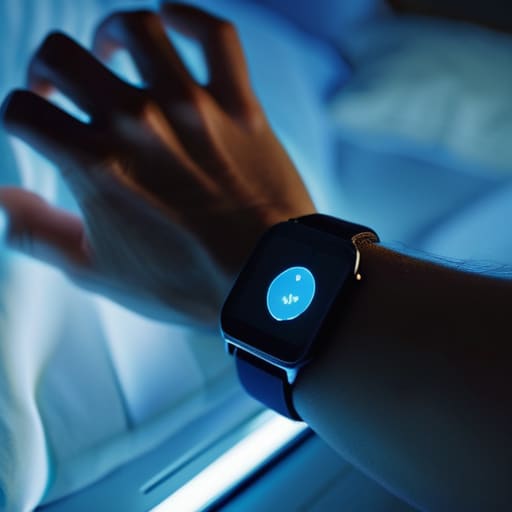
I see it every week in the clinic: a patient clutching their smartwatch like a holy relic, distraught because their “Sleep Score” was a 62 instead of an 85. They are looking for an explanation for why they feel wired and tired, but they are looking in the wrong place. Your wearable is essentially a glorified movement and heart-rate monitor; it can tell you that you were restless, but it has absolutely no idea why. It cannot distinguish between a heart rate that is elevated because you’re dreaming and one that is elevated because your sympathetic nervous system is stuck in a loop of high alert.
A tracker can measure the symptoms of a dysregulated system, but it cannot see the underlying mechanics of regulating the autonomic nervous system. It won’t tell you if you are stuck in a state of hyperarousal or if your body is failing to transition from the fight-or-flight response into the restorative, parasympathetic state required for deep sleep. These devices give you data, but data without context is just noise. You don’t need a higher score; you need to understand the physiological shift required to actually land in sleep.
Sympathetic vs Parasympathetic Nervous System the Real Battle for Sleep
Think of your nervous system as a seesaw. On one side, you have the sympathetic branch—the accelerator that keeps you alert, scanning for threats, and ready to react. On the other is the parasympathetic branch, the brake pedal that allows for digestion, repair, and, crucially, sleep. When we talk about the sympathetic vs parasympathetic nervous system, most people assume they are simply “stressed.” But in my clinic, I see people whose “accelerator” is stuck in the down position even when they are physically exhausted. They aren’t just tired; they are physiologically incapable of shifting gears.
To sleep, you don’t just need to be “relaxed”; you need to actively signal to your brain that the environment is safe. This is where calming the fight or flight response becomes a biological necessity rather than a lifestyle suggestion. You can’t lecture your way out of a sympathetic spike, and no amount of “positive thinking” will override a racing heart. Instead, we look for physiological levers—like specific breathing patterns or temperature shifts—that force the body to engage those parasympathetic brakes. It is a mechanical process, not a mental one.
Polyvagal Theory Explained Beyond the Surface of Your Anxiety
When people talk about being “stressed,” they usually mean their brain is spinning. But in my clinic, I see that the struggle is often much deeper, happening in the body before the mind even has a chance to catch up. This is where polyvagal theory explained moves from academic jargon to something deeply practical. Instead of seeing your nervous system as a simple on-off switch, think of it as a series of layers. When you are stuck in a state of high alert, you aren’t just “anxious”—you are physically trapped in a survival response that views your pillow as a place of vulnerability rather than a place of rest.
To get to sleep, you have to navigate your way back down through these layers. You cannot simply “will” yourself out of a fight-or-flight state; you have to signal to your brain that the environment is safe. This is why I often suggest a simple physiological sigh for relaxation—that specific pattern of a double inhale followed by a long, slow exhale—to help bridge the gap. It is a physical way of calming the fight or flight response by manually nudging your system toward a state where it can finally, mercifully, let go.
Calming the Fight or Flight Response With Evidence Based Methods
When we talk about calming the fight or flight response, we aren’t talking about “thinking positive thoughts” or forcing yourself to be calm. You cannot logic your way out of a physiological state. If your sympathetic nervous system is stuck in high gear, your body genuinely believes there is a threat in the room, even if you’re just lying in a dark bedroom staring at the ceiling. To shift the balance toward the parasympathetic, you have to use the body to talk to the brain, not the other way around.
One of the most effective, evidence-based tools for this is the physiological sigh. It’s a specific breathing pattern—a double inhale followed by a long, slow exhale—that helps offload carbon dioxide and signals to your brain that the immediate danger has passed. It is a direct way of regulating the autonomic nervous system without needing a yoga mat or an hour of silence. I often tell my patients that while they can’t control the initial spike of cortisol, they can use these mechanical triggers to nudge their system back toward a state of safety.
From Cortisol Reduction Methods to the Physiological Sigh for Relaxation
When we talk about cortisol reduction methods, the internet tends to suggest things that are frankly more about lifestyle aesthetics than biology—lavender oils, expensive supplements, or “unplugging” an hour before bed. While those aren’t bad habits, they don’t address the immediate, mechanical reality of a body stuck in high gear. If your sympathetic nervous system is firing, you can’t simply “wish” your way into a parasympathetic state. You need a physiological lever to pull.
This is where the physiological sigh for relaxation comes in, and it’s one of the few things I actually respect because it’s grounded in respiratory mechanics rather than wellness trends. It’s a specific pattern: a double inhale through the nose followed by a long, slow exhale through the mouth. That second, tiny inhale re-inflates the alveoli in your lungs, increasing the surface area for carbon dioxide exchange, which then allows the exhale to more effectively signal to your brain that the threat has passed. It isn’t magic; it’s a direct way of hacking the feedback loop between your lungs and your brain to force a moment of calm.
Practical ways to signal safety to your brain
- Stop trying to “think” your way into calm. If your sympathetic nervous system is in overdrive, your prefrontal cortex—the part of you that does the logical thinking—is effectively offline. Instead of ruminating on why you aren’t sleeping, focus on physical signals of safety, like temperature changes or controlled breathing, to bypass the thinking brain and talk directly to your vagus nerve.
- Prioritise a consistent wake time over a consistent bedtime. I know, it sounds counterintuitive when you’re exhausted, but your circadian rhythm is anchored by your first light exposure and your subsequent wake-up time. If you try to “catch up” on sleep by sleeping in, you aren’t helping your nervous system settle; you’re just shifting your biological clock and making tomorrow night’s struggle even more predictable.
- Use temperature as a physiological lever. A drop in core body temperature is a primary biological signal that it is time to transition from alert to rest. Rather than fighting a warm bedroom, try a warm bath or shower an hour before bed; the subsequent rapid cooling of your skin as you exit the water mimics the natural thermal dip your body needs to trigger sleepiness.
- Reduce sensory “noise” in the final hour. Your nervous system is an exquisite pattern-recognition machine, and it is constantly scanning for threats. Bright, blue-enriched light or the rapid-fire dopamine hits of scrolling through news feeds signal to your brain that the environment is active and demanding. Dim the lights and lower the stimulation to tell your system that the “threat level” has returned to baseline.
- Differentiate between “tired” and “wired.” If you feel physically exhausted but your heart is racing or your mind is looping, you aren’t dealing with simple sleepiness; you are dealing with autonomic dysregulation. In these moments, more “effort” is your enemy. Instead of forcing sleep, focus on low-arousal activities—reading a physical book or listening to non-rhythmic sound—to allow the parasympathetic nervous system to take the lead.
The Essentials: What to Actually Take Away
Stop treating a dysregulated nervous system like it’s just “stress.” If your body is stuck in a sympathetic fight-or-flight loop, no amount of “trying harder” to sleep will work; you have to use physical, evidence-based tools to signal safety to your brain.
Your wearable’s sleep score is a mathematical guess, not a clinical measurement. A tracker can tell you that you moved, but it cannot tell you whether your nervous system actually settled into the restorative states you need.
Distinguish between a bad habit and a physiological hurdle. If your wake times are erratic and your room is too warm, you have a discipline and environment problem; if your body feels physically unable to downshift despite your best efforts, you are likely dealing with a genuine autonomic regulation issue.
Frequently Asked Questions
If my nervous system is stuck in "fight or flight," will breathing exercises actually work, or am I just masking a deeper physiological issue?
It’s a fair question, and one I hear in clinic constantly. If you’re stuck in a high-arousal state, breathing exercises aren’t a “cure” for an underlying pathology, but they aren’t just masking it either. Think of it as manual override. You aren’t fixing the broken engine; you’re using the vagus nerve to signal to your brain that the immediate threat has passed. It’s a physiological tool to shift the state, not a magic wand for life’s stressors.
I feel physically exhausted but my mind is racing; is this a sign of a dysregulated nervous system or just classic insomnia?
It’s the classic “tired but wired” paradox. If you can sleep once you finally drift off, but your brain treats 2:00 AM like a boardroom meeting, you’re likely dealing with a nervous system that hasn’t received the signal that the “threat” is over. Classic insomnia is often a cycle of anxiety about sleep itself; what you’re describing sounds more like physiological dysregulation—your body is exhausted, but your sympathetic nervous system is still stuck in high gear.
How can I tell if my "restlessness" is a clinical sleep disorder that needs a study, or just a habit of not letting my body settle down properly?
If your restlessness follows a pattern of “trying too hard” to sleep—racing thoughts, checking the clock, or feeling wired despite being exhausted—it’s likely a habit of dysregulation. However, if you are gasping for air, waking up with a racing heart, or feeling like you’re choking mid-sleep, that’s different. That’s physiological. One is a mind that won’t settle; the other is a body that can’t breathe. One needs behavioral shifts; the other needs a clinical sleep study.