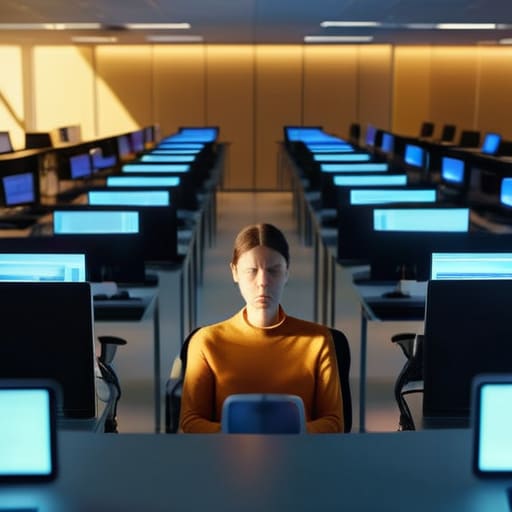
I spent a decade in the dark, watching patients twitch and gasp under a mess of wires, and if there is one thing I’ve learned, it’s that your HR department’s “wellness seminar” is almost certainly useless. We are constantly sold these expensive, polished solutions—mindfulness apps, ergonomic chairs, or “recharge rooms”—as if a beanbag in the corner can undo the biological damage of a culture that rewards constant availability. The truth is much more blunt: the way your company structures its hours and its expectations is fundamentally altering your physiology. We need to stop pretending that a meditation break can fix the systemic ways how workplaces affect rest, because you cannot breathe your way out of a broken circadian rhythm caused by a culture of late-night emails.
I’m not here to give you more fluff or tell you to buy a better pillow. I want to look at the actual mechanics of your workday—the light, the stress hormones, and the erratic schedules—to show you where your job is sabotaging your biology. I will tell you what is a genuine physiological disruption and what is simply a bad habit, providing the evidence-based clarity you actually need to reclaim your sleep.
Your Office Isnt Just Draining Energyits Sabotaging Your Biology

We tend to think of work as something that happens between 9 and 5, but for most of my patients, the office follows them home in the form of a racing mind and a cortisol spike that won’t subside. It isn’t just about the hours logged; it’s about the physiological impossibility of switching off when your corporate culture and employee wellness initiatives are purely cosmetic. If your manager sends “urgent” emails at 9 PM, they aren’t just asking for a quick glance—they are actively disrupting your ability to achieve psychological detachment from work, which is the essential mental buffer required before your brain can even begin to transition into sleep mode.
When you are constantly tethered to a screen, you aren’t just tired; you are biologically dysregulated. The blue light is one thing, but the cognitive load of being “always on” is what truly wrecks your sleep architecture. We see it in the clinic all the time: people who aren’t suffering from clinical insomnia, but rather a complete inability to settle because their nervous system is stuck in a state of high alert. True work-life balance and sleep quality aren’t about yoga apps or meditation timers; they are about creating a hard boundary that allows your biology to actually stand down.
The High Cost of How Workplaces Affect Rest
When I sit across from a patient in the clinic, they rarely talk about their caffeine intake first. Instead, they talk about the weight of their inbox. We tend to view exhaustion as a personal failing—something we can fix with a magnesium supplement or a blackout curtain—but we ignore the structural reality that the modern workplace demands a level of psychological detachment from work that is becoming biologically impossible. If your brain is still processing a spreadsheet at 11:00 PM, you aren’t actually resting; you are merely lying still while your nervous system remains stuck in high gear.
This isn’t just about feeling a bit tired on a Monday morning. The cumulative effect of poor work-life balance and sleep quality creates a physiological debt that no amount of weekend “catching up” can repay. When a company’s culture treats constant availability as a virtue, it effectively erodes the circadian rhythms of its entire staff. We see it in the clinical data: a steady decline in deep sleep stages and a fragmented architecture that leaves people feeling hollowed out. We aren’t just losing productivity; we are losing the ability to recover.
Why Overtime Is a Direct Threat to Mental Health
When I see patients in the clinic, they often present with the classic hallmarks of chronic stress: heightened cortisol, fragmented sleep architecture, and a nervous system that simply won’t downregulate. They aren’t just “tired”; they are stuck in a state of hyperarousal because their professional lives demand constant availability. The impact of overtime on mental health is rarely about the physical hours alone; it is about the inability to achieve psychological detachment from work. If your brain is still processing spreadsheets or unread emails at 11:00 PM, you aren’t actually resting, even if you are unconscious.
We have been conditioned to view the “hustle” as a badge of honour, but from a physiological standpoint, it is a slow-motion wrecking ball. When overtime becomes the baseline, the boundary between your identity and your output dissolves, making digital disconnection after hours nearly impossible. You cannot expect to recover from a twelve-hour day if your brain is still tethered to a glowing screen. Without that buffer, you aren’t just risking a bad night’s sleep—you are inviting a total systemic collapse.
Corporate Culture and Employee Wellness the Invisible Sleep Thief
We need to talk about the “always-on” culture that masquerades as engagement. In my years in the clinic, I’ve seen patients who are physically exhausted but mentally racing because their phone buzzed with a “quick” email at 9:00 PM. This lack of digital disconnection after hours creates a state of hyperarousal that is the antithesis of sleep readiness. You cannot expect your nervous system to shift from high-stakes problem-solving to restorative rest if the boundary between your desk and your duvet has been completely eroded.
True corporate culture and employee wellness shouldn’t be a series of perfunctory yoga sessions or fruit baskets delivered to an office where people are too stressed to eat them. It’s about the structural permission to stop. If your company culture implicitly rewards the person who answers Slacks at midnight, they aren’t just building a “hardworking” team; they are engineering a workforce of sleep-deprived zombies. Without psychological detachment from work, your brain remains tethered to the office, turning your bedroom into a secondary workstation and making genuine recovery impossible.
The Myth of Work Life Balance and Sleep Quality
We talk about “work-life balance” as if it’s a scale you can balance perfectly with a yoga app and a scented candle. In my clinic, I see the reality: it’s rarely about the hours spent at a desk and almost always about the inability to achieve psychological detachment from work once you’ve left it. You can be home by 5:00 PM, but if your brain is still processing an email thread or rehearsing a difficult conversation with your manager, you aren’t actually “off.” You are effectively still at the office, just without the ergonomic chair.
This constant cognitive tethering is why the link between work-life balance and sleep quality is so frequently misunderstood. It isn’t just about getting eight hours; it’s about the quality of the wind-down. When your nervous system is stuck in a state of high alert, expecting a deep, restorative sleep becomes biologically impossible. True burnout prevention strategies shouldn’t just focus on “taking breaks”—they need to address the cultural expectation of constant availability. If you can’t practice digital disconnection after hours without a spike in cortisol, no amount of sleep hygiene is going to save you.
Mastering Digital Disconnection After Hours for True Burnout Prevention
The problem with the modern “always-on” culture isn’t just the hours you spend sitting at a desk; it’s the way your brain remains tethered to that desk long after you’ve physically left. I see it constantly in clinic: patients who are exhausted but can’t settle because their minds are still processing an email sent at 8:00 PM. This lack of psychological detachment from work is a physiological nightmare. When you are constantly scanning for notifications, your sympathetic nervous system stays revved up, making it nearly impossible to transition into the parasympathetic state required for restorative sleep.
If you want real burnout prevention strategies that actually work, you have to stop treating “winding down” as a luxury and start treating it as a clinical necessity. This means more than just putting your phone in another room; it requires a hard boundary. You need a ritual that signals to your biology that the “threat” of work is over. Whether it’s a walk, a book, or simply turning off the Wi-Fi, you are training your brain to stop scanning for danger. Without this intentional digital disconnection after hours, you aren’t actually resting—you’re just idling in a state of high-alert exhaustion.
How to stop your job from hijacking your biology
- Stop treating your alarm clock like a suggestion; if your shift pattern or workload forces you into a “yo-yo” wake time, your circadian rhythm is essentially living in a permanent state of jet lag. Aim for a consistent wake-up time, even on your days off, to give your brain a predictable signal that the day has begun.
- Demand a “buffer zone” between your final email and your pillow. I see so many patients who try to transition from high-stakes problem solving straight into sleep, but your brain isn’t a light switch; it’s a heavy flywheel that needs time to slow down.
- Audit your light exposure like a clinician. If you’re staring at high-intensity office LEDs or blue-light screens until 9 PM, you are actively suppressing your melatonin production, making it physically harder for your body to enter deep sleep stages later.
- Learn to distinguish between “tired” and “wired.” If your workplace culture keeps you in a state of constant sympathetic nervous system arousal (that low-level fight-or-flight feeling), no amount of magnesium supplements or expensive mattresses will fix the fact that your cortisol is spiked at the wrong time.
- Reject the “productivity at all costs” fallacy. Sleep isn’t a luxury you earn after your tasks are done; it is the biological foundation that allows you to perform them. If your workplace views rest as downtime rather than essential maintenance, you aren’t working efficiently—you’re just borrowing energy from tomorrow at a massive interest rate.
The bottom line for your biology
Stop treating sleep as a luxury you can trade for overtime; your biology doesn’t negotiate, and the cognitive debt you accrue during the week cannot be repaid by a single long sleep on Sunday.
True wellness isn’t a yoga app provided by HR; it is a corporate culture that respects the hard boundary between “on” and “off” and understands that an employee who can’t disconnect is an employee heading for burnout.
If your workplace demands constant digital availability, they aren’t just asking for your time—they are actively sabotaging your circadian rhythm and your long-term mental health.
Frequently Asked Questions
If I can't change my company's culture or my workload, what practical things can I actually do to protect my sleep?
If you can’t change the system, you have to build a fortress around your biology. Since you can’t control the workload, focus on the variables you actually own: your wake time and your temperature. Stop trying to “force” sleep; instead, anchor your circadian rhythm by getting up at the same time every day, regardless of how much you slept. Keep your bedroom cool—ideally around 18°C—and treat your evening wind-down as a non-negotiable medical necessity, not a luxury.
How can I tell if my exhaustion is just a result of a bad work routine or if I’ve developed a clinical sleep disorder that needs a specialist?
If your exhaustion vanishes on a long, consistent holiday, you’re likely dealing with a lifestyle-induced rhythm disruption. But if you’re sleeping ten hours and still waking up gasping, or if your fatigue persists even when your schedule is stable, we need to talk. When “trying harder” to sleep fails despite a cool room and a regular wake time, that’s when we move from habit correction to clinical investigation. Don’t mistake a broken routine for a broken biology.
My wearable says my "sleep score" is terrible after a long shift, but I don't feel that tired—should I trust the data or my own body?
Trust your body, not the gadget on your wrist. I’ve spent seventeen years looking at actual polysomnograms—real data measuring brain waves and airflow—and I can tell you: your wearable is not a medical device. It’s a glorified movement sensor making educated guesses. If you feel rested, you likely are. A “low score” is often just the sensor struggling with your disrupted circadian rhythm after a shift. Don’t let an algorithm manufacture anxiety.