
I spent a decade in the dark, hunched over a monitor in a clinical sleep lab, watching the delicate architecture of human rest unfold in waves of EEG data. Most people come to me convinced they have a profound neurological disorder because they can’t drift off, but more often than not, the culprit is something far more mundane and physical. We spend hundreds, even thousands, on “smart” mattresses and high-tech sleep trackers that provide nothing but anxiety, yet we completely ignore the foundational structure beneath us. You can buy the most expensive cooling gel topper on the market, but if you’re tossing and turning because your base is unstable, you aren’t dealing with insomnia—you’re dealing with a mechanical failure. It is time we actually talk about how bed frames affect sleep without the marketing fluff.
I am not here to sell you a new lifestyle or a subscription to a wellness app. My goal is to strip away the nonsense and look at the physical reality of your bedroom environment. I want to help you distinguish between a genuine clinical sleep disorder and the simple, fixable frustration of a sagging, creaky, or poorly supported frame. I will give you the evidence-based truth about stability, airflow, and alignment, so you can stop chasing “sleep scores” and start fixing your foundation.
The Hidden Variable How Bed Frames Affect Sleep and Stability
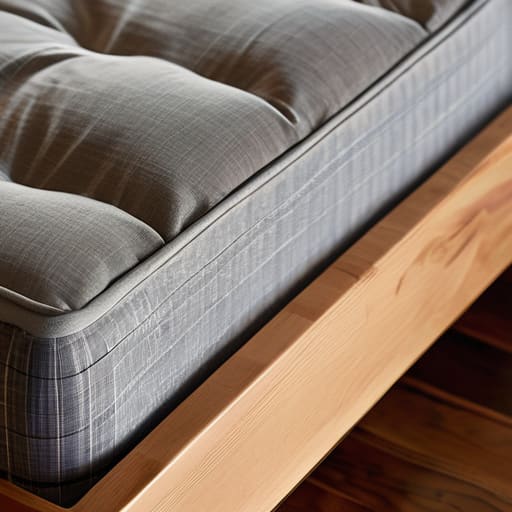
We spend a fortune on “smart” mattresses and high-thread-count sheets, yet we ignore the very thing holding it all up. When I’m sitting in clinic with a patient who is convinced they have a neurological issue because they wake up every two hours, I start looking for the physical disruptors. A sagging slat or a failing center support isn’t just a minor inconvenience; it directly compromises mattress stability and spinal alignment. If your foundation is bowing, your body is spending the entire night fighting to find a neutral position rather than drifting into deep, restorative stages. You aren’t “bad at sleeping”—you are simply fighting your own furniture.
Then there is the auditory component, which is often dismissed as a nuisance but is actually a physiological trigger. Preventing bed frame squeaking isn’t just about peace and quiet; it’s about preventing those micro-arousals that pull you out of REM sleep without you even realizing it. You might not fully wake up, but your brain registers the vibration or the sharp metallic protest of a loose bolt, snapping you back into a lighter stage of sleep. It’s a constant, subtle tax on your rest that no amount of magnesium or melatonin can fix.
Foundation Matters Mattress Foundation Support vs Clinical Sleep Disorders

Here is where I have to draw a line between lifestyle adjustments and clinical pathology. In the clinic, I see patients who are convinced they have a neurological sleep disorder because they wake up feeling unrefreshed, but when we look at the mechanics, it’s often a matter of mattress foundation support. If your mattress is dipping into the gaps of a slatted frame or losing its structural integrity, you aren’t dealing with insomnia; you’re dealing with poor spinal alignment. A mattress that can’t stay level is a mattress that forces your body to work through the night to find a neutral position, preventing you from ever reaching those deep, restorative stages.
I often tell patients to stop over-analysing their brain chemistry and start looking at their furniture. There is a massive difference between a clinical sleep disorder and the physical discomfort caused by a failing base. Whether you are debating a platform bed vs box spring for sleep, the goal is the same: consistent, even support. If your foundation is uneven, your body spends the night micro-adjusting, which mimics the fragmented sleep patterns of more serious conditions. We need to rule out these mechanical failures before we start prescribing heavy-duty interventions.
Platform Bed vs Box Spring Finding Real Evidence Based Support
When patients come to my clinic complaining of mid-back pain, they often assume it’s a structural issue with their spine. In reality, I frequently find it’s a mechanical issue with their setup. If you are weighing up a platform bed vs box spring for sleep, you need to stop thinking about aesthetics and start thinking about physics. A box spring is essentially a coil-on-coil system; it’s designed for bounce, not necessarily for the rigid, predictable support a modern memory foam or hybrid mattress requires. If your mattress is constantly shifting or dipping because it lacks a solid base, you aren’t just sleeping poorly—you are actively fighting your body’s natural alignment all night.
A platform bed offers a much more consistent surface, which is vital for mattress stability and spinal alignment. By providing a flat, firm foundation, you eliminate the micro-movements that can trigger those frustrating “micro-awakenings” we see on sleep studies. Furthermore, if you’re tired of that jarring, metallic screech every time you roll over, investing in a solid platform is the most effective way of preventing bed frame squeaking. It’s about creating a predictable environment where the only thing you have to focus on is actually drifting off.
Spinal Alignment and the Myth of Mattress Stability
In the clinic, I often see patients who are convinced they have a chronic back issue or a neurological disorder, only to find their “pain” is actually a direct result of a failing bed frame. It’s a classic case of misattribution. If your frame is uneven or the slats are spaced too far apart, you aren’t just sleeping on a soft mattress; you are fighting a losing battle with mattress stability and spinal alignment. When the foundation shifts even a fraction of an inch under your weight, your spine loses its neutral position. You spend eight hours in a state of micro-adjustment, never truly settling, which mimics the physical restlessness we see in more complex sleep disorders.
We also need to talk about the sensory disruptions that people often dismiss as “just getting older.” A frame that isn’t properly tightened or a base that lacks structural integrity leads to those sudden, jarring noises in the middle of the night. Preventing bed frame squeaking isn’t just about peace and quiet; it’s about preventing those micro-arousals that pull you out of deep, restorative sleep stages before you even realize you’ve woken up. If your environment is noisy and unstable, your brain stays on high alert, making it impossible to achieve the physiological stillness required for real rest.
Preventing Bed Frame Squeaking to Protect Your Sleep Environment
There is a specific kind of psychological torture that comes from a bed frame that decides to protest every time you roll over. In the clinic, I see patients who are convinced they have a hyper-arousal disorder because they wake up at the slightest sound, but often, it isn’t their nervous system that’s the problem—it’s a loose bolt or a dry wooden slat. Preventing bed frame squeaking isn’t just about noise control; it’s about reducing the micro-arousals that pull you out of deep, restorative sleep stages without you even realizing it.
If you’re dealing with a mechanical protest, start with the basics: tighten every screw and ensure the frame is flush against the floor or the slats. If you have a wooden frame, a bit of paraffin wax or even a simple felt pad between moving parts can work wonders. I often tell my patients that improving sleep environment with furniture maintenance is far more effective than buying a new $2,000 “sleep-optimizing” gadget. A silent, stable base allows your brain to stay in the dark, quiet zone where actual recovery happens.
Bed Height and Sleep Hygiene Optimizing Your Physical Space
We often obsess over the thread count of our sheets or the exact darkness of the room, yet we rarely consider the ergonomics of the bed itself. I see patients all the time who are struggling with fragmented sleep, only to realize their bed is so low to the ground that getting in and out feels like a feat of gymnastics. This isn’t just about comfort; it’s about the impact of bed height on sleep hygiene. If your physical environment requires effort to navigate, you are introducing micro-stressors into your evening routine that can keep your sympathetic nervous system on edge right when you should be winding down.
A bed that is too high can be just as problematic, making the act of climbing in feel precarious rather than inviting. When we talk about improving sleep environment with furniture, we need to look at the transition between being awake and being asleep. A well-proportioned bed height supports a seamless movement into bed, reducing the physical friction that can disrupt your ability to settle. It’s about creating a space that feels stable and accessible, rather than a piece of furniture you have to “manage” every single night.
Practical Fixes: Beyond the Clinical Diagnosis
- Check your slats before you check your pulse. If you’re waking up with a dull ache in your lower back, don’t immediately assume it’s a spinal issue; check if your bed slats have bowed or shifted, creating a “hammock effect” that ruins your alignment.
- Stop ignoring the squeak. In the clinic, I see people exhausted by “anxiety,” but they’re actually being micro-aroused every time they roll over because their metal frame is protesting. Tighten those bolts or use felt pads; silence is a legitimate sleep hygiene requirement.
- Match the foundation to the mattress, not the aesthetic. If you’ve bought a high-end memory foam mattress but dumped it on an old, uneven box spring, you’ve essentially wasted your money and sabotaged your sleep architecture.
- Watch the wobble. A bed frame that shifts when you move creates a subconscious sense of instability. Your brain needs to feel that your environment is a “fixed” sanctuary to transition effectively into deep sleep stages.
- Mind the height for your morning routine. It sounds trivial, but if your bed is so low you’re struggling to sit up and stand, you’re starting your day with a cortisol spike from physical exertion. Aim for a height that allows for a natural, fluid transition to your feet.
The Bottom Line: Distinguishing Environment from Disorder
Before you assume you have a clinical sleep disorder, look at your foundation; a sagging or unstable bed frame can mimic the physical restlessness and discomfort of more serious conditions.
Stop over-relying on your wearable’s data to solve sleep issues; if your bed frame is causing micro-awakenings due to noise or instability, no amount of “sleep hygiene” apps will fix the physical disruption.
Prioritize structural stability—whether through a platform or a reinforced base—to ensure your spinal alignment remains consistent, as even minor shifts in mattress support can sabotage your restorative sleep cycles.
Frequently Asked Questions
If my bed frame is making noise or shifting, is that actually enough to trigger a clinical sleep disorder, or am I just overthinking it?
No, a squeaky frame won’t cause a clinical disorder, but it will absolutely ruin your sleep hygiene. A shifting bed causes micro-arousals—those tiny, jagged awakenings you don’t even remember but that prevent you from hitting deep, restorative stages. You aren’t “overthinking” it; you’re reacting to a disrupted environment. If your bed moves, your brain stays on high alert. Fix the frame first; don’t go looking for a diagnosis when you just need a stable base.
I've spent a fortune on a high-end mattress; is there any point in upgrading my bed frame if I'm still waking up with back pain?
It’s a frustratingly common scenario in my clinic. You’ve invested in the “best” mattress, yet your back is still screaming at you by 3 a.m. If you’re waking up in pain, the mattress is only half the story. A high-end mattress on a weak or uneven frame is like putting a Ferrari engine in a car with a broken chassis. If that frame isn’t providing a perfectly flat, rigid foundation, your expensive mattress can’t do its job.
Can a mismatched bed frame and mattress actually mess with my sleep cycles, or is that just another one of those "wellness" myths?
It isn’t a wellness myth, but it’s also not “messing with your sleep cycles” in the way a clinical disorder does. A mismatched pairing won’t rewrite your brain chemistry, but it will wreak havoc on your physical comfort. If your mattress is sagging because the frame lacks support, you’ll spend the night micro-adjusting your posture. Those tiny, subconscious movements fragment your sleep architecture. You aren’t experiencing insomnia; you’re just fighting your furniture all night.