I spent ten years in the dark, sitting in clinical observation rooms while patients were tethered to a headbox by a web of electrodes, measuring the actual electrical architecture of their brains. Now, I spend my afternoons watching people stare anxiously at their wrists, convinced that a glowing “sleep score” of 64 means they’ve failed at being human. If you are looking for a complete guide to sleep trackers that promises to turn your smartwatch into a medical-grade diagnostic tool, you can stop reading right now. Most of these devices are essentially just glorified pedometers with a fancy algorithm, and they are doing more to increase your sleep anxiety than actually helping you rest.
I’m not here to sell you a gadget or validate the marketing hype of Silicon Valley. Instead, I want to draw a very clear line between the consumer-grade data you’re seeing on your phone and the clinical reality of what a sleep study actually proves. I will show you how to use these tools without letting them gaslight you, and more importantly, I’ll help you distinguish between a genuine physiological disorder and a simple case of a bedroom that is far too warm.
Your Sleep Score Is a Lie a Complete Guide to Sleep Trackers
I’ve spent seventeen years watching patients sleep while wired to a clinical headbox, and if there is one thing I have learned, it is that your wrist is not a laboratory. When you wake up and see that arbitrary number—that “78%” or “Sleep Score of 65″—you aren’t looking at medical data; you are looking at a highly sophisticated educated guess. Most wearable sleep technology relies on movement and heart rate to estimate where you are in your night, but it cannot actually see your brain waves.
Without EEG to monitor the electrical activity of the brain, these devices are essentially playing a game of charades with your sleep stages analysis. They might see your heart rate drop and assume you’ve entered deep sleep, but they can’t distinguish between true restorative rest and a state of quiet wakefulness. They are particularly poor at reliable REM sleep monitoring, which is vital for cognitive function. Stop treating that score as an absolute truth. It is a trend indicator at best, and a source of unnecessary anxiety at worst.
Why Wearable Sleep Technology Fails at True Sleep Stages Analysis
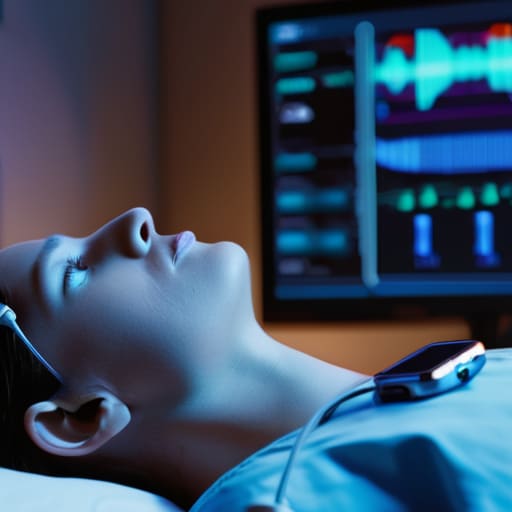
The fundamental problem with wearable sleep technology is that it is essentially playing a game of high-stakes guesswork. In my clinic, when we perform a polysomnography, we aren’t just looking at how much you moved or how fast your heart beat; we are looking at the electrical activity of your brain. We use EEG sensors to see the actual firing of neurons that distinguishes deep N3 sleep from the rapid eye movements of REM. Your watch, however, is relegated to the periphery. It’s trying to infer your sleep stages analysis by using proxy measurements like movement and heart rate variability sleep data. It is trying to guess what your brain is doing by looking at what your wrist is doing, and frankly, that is a massive leap of logic.
Because these devices lack a direct line to your central nervous system, they frequently miss the nuance of your architecture. A tracker might see you lying perfectly still and decide you’re in a deep sleep, when in reality, you’re just experiencing that frustrating, wide-awake state of quiet wakefulness. They are remarkably poor at distinguishing between light sleep and true restorative stages, which is why you often wake up feeling like you’ve been hit by a bus despite a “90% sleep score” on your app.
The Truth About Rem Sleep Monitoring and Your Data
If you’ve ever woken up feeling like a zombie despite your watch insisting you had plenty of “deep sleep,” you aren’t imagining things. In the clinic, we define REM sleep by looking at rapid eye movements and specific brainwave patterns on an EEG. Your wearable, however, is essentially playing a guessing game. It’s using heart rate variability sleep data and movement sensors to infer what might be happening, rather than actually seeing it. It’s like trying to judge the plot of a film by only watching the shadows flicker on the wall; you might get the gist, but you’re missing the nuance.
This lack of precision is why many people end up in a cycle of unnecessary anxiety. They see a low REM score and panic, thinking they are cognitively declining, when in reality, the REM sleep monitoring on their wrist is simply misinterpreting a period of stillness or a slight shift in heart rate. We aren’t looking at brain activity; we are looking at proxies. Until a device can actually peer into your cortex, please treat those stage percentages as educated guesses rather than clinical facts.
Distinguishing Circadian Rhythm Tracking From Actual Sleep Disorders
Here is where the confusion really sets in. Most of the data you’re seeing on your app—the fluctuations in your movement or your heart rate variability sleep metrics—is actually telling you more about your internal clock than your actual sleep quality. This is circadian rhythm tracking, not a diagnostic tool. It can show you that your body prefers a 7:00 AM wake time or that your temperature drops at a certain hour, but it cannot tell you if your breathing is actually stopping in the night.
The danger is that people see a dip in their “readiness score” and assume they have a clinical issue, when in reality, they just have an inconsistent schedule. A wearable might flag a restless night, but it is fundamentally incapable of providing reliable sleep apnea detection. If you are gasping for air or waking up with a headache, a graph on your phone is a poor substitute for a clinical assessment. We need to stop treating these devices as medical detectives and start seeing them for what they are: glorified calendars for your biology.
When Heart Rate Variability Sleep Data Signals Real Medical Needs
Now, I’m not saying your wearable is entirely useless; it’s just not a diagnostic tool. However, there is a specific threshold where the data stops being a “wellness metric” and starts looking like a red flag. If you notice a sustained, significant drop in your heart rate variability sleep data—especially if it’s coupled with a resting heart rate that refuses to settle—your device is essentially screaming that your autonomic nervous system is under siege. This isn’t about whether you had a “bad night”; it’s about whether your body is struggling to recover from a physiological stressor.
When I see patients in the clinic, I look for patterns that a consumer device can only hint at. If your tracker shows a consistent trend of low HRV alongside high nocturnal heart rates, it might be time to stop looking at your “sleep score” and start looking at sleep apnea detection. These shifts can indicate that your breathing is being interrupted, preventing you from ever truly reaching the restorative depths of N3 or REM. Don’t ignore a pattern of physiological strain just because the app tells you to “try a magnesium supplement.”
Beyond Sleep Hygiene Improvement Moving Toward Sleep Apnea Detection
If you’ve spent months tweaking your blackout curtains and lowering your thermostat only to find you’re still waking up gasping or feeling like you’ve been hit by a bus, it is time to stop focusing on sleep hygiene improvement. You can have the perfect, cool, dark bedroom and still be suffering from a physiological crisis. This is where the distinction between a “bad habit” and a medical necessity becomes life-altering. When your fatigue isn’t solved by a magnesium supplement or a consistent bedtime, we have to look at the mechanics of your breathing, not just the timing of your rest.
This is the limit of most wearable sleep technology. While your watch might notice a spike in your heart rate, it cannot see your airway collapsing. It lacks the ability to monitor the oxygen desaturation that defines obstructive sleep apnea. If you are experiencing heavy snoring, morning headaches, or daytime sleepiness that feels structural rather than just tired, you aren’t looking for better sleep hygiene; you are looking for sleep apnea detection. Don’t let a “good” sleep score on your wrist mask a serious respiratory issue that requires a clinical diagnosis.
How to actually use your data without losing your mind
- Stop chasing the perfect score. If your tracker tells you that you had a “poor” night but you feel functional and alert by 10:00 AM, trust your brain, not the algorithm. A number on a screen is not a clinical diagnosis.
- Look for trends, not single nights. A single bad reading is just a bad night—maybe you had a glass of wine too late or the room was stifling. I care about what your data looks like over three weeks, not what it says about last Tuesday.
- Use your wearable to track your wake time, not just your sleep time. If you see your “sleep windows” drifting later and later every night, you aren’t suffering from a mysterious disorder; you’re just drifting into a social jetlag cycle.
- Cross-reference your data with your physical symptoms. If your tracker shows high restlessness and you wake up with a dry mouth or a headache, stop looking at the app and start looking at your breathing; that is a signal for a clinical conversation, not a lifestyle tweak.
- Treat your tracker as a diary, not a doctor. Use it to spot patterns in your environment—like how a warmer room correlates with more movement—but never use it to self-diagnose a condition that requires a polysomnography study.
The Bottom Line
Stop using your wearable to diagnose yourself; a sleep score is a mathematical guess based on movement, not a clinical measurement of your brain waves.
Learn to differentiate between lifestyle-driven sleep issues—like inconsistent wake times—and genuine medical disorders that require a professional polysomnography study.
If your data suggests a pattern of breathing interruptions or extreme oxygen drops, stop looking at your app and start looking for a clinician who will actually listen.
Frequently Asked Questions
If my tracker says I slept well but I still feel exhausted, should I be worried about a clinical issue like sleep apnea?
If your tracker gives you a gold star but you feel like you’ve been hit by a bus, listen to your body, not the wristband. A tracker sees you lying still and assumes success; it can’t see the micro-arousals or the oxygen desaturations that tear your sleep apart. That disconnect is a massive red flag. It’s often the hallmark of sleep apnea. Don’t dismiss your exhaustion just because an algorithm says you’re fine.
Is there any way to use my wearable data to help my doctor make a diagnosis, or is it all just noise to them?
It’s not all noise, but you have to stop handing over your “sleep score” like it’s a blood test. To a clinician, that number is meaningless. Instead, bring the trends. Show me your resting heart rate patterns or a sudden, sustained spike in nocturnal movement. Don’t tell me you “slept poorly”; show me the data that suggests your breathing changed or your heart rate refused to drop. Patterns matter; arbitrary scores don’t.
How much of my "poor sleep score" is actually just a result of me waking up at different times throughout the week?
Probably more than you’d like to admit. Before I even look at your sleep onset or duration, I want to know what time you’re actually getting out of bed. If your wake time is a moving target, your circadian rhythm is essentially in a state of permanent jet lag. Your tracker sees the physiological fallout of that inconsistency and flags it as a “poor score,” but it’s not a disorder—it’s just a lack of rhythm.