I’ve lost count of how many times I’ve seen a patient spend hundreds of pounds on silk eye masks, weighted blankets, and expensive “sleep-optimising” apps, only to realize they’re still sleeping three feet away from their toaster and a pile of laundry. If you are trying to figure out how to sleep well in a studio flat, please stop looking for a magic supplement or a high-tech wearable to save you. The problem usually isn’t a lack of “zen”; it’s that your living space is a physiological battlefield where your brain can’t distinguish between the kitchen, the office, and the bedroom.
I’m not here to sell you on lavender mists or lifestyle trends that have no basis in actual sleep science. Instead, I want to talk about the structural friction of small-space living—things like light pollution from your kitchenette, the thermal reality of a single-room heat cycle, and how to create psychological boundaries when you physically have none. I will show you how to use evidence-based principles to reclaim your rest, separating the genuine environmental challenges of a studio from the unnecessary clutter of modern sleep hype.
Understanding How to Sleep Well in a Studio Flat
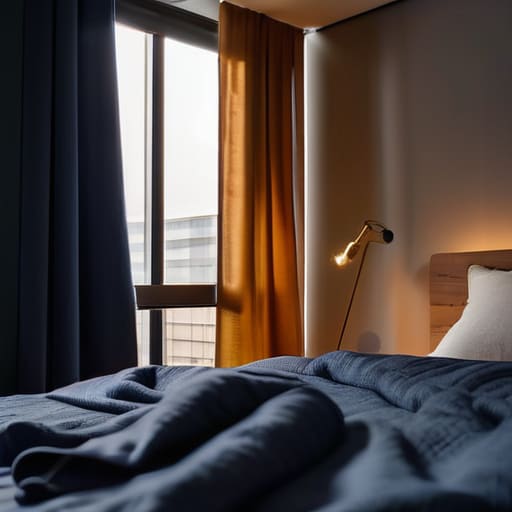
The fundamental issue with a studio isn’t just the lack of square footage; it’s the lack of psychological boundaries. In my clinic, I see people who are exhausted because their brain can no longer distinguish between “productive living space” and “restorative sleep space.” When your sofa, your desk, and your bed are all within a three-meter radius, your nervous system stays in a state of low-level alertness. You aren’t just sleeping in a room; you’re sleeping in your kitchen, and your brain knows it.
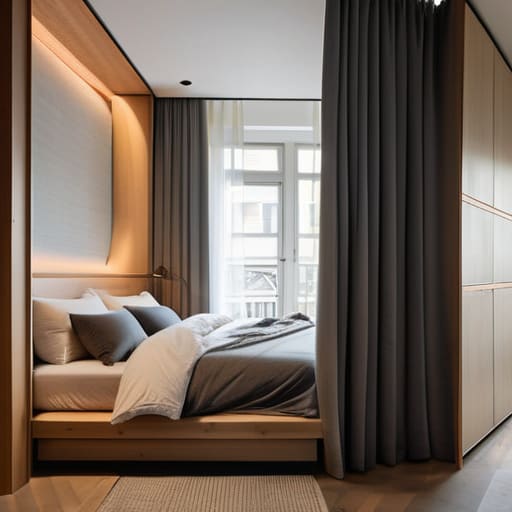
To fix this, you have to stop treating your studio like a single room and start creating a bedroom nook. This doesn’t require a sledgehammer and a building permit; it requires intentionality. I often suggest using room dividers for studio apartments—not just for aesthetics, but to create a visual “off switch” for your eyes. If you can see your laptop or your pile of washing up from your pillow, your cortisol levels aren’t going to drop the way they should. You need to physically partition the environment so that when you step into that corner, the rest of your life effectively disappears.
Key Things to Know
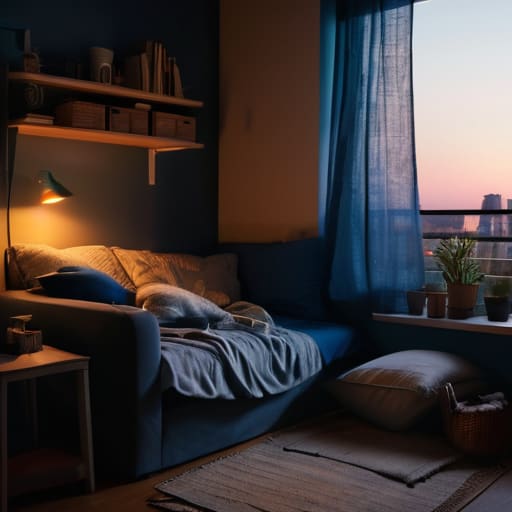
First, we need to address the elephant in the room: your bed is likely your sofa, your dining table, and your office all at once. In a clinical setting, I look for “stimulus control”—the brain’s ability to associate a specific space with sleep. When your studio apartment layout for sleep is non-existent, your brain stays in a state of high alert because it hasn’t been given a clear signal that the day is over. You aren’t just fighting bad habits; you are fighting a lack of environmental cues.
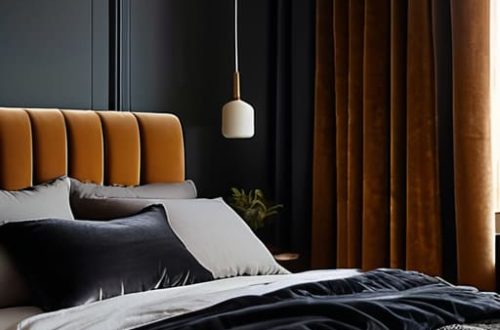
This is where practical boundaries come in. If you can’t physically move walls, you must create them mentally. I often suggest creating a bedroom nook using heavy, opaque curtains or even strategic shelving. This isn’t about aesthetics; it’s about minimizing light pollution in studios and creating a psychological “off” switch. If your eyes can see your laptop or your dirty dishes from your pillow, your cortisol levels aren’t going to drop as they should. You need to trick your nervous system into believing the rest of the room has simply ceased to exist.
Practical Tips and Steps
First, let’s address the physical environment. In a studio, your bed is often also your dining table and your office, which is a physiological nightmare for your brain. You need to signal to your nervous system that “work time” is over. I’m a big proponent of creating a bedroom nook, even if it’s just a psychological one. If you can’t afford permanent walls, use heavy, blackout curtains or even bookshelves as room dividers for studio apartments. This isn’t just about aesthetics; it’s about creating a visual boundary that tells your brain it is safe to power down.
Second, we have to talk about the sensory triggers. In an open-plan layout, you are at the mercy of every stray light from the street or the hum of the fridge. Minimizing light pollution in studios is non-negotiable; if you can see your hand in front of your face, it’s too bright. Invest in a high-quality eye mask and perhaps a white noise machine to mask the sounds of your life happening five feet away from your pillow. If you can’t control the noise, you must dampen the acoustic environment to prevent those micro-arousals that ruin your sleep architecture.
Common Mistakes to Avoid
The biggest mistake I see isn’t a lack of willpower; it’s people trying to apply standard sleep hygiene to a space that fundamentally defies it. You cannot simply “relax” in a room where your dining table is three feet from your pillow. Many people attempt to fix their sleep by buying expensive blackout curtains, but they ignore the psychological friction of living in a single room. If you haven’t prioritized creating a bedroom nook, your brain remains in a state of low-level alertness, unable to transition from “living mode” to “sleeping mode.”
Another error is the obsession with “optimizing” everything via apps while ignoring the physical environment. I see patients who are devastated by a low sleep score on their wearable, yet they are sleeping in a space with zero noise reduction in open plan living. You can’t track your way out of a room that is too loud or too bright. Stop trying to fix your circadian rhythm with supplements if your studio layout means your bed is directly in the line of sight of your laptop or kitchen lights. Focus on the environment first; the data matters much less if the setting is wrong.
Final Thoughts
At the end of the day, living in a single room means you are constantly negotiating with your environment. You aren’t just fighting your own thoughts; you are fighting the proximity of your kitchen to your pillow and the way a single window can flood your entire living area with light at dawn. If you’ve tried everything from magnesium supplements to expensive weighted blankets and still feel like you’re running on empty, stop looking for a magic pill. Start looking at your studio apartment layout for sleep. Sometimes, the solution isn’t a new habit, but a physical boundary.
Whether you decide on using room dividers for studio apartments to create a sense of separation or simply focus on minimizing light pollution in studios with better blackout options, the goal is the same: psychological and physiological cues that the “day” has ended. Don’t let a gadget tell you that you slept poorly when you can clearly feel the difference after a few nights of temperature control and better zoning. Trust your body over your wristband, and remember that sometimes, sleep isn’t a mystery to be solved, but an environment to be built.
The Studio Survival Guide: Five Clinical Realities
- Stop treating your bed like a sofa. In a studio, the boundary between “living” and “sleeping” is non-existent, which is a disaster for your brain. If you work, eat, and watch Netflix in the same square meter where you sleep, your brain never gets the signal that the day is over. You need a physical or visual boundary—even if it’s just a heavy curtain or a folding screen—to tell your nervous system that the “living” zone is closed.
- Check your thermostat, not your mood. People in small flats often struggle with temperature because the heat from a laptop, a small radiator, or even your own body stays trapped in that single room. If your bedroom is a sauna, you aren’t going to hit deep sleep, no matter how much chamomile you drink. Aim for a drop in core temperature; if the air is stagnant, get a fan or crack a window.
- Beware the “Blue Light” trap of small-space living. When your TV is five feet from your pillow because you have no choice, your melatonin production is under constant siege. If you can’t move the furniture, you must move the light. Invest in dimmable, warm-toned lamps for the evening and stop using the overhead “big light” an hour before you want to drift off.
- Silence the environmental friction. In a studio, every sound—the hum of the fridge, the neighbor’s footsteps, the street noise—is amplified because you are effectively sleeping in your hallway. Don’t just buy earplugs and hope for the best; consider a white noise machine or a dedicated fan to create a consistent “sound floor” that masks those sudden, jarring spikes in noise.
- Discipline your wake time, even if your space is chaotic. Because your bed is so close to your kitchen and your desk, the temptation to “just rest for ten minutes” after waking up is massive. Don’t do it. Get out of that specific sleeping area immediately upon waking. You need to separate the physical act of rising from the physical space of the studio to keep your circadian rhythm from collapsing into a permanent state of grogginess.
The Bottom Line
Stop chasing “sleep scores” on your wrist and start looking at your thermostat; in a studio, temperature regulation is your biggest physiological hurdle.
Learn to distinguish between environmental friction—like your bed being too close to your kitchen table—and a genuine clinical sleep disorder.
Consistency beats “optimization”; a predictable wake time will do more for your circadian rhythm than any expensive blackout curtain or lavender mist ever could.
Frequently Asked Questions
If my studio is one big room, how can I stop my brain from associating my bed with the "living" area where I eat and work?
This is a classic case of stimulus control, and it’s a genuine struggle in a studio. Your brain isn’t a light switch; it needs environmental cues to transition. If you work, eat, and scroll in the same six-foot radius where you sleep, your cortex stays “on.” You need sensory boundaries. Use a specific lamp only for evening, a different scent for sleep, or even a physical screen. If you can’t change the floor plan, change the light.
I use a sleep tracker to monitor my rest, but it says I'm sleeping poorly in this flat—should I trust the data or my own feeling of exhaustion?
Trust your exhaustion. I’ve spent seventeen years looking at polysomnography data—the gold standard—and I can tell you that your wristband is essentially guessing. It’s measuring movement and heart rate variability, not brain waves. If your tracker says you slept poorly but you feel fine, ignore it. However, if the tracker says you slept “well” but you’re dragging through your day, that’s a red flag. Your body is a better clinician than an algorithm.
Is it actually possible to keep a studio apartment cool enough for deep sleep without running the heating or AC all night?
It is, provided you stop fighting your environment and start managing your biology. You don’t need a constant blast of AC; you need to facilitate the natural drop in core body temperature that signals sleep. Focus on thermal regulation: cotton bedding, a hot shower an hour before bed to trigger a cooling rebound, and—crucially—cracking a window or using a fan to move air. If your studio feels like a sauna, no “sleep hack” will save you.