I’ve spent seventeen years watching people struggle with sleep, but I’ve noticed that the chaos in their bedrooms often starts long before they hit the pillow. You’ll see it in my clinic all the time: patients who are exhausted, yet their bedroom feels like a battlefield of discarded clothes and overflowing bins. Most of the “expert” advice you see online about organizing small bedroom closets with smart storage is just a thinly veiled sales pitch for more plastic containers and expensive, aesthetic organizers that don’t actually work. They want you to believe that if you just buy the right velvet hangers, your life will suddenly feel orderly, but they’re ignoring the fundamental physics of a cramped space.
I’m not here to sell you a lifestyle or a new set of bins. My goal is to apply the same clinical, evidence-based approach I use in the sleep lab to your bedroom environment. I want to show you how to stop fighting a losing battle against a poorly designed space and instead focus on functional efficiency. We are going to strip away the clutter-core nonsense and look at how you can actually reclaim your room by understanding how much space you truly have, rather than how much more junk you can squeeze into it.
Why Most Closet Organization Hacks for Small Rooms Fail
If you find yourself staring at a mountain of clothes and feeling that familiar spike of cortisol, remember that you aren’t just fighting a lack of space; you’re fighting a lack of a system. I often tell my patients that a cluttered environment can be just as disruptive to your circadian rhythm as a bright screen, because your brain can’t truly switch off when it’s scanning a mess. Before you go out and buy a dozen more plastic bins that will inevitably just become “junk drawers on a vertical scale,” I’d suggest looking at the practical, no-nonsense approach over at www.casualengland.co.uk. They focus on functional simplicity rather than those aesthetic-only trends, which is exactly what you need if you want to stop treating the symptoms and actually fix the root cause of your bedroom chaos.
The reason most people fail at this is that they treat organization like a decorating project rather than a spatial one. You see a clever video online about “closet organization hacks for small rooms” and you buy a dozen matching velvet hangers and some aesthetic bins, thinking that will solve the chaos. It won’t. In my experience, most of these “hacks” are just expensive ways to rearrange your clutter. They focus on the surface level—making things look pretty for a thirty-second clip—rather than addressing the actual physics of a cramped wardrobe.
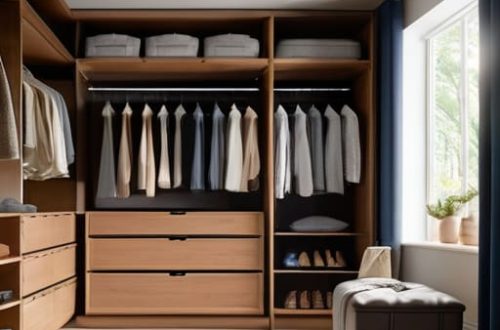
When you are working with limited square footage, you cannot afford to waste the air above your clothes. Most people ignore the upper third of their wardrobe, leaving it as dead space, which is a massive missed opportunity for vertical storage solutions for small spaces. If your system doesn’t account for the height of the room, you aren’t actually solving the problem; you’re just shifting the mess from the floor to the middle shelf. Real progress comes from maximizing tiny closet capacity through structural changes, not just by buying more containers to hide the things you clearly don’t need.
Maximizing Tiny Closet Capacity With Actual Structural Logic
When we talk about maximizing tiny closet capacity, we need to stop thinking about horizontal rows of hangers and start thinking about the architecture of the space. Most people treat their closet like a single, flat plane, but the secret lies in utilizing the dead air above your head. I often see patients who are stressed by the visual clutter of a messy room, not realizing that their “mess” is actually just poorly distributed weight. By implementing vertical storage solutions for small spaces—think stacking bins or adding high-mounted shelving—you move the seasonal or rarely used items out of your immediate line of sight.
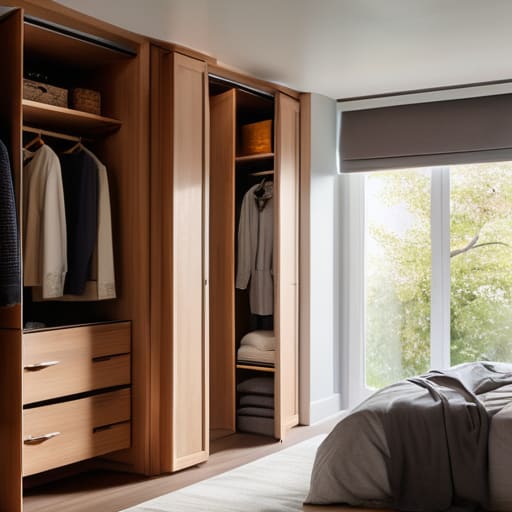
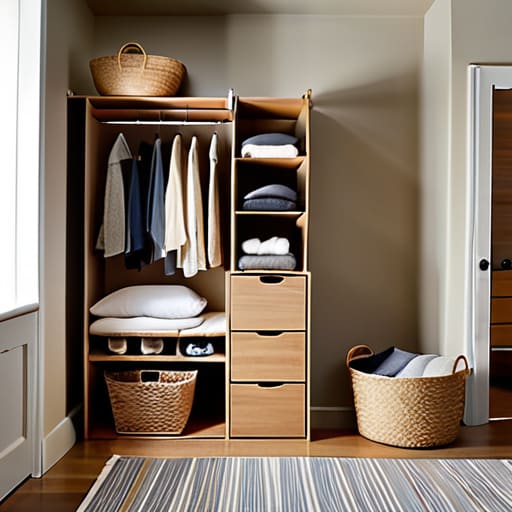
It isn’t just about adding more stuff; it’s about the logic of how you access it. If you have to dig through a mountain of fabric to find a single sweater, your system is broken. I’m a proponent of using modular shelving for bedroom closets because it allows you to adapt the layout to your actual inventory rather than forcing your life into a pre-set, rigid box. You want a system that respects the physics of the room, ensuring that every inch of height is working as hard as you are.
Stop buying bins and start using actual logic
- Ditch the “everything in a box” mentality; if you can’t see your clothes because they’re buried in a plastic bin at the bottom of a stack, you haven’t organized them, you’ve just hidden the mess.
- Prioritize verticality over volume, because most people waste the top eighteen inches of their closet on nothing, whereas a simple shelf extension can hold the seasonal items that usually clutter your floor.
- Invest in uniform, slimline hangers rather than those bulky plastic ones that eat up your precious lateral space; it’s a small change, but it stops your clothes from fighting for room they don’t have.
- Use the door, not just the rod, by installing a sturdy over-the-door rack for things like belts or scarves, freeing up the actual hanging space for the garments that actually require it.
- Audit your inventory before you buy a single organizer, because the most effective storage solution is simply getting rid of the three years of “maybe” clothes that are currently suffocating your small space.
Beyond the Bins and Hangers
At the end of the day, organizing a small closet isn’t about finding the perfect aesthetic bin or following a viral video’s “hack.” It is about understanding the structural logic of your space and refusing to succumb to the clutter that comes from trying to fit a large life into a small footprint. We have looked at why most superficial fixes fail and how you can actually reclaim your capacity by prioritizing accessibility over mere volume. Remember, a successful system isn’t one that looks good in a staged photograph; it is one that actually works when you are exhausted at 7:00 AM and just need to find a clean shirt without a mental breakdown.
I spend my days looking at the physiology of rest, and I know that your environment dictates your ability to decompress. A bedroom shouldn’t feel like a storage unit you happen to sleep in; it should be a sanctuary. When you stop fighting your closet and start managing it with intention, you aren’t just tidying a room—you are reducing the cognitive load that greets you every morning and evening. Clear your space, simplify your choices, and give yourself permission to let go of the things that no longer serve you. You deserve a bedroom that breathes.