I spent ten years in the dark, watching patients twitch under a mess of wires, and if there is one thing I’ve learned, it’s that we are far too obsessed with expensive gadgets and not nearly enough with the basics. Parents often come to my clinic desperate for a medical diagnosis or a new app to track their child’s circadian rhythms, but they rarely look at the most obvious culprit. We spend hundreds on “smart” tech, yet we completely overlook how teenagers’ bedrooms affect sleep through something as simple as a stuffy, overheated room or a desk positioned right next to a pillow. Most of the time, it isn’t a complex neurological malfunction; it’s just a poorly managed environment.
I am not here to sell you a subscription to a sleep-tracking wearable or a complicated light-therapy lamp. My promise to you is much simpler: I will strip away the pseudo-science and tell you what actually matters. We are going to look at the evidence—the real, clinical stuff—to see how temperature, light, and clutter actually impact a developing brain. I’ll help you distinguish between a teen who needs a medical intervention and one who just needs to turn down the thermostat.
Stop Blaming Their Biology How Teenagers Bedrooms Affect Sleep
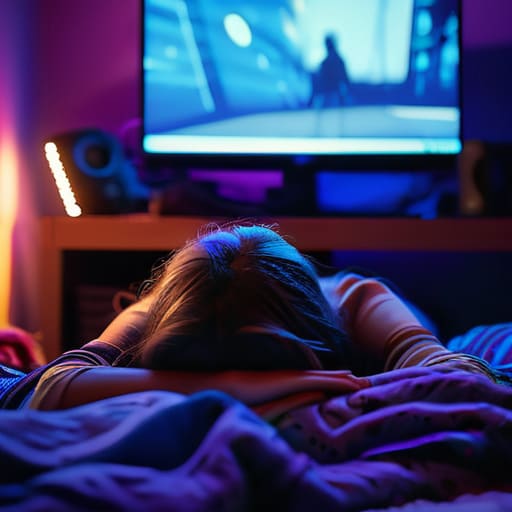
We often fall into the trap of thinking a teenager’s inability to wake up for school is just a byproduct of their developing brain or a stubborn biological clock. While it’s true that puberty shifts their internal timing, we shouldn’t ignore the physical environment they’ve built for themselves. I see so many parents convinced their child is suffering from a profound medical issue, when in reality, they are simply living in a space designed for stimulation rather than recovery.
The modern teen bedroom is frequently a sensory minefield. Between the glowing LED strips and the constant hum of a gaming console, we are seeing massive blue light exposure and melatonin suppression before they even touch the pillow. It isn’t just about the screens, though; it’s the ambient light and the lack of temperature control. If their room is a bright, stuffy sanctuary for late-night scrolling, you aren’t looking at a biological inevitability—you’re looking at circadian rhythm disruption caused by their surroundings. Before we start chasing expensive specialist diagnoses, we need to look at whether their room is actually helping them drift off or actively fighting against them.
Why Blue Light Exposure and Melatonin Are Actually Fighting
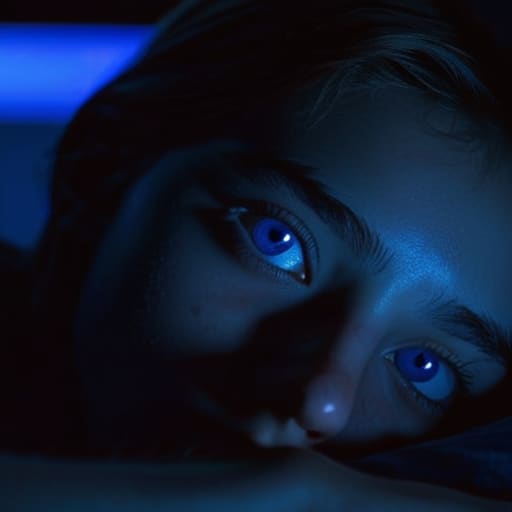
We need to have a serious chat about the “blue light” obsession. I spend half my clinic time explaining that the problem isn’t just the screen itself, but the physiological timing of it. When your teen is staring at a smartphone at 11:00 PM, they aren’t just being “distracted”; they are sending a direct, high-intensity signal to their brain that the sun is still up. This causes a profound blue light exposure and melatonin conflict. Melatonin is the hormone that tells the body it’s time to wind down, but blue light suppresses its release, effectively tricking the brain into staying in a state of high alertness.
It isn’t just about being tired the next day; it is about circadian rhythm disruption in teens. Their biological clocks are already under immense pressure due to puberty, which naturally pushes their sleep onset later. When you add a bedroom lit by LED strips or glowing monitors, you are essentially fighting their biology with a sledgehammer. It’s not a lack of willpower or “laziness”—it is a chemical battle happening in their pineal gland.
The Truth About Circadian Rhythm Disruption in Teens
We often talk about the “teenage brain” as if it’s an unpredictable rogue agent, but there is a very predictable biological clock at play here. During adolescence, that internal clock naturally shifts later—a biological delay that makes them want to stay up and wake up later. The problem isn’t just the biology; it’s how their environment fights against it. When a bedroom is filled with harsh, overhead LED lighting or the constant glow of a gaming monitor, we are essentially forcing a physiological collision. This constant stimulation creates a state of circadian rhythm disruption in teens that no amount of “trying harder” to sleep can overcome.
It isn’t just about the light itself, but the timing. If their room remains a bright, high-energy environment until the moment they close their eyes, they are effectively telling their brain that it is midday. To fix this, we need to look at optimizing teen bedroom for rest by shifting the environment toward the dim and the warm. We aren’t looking for perfection, just a gradual signal to the brain that the day is actually over.
Optimizing Teen Bedroom for Rest Without the Useless Fluff
If you want to start optimizing teen bedroom for rest, please, for the love of all things clinical, stop buying expensive “sleep-inducing” essential oil diffusers or those ridiculous weighted blankets that promise a miracle. They aren’t doing anything. If you want real results, start with the basics: temperature and light. Most teenagers are sleeping in rooms that feel more like a sauna than a sanctuary. A stuffy, overheated room is a primary driver of fragmented sleep, and no amount of “sleep hygiene” supplements will fix that.
Secondly, we need to talk about the light. It isn’t just about the screen in their hand; it’s the ambient bedroom lighting for sleep hygiene that matters most. If they are studying under a harsh, cool-toned LED desk lamp until midnight, they are essentially telling their brain it is midday. Switch to warm, dim lamps in the evening. And regarding the noise? If they live in a busy household, a simple white noise machine can do more to mitigate the impact of noise on adolescent sleep than any expensive gadget on the market. Keep it simple, keep it cool, and keep it dark.
Bedroom Lighting for Sleep Hygiene What Actually Works
I see it constantly in clinic: parents buying expensive “blue light blocking” glasses for their teenagers, as if a pair of orange-tinted lenses can undo a bedroom lit like a landing strip. We need to stop treating light as a binary—on or off—and start looking at the intensity and spectrum of what’s actually in the room. Most teen bedrooms are currently optimized for gaming or scrolling, which is the exact opposite of what a biological clock needs to wind down.
If you want to move beyond the fluff, focus on the transition. It isn’t about total darkness at 9:00 PM; it’s about lowering the lux levels in the hour before they intend to sleep. Switch out those harsh, cool-white overhead LEDs for warm-toned lamps positioned lower in the room. This subtle shift helps mitigate the impact of blue light exposure and melatonin suppression that occurs when they are staring at a screen. We aren’t trying to turn them into monks; we are simply trying to signal to their brain that the day is actually over.
Addressing Adolescent Sleep Deprivation Causes Beyond the Screen
We spend so much time obsessing over the glowing rectangle in their hands that we completely overlook the physical environment surrounding them. While blue light exposure and melatonin are the usual suspects in these discussions, we often ignore the more visceral, sensory triggers of sleep fragmentation. I’ve seen countless teenagers who aren’t just struggling with a delayed biological clock, but are being jolted awake by the sheer unpredictability of their environment.
If their room is a hub of high-frequency noise—whether it’s a sibling’s gaming headset, street traffic, or a poorly insulated window—their sleep architecture is being shredded. You can have the most expensive blackout curtains in the world, but if the impact of noise on adolescent sleep isn’t addressed, they will never reach those restorative deep sleep stages. They might be drifting in and out of light sleep without even realizing it, leaving them feeling like zombies the next morning. We need to stop looking for a single “magic bullet” like a sleep app and start treating the bedroom like the sanctuary it’s supposed to be.
The no-nonsense checklist for a teen’s sleep environment
- Check the thermostat before you check their mood; if that bedroom is a stuffy incubator, they aren’t going to hit deep sleep, no matter how many weighted blankets they use.
- Get rid of the “dorm room” clutter that doubles as a sensory minefield; a bedroom that looks like a disaster zone keeps the brain in a state of low-level alertness.
- Stop worrying about the “blue light” myth in isolation and start looking at the total light load—if they’re studying under a harsh, cool-toned LED desk lamp until 11 PM, you’ve already lost the battle.
- Audit the noise situation, but don’t just suggest earplugs; if they live in a noisy house, a consistent, low-frequency white noise machine is far more effective than asking a teenager to “just be quiet.”
- If they have a desk in their bedroom, make sure it’s a psychological boundary; the brain needs to associate that bed with sleep, not with the stress of a biology revision session.
The Bottom Line for Teen Sleep
Stop chasing the “perfect” sleep app or expensive gadget; if their room is a stuffy, overheated box, no amount of digital tracking will fix the physiological struggle to stay asleep.
Distinguish between a biological shift in their internal clock and poor environmental habits—one requires clinical understanding, the other requires a thermostat adjustment and a ban on blue light.
Focus on the two most effective levers you actually have control over: stabilizing their wake time and ensuring their bedroom environment is cool, dark, and predictable.
Frequently Asked Questions
If my teen's wearable says they had "poor sleep" despite them being in bed for nine hours, should I actually be worried about a medical issue?
Don’t panic. First, remember that a wearable is not a polysomnogram; it’s a glorified motion sensor. It cannot see brain waves, which is the only way we actually measure sleep stages. If your teen feels rested, the “poor sleep” score is likely just noise. However, if they are exhausted despite those nine hours, we stop looking at the app and start looking at breathing or movement. The tracker is a hint, not a diagnosis.
How do I balance the need for a cool, dark room with the fact that most teenagers are naturally drawn to warmth and bright LED strips?
It’s a classic battle of biology versus aesthetics. Your teen wants a cozy, glowing sanctuary; your physiology tells you that’s a recipe for fragmented sleep. Don’t fight them on the LEDs—just move them. Switch those bright strips to a warm, dimmable amber or red tone that doesn’t suppress melatonin. As for the warmth, keep the room cool, but let them layer up with a heavier duvet. It’s easier to regulate body temperature with blankets than with a thermostat.
Is it worth investing in blackout curtains, or is the real problem just the inconsistent time they wake up on weekends?
It’s a bit of both, but let’s be clear: blackout curtains won’t fix a chaotic schedule. If your teen is waking up at 7:00 AM during the week and 11:00 AM on Saturdays, they’re essentially giving themselves permanent jet lag. No amount of darkness can override that kind of circadian whiplash. Buy the curtains to help them settle, certainly, but don’t expect them to solve the problem of an inconsistent wake time.