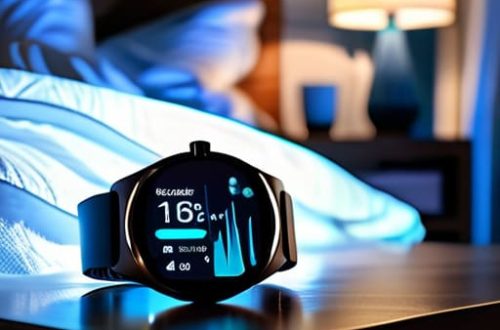
I spent ten years in the dark, sitting in dimly lit sleep labs while patients lay wired to headboxes, tossing and turning under the hum of medical monitors. I’ve seen it all: the genuine respiratory struggles that keep people awake, and the endless stream of people convinced their “sleep score” on a shiny new wearable is a medical diagnosis. Most of the noise you hear online about the common causes of nighttime restlessness is either expensive nonsense or oversimplified fluff that ignores the actual physiology of what’s happening in your brain. If you’re staring at the ceiling at 3:00 AM, you don’t need a $300 ring telling you that you slept poorly; you need to know why your body isn’t settling.
My goal here isn’t to sell you a magnesium supplement or a weighted blanket. I want to help you draw a line in the sand between a messy lifestyle and a clinical issue that requires actual medical intervention. I’m going to strip away the hype and look at the evidence, distinguishing between bad habits—like a bedroom that’s too warm or an erratic wake time—and the real disorders that have been ignored for far too long.
Circadian Rhythm Disruption and Your Irregular Wake Time
Before I even look at your sleep diary or ask when you last had a coffee, I’m going to ask you one thing: what time do you actually get out of bed? It sounds like a triviality, but for most of my patients, the answer is the smoking gun. We have this biological clock—the circadian rhythm—that thrives on predictability. When you spend your weekdays waking up at 6:30 AM for work, but spend your weekends “recovering” by sleeping in until 10:00 AM, you aren’t resting; you are essentially giving yourself permanent jet lag.
This constant shifting creates a state of circadian rhythm disruption that makes your brain unsure when to start secreting melatonin. You might find yourself lying awake at 2:00 AM, heart racing, feeling a sense of dread. While people often jump straight to discussing anxiety and sleep disturbances, the root cause is frequently just this biological confusion. Your body isn’t broken; it’s just lost. If your wake time is a moving target, your sleep quality will be too, no matter how many expensive supplements you try to use to fix it.
Common Causes of Nighttime Restlessness vs True Insomnia
The distinction between a lifestyle-induced struggle and a clinical pathology is where most people get lost. Often, what feels like a profound inability to sleep is actually a collection of physiological “noises” that we haven’t learned to tune out. You might be dealing with dietary triggers for insomnia—like that late-night snack or the hidden caffeine in a “decaf” tea—or perhaps you are noticing the specific, crawling sensations of restless leg syndrome symptoms that flare up only when the house goes quiet. These are real, physical irritants, but they are often manageable through specific clinical interventions rather than broad, vague lifestyle changes.
True insomnia, however, is a different beast entirely. It isn’t just about feeling tired; it’s a persistent, often debilitating disconnect between your brain and your body’s ability to rest, frequently exacerbated by anxiety and sleep disturbances. While I can give you plenty of sleep hygiene improvement tips to help someone with a messy routine, those tips will do absolutely nothing for a patient whose neurochemistry is working against them. If you’ve been told to “just relax” while your brain is running a marathon at 3:00 AM, you aren’t dealing with a bad habit; you’re dealing with a disorder.
Five ways to stop fighting your own biology
- Fix your wake-up time before you worry about your bedtime. It sounds counterintuitive, but if you’re waking up at 7:00 AM on Tuesday and 10:00 AM on Saturday, you aren’t “recovering” sleep; you’re just giving yourself permanent jet lag. Consistency is the only way to anchor your internal clock.
- Check your thermostat. I see this in clinic constantly—people trying to “force” sleep while their bedroom is a sauna. Your core temperature needs to drop to initiate sleep; if your room is too warm, your body stays in a state of physiological alertness that makes restlessness inevitable.
- Stop treating your wearable’s “sleep score” like a medical diagnosis. Those gadgets are wonderful for seeing trends, but they are notoriously bad at distinguishing between actual sleep and just lying still in the dark. If your tracker says you had a “poor” night but you feel fine, trust your brain, not the wristband.
- Audit your light exposure, specifically in the hour before you intend to sleep. It isn’t just about blue light from phones; it’s about the sheer intensity of overhead lighting. Dim the lamps, lower the brightness, and stop telling your brain it’s midday when you’re trying to wind down.
- Differentiate between “trying to sleep” and “resting.” If you are lying in bed wide awake, ruminating on your to-do list, you are training your brain to associate your mattress with anxiety. If you aren’t asleep after twenty minutes, get out of bed, go to another room, and do something boring until you actually feel the physiological urge to sleep.
Sorting the signal from the noise
At the end of the day, most of the restlessness you’re feeling isn’t a mystery to be solved by a $400 wearable; it’s usually a physiological response to a messy routine or an environment that isn’t quite right. If your wake times are all over the place and your bedroom feels more like a sauna than a sanctuary, you aren’t “broken,” you’re just out of sync. However, if you have been struggling despite a disciplined schedule and a cool, dark room, please stop listening to the people telling you to “just relax.” There is a massive difference between a lifestyle habit that needs tightening and a genuine clinical disorder that requires professional intervention, and you deserve to know which one you are facing.
My job in the clinic is to help people stop fighting their own bodies. Whether we are looking at your breathing patterns during sleep or simply adjusting your morning routine, the goal is always the same: clarity. Don’t let a confusing sleep score on an app convince you that you are failing at being human. Sleep is a biological process, not a performance metric. If you take the time to stabilize your rhythm and respect your environment, you’ll often find that the restlessness begins to fade on its own. But if it doesn’t, don’t settle for being told it’s all in your head—go find someone who will actually look at the data.
If you find yourself spiralling into a late-night Google rabbit hole, trying to cross-reference your symptoms with every terrifying thing you’ve read online, please stop. It only feeds the anxiety that keeps you awake. Instead of relying on unverified forums, I often suggest finding a space where you can actually talk through these frustrations with others who understand the nuance of it all; sometimes, a quick chat on hobbyladies can provide more clarity than a dozen conflicting medical blogs. It’s about finding meaningful connection rather than just more data points to obsess over.