I spent a decade in the dark, sitting in quiet hospital rooms while patients lay wired to headboxes, their breathing patterns telling stories their conscious minds couldn’t grasp. I’ve seen the desperation in their eyes when they ask me, “Roisin, how do I stop this?”—usually after they’ve already spent a small fortune on magnesium supplements and “sleep-optimising” apps that do nothing but increase their anxiety. Everyone has an opinion on how to handle night time waking, but most of it is just expensive noise. They’ll tell you to buy a weighted blanket or download a meditation app, when the reality is often much simpler—or, conversely, much more clinically significant than a lifestyle tweak can fix.
I am not here to sell you a gadget or a new supplement regime. My promise to you is a bit more grounded: I’m going to help you distinguish between a bedroom that is simply too warm and a genuine physiological disruption that requires medical attention. We are going to look at the evidence, ignore the wearable data nonsense, and figure out if your mid-night awakenings are a habit you can break or a disorder that you have been unfairly ignored for.
Why Your Tracker Lies About Your Nocturnal Awakenings Causes
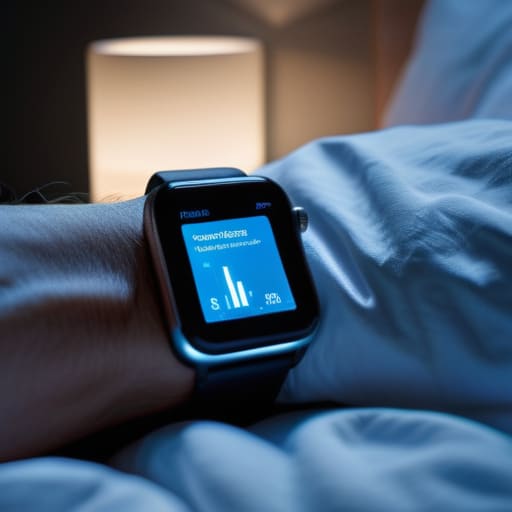
I see it every week in the clinic: a patient arrives, clutching their smartwatch like a holy relic, absolutely convinced they are experiencing catastrophic nocturnal awakenings because their app says they were awake for two hours. Here is the hard truth I tell them: your wearable is not a polysomnograph. It cannot see your brain waves. It is essentially a glorified pedometer strapped to your wrist, using movement and heart rate to guess what your brain is doing.
When your tracker tells you that you were “awake,” it is often just misinterpreting a period of light sleep or a slight shift in your heart rate variability. This creates a feedback loop of anxiety; you see a “bad” score, you worry about it, and suddenly you are managing sleep anxiety instead of actually sleeping. This obsession with the data often leads to more stress than the actual sleep fragmentation itself. We need to stop treating these estimated scores as clinical fact. Unless you are wired to a headbox in a darkened room, your tracker is simply providing a highly educated guess, not a medical diagnosis of your nocturnal awakenings causes.
The Great Divide Habitual Waking or Circadian Rhythm Disruption
This is where we separate the wheat from the chaff. In my years in the clinic, I’ve seen a massive overlap between people who have a physiological issue and those who have simply accidentally trained their brains to stay alert. If your waking is tied to a chaotic schedule—different bedtimes, varying caffeine hits, or that “just one more episode” mentality—you aren’t necessarily broken; you are likely experiencing circadian rhythm disruption. Your internal clock isn’t broken; it’s just lost. When your body doesn’t know when the sun is supposed to set, it doesn’t know when to release the melatonin required to keep you under.
On the other hand, there is the clinical side, where the waking is driven by something more stubborn, like sleep apnea or restless leg syndrome. However, even among those with genuine disorders, we often see a secondary layer of managing sleep anxiety. You wake up once, you panic about the time, and suddenly your cortisol is spiking, making it impossible to drift back. This creates a feedback loop where the fear of waking becomes the very thing that keeps you awake. We have to determine if you are fighting your biology or just fighting a bad habit.
How to Handle Night Time Waking Without Useless Advice
First, we need to stop the “sleep hygiene” obsession for a moment. If you are waking up at 3:00 AM, most internet gurus will tell you to buy a silk eye mask or stop eating blueberries after sunset. While those things are fine, they are often a distraction from the real mechanics at play. If your issue is rooted in circadian rhythm disruption, no amount of lavender oil is going to fix a body that doesn’t know when the day begins. You don’t need more gadgets; you need a predictable anchor. This starts with your wake-up time, not your wind-down time.
If we determine your waking is more about managing sleep anxiety—that frantic, racing-heart feeling when you realize you’re awake—the approach changes entirely. You cannot “force” sleep, and trying to do so only reinforces the neurological loop of wakefulness. Instead of fighting the clock, we look at cognitive tools to lower your physiological arousal. We aren’t looking for a magic pill; we are looking to decouple the act of being awake from the feeling of panic.
When Managing Sleep Anxiety Becomes a Clinical Necessity
There is a point where “trying to relax” stops being helpful advice and starts being an insult. I see it in the clinic all the time: patients who have become so hyper-vigilant about their own physiological responses that the act of sleeping itself has become a source of dread. When you start monitoring your heart rate or calculating exactly how many hours of REM you’ve lost by 3:00 AM, you aren’t just tired; you are caught in a feedback loop. At this stage, managing sleep anxiety isn’t about dimming the lights or buying a silk eye mask; it is about addressing a nervous system that has incorrectly flagged the bedroom as a place of combat rather than rest.
If your brain has begun to associate the bed with the frustration of being awake, standard sleep hygiene techniques will likely fail you. You can follow every rule in the book, but if your sympathetic nervous system is stuck in high gear, no amount of lavender oil will bridge that gap. We have to move past the superficial fixes and look at whether your anxiety has become a clinical driver of your wakefulness, requiring a more structured, psychological approach to decouple the bed from the stress.
Moving Beyond Sleep Hygiene Techniques for Real Results
We need to talk about the “sleep hygiene” trap. You’ve heard it all before: dim the lights, avoid screens, don’t eat late. While these are fine baseline suggestions, they are often treated as a panacea for much deeper issues. If you are waking up at 3:00 AM every single night, telling you to “avoid caffeine after noon” is like bringing a squirt gun to a house fire. It ignores the physiological reality of what is happening in your brain. For many, the problem isn’t a lack of discipline; it is a fundamental breakdown in bedtime routine consistency or a biological mismatch with your environment.
Instead of just stacking more rules on top of an already exhausted mind, we have to look at the mechanics. If your nocturnal awakenings are driven by a physiological trigger—like sleep apnea or restless leg syndrome—no amount of lavender oil or blackout curtains will fix the underlying pathology. We have to move past the superficial sleep hygiene techniques that populate wellness blogs and start looking at the data. Are you waking because your body is struggling to breathe, or because your internal clock is completely out of sync? Once we identify which one it is, we can actually start treating the cause rather than just decorating the symptoms.
Bedtime Routine Consistency and the Truth About Infant Sleep Cycles
I often see parents in the clinic who are utterly exhausted, convinced they are failing at sleep training because they don’t understand infant sleep cycles. There is a massive misconception that a baby’s waking is a sign of a broken routine, when in reality, infants move through sleep stages with a much higher frequency of light sleep than we do. If you are trying to manage your own nocturnal awakenings caused by a baby, you have to stop viewing every tiny stir as a “wake up” event. They aren’t waking; they are simply transitioning, and your instinct to intervene might actually be contributing to your own struggle with circadian rhythm disruption.
When it comes to your own rest, bedtime routine consistency isn’t about a magical sequence of lavender oil and reading; it is about signaling to your brain that the physiological shift to sleep is imminent. For many of my patients, the problem isn’t the routine itself, but the lack of a predictable anchor. If your “wind-down” involves scrolling through news or checking work emails, you aren’t building a bridge to sleep—you’re building a highway for managing sleep anxiety to take over the moment your head hits the pillow.
Five ways to stop fighting your bed and start actually resting
- Stop checking the clock the moment you stir. I’ve spent seventeen years watching people spiral into a panic attack just because it’s 3:14 AM. That little digital glow is a trigger, not a tool; it turns a momentary wakefulness into a mathematical calculation of how much sleep you’re “losing,” which is the fastest way to ensure you don’t get back to sleep.
- Fix your thermal environment before you change your supplement routine. If you are waking up hot or tossing because the air is stagnant, no amount of magnesium or “calming teas” will fix the physiological reality that your body cannot enter deep sleep stages if your core temperature is struggling to drop.
- Anchor your wake time, even on weekends. Most people try to “compensate” for a bad night by sleeping in, but you are actually just punishing your circadian rhythm for the next day. If you want to stop the middle-of-the-night wake-ups, you have to be willing to get up at the same time, regardless of how much you suffered the night before.
- Differentiate between “quiet wakefulness” and a crisis. If you are lying there still and calm, you aren’t “failing” at sleep; you are simply in a period of wakefulness. The anxiety comes from the belief that you must be unconscious to be resting. If you stop treating wakefulness as an emergency, your nervous system will eventually stop flagging it as one.
- Get out of bed if the frustration becomes physical. If you’ve been lying there for what feels like an eternity and your heart is starting to race, leave the room. Go sit in a dim chair and do something mind-numbing—not something productive, not something on a screen—until your sleep drive actually overrides your frustration. We need to break the neurological association between your mattress and your misery.
The Bottom Line on Night Wakes
Stop letting your wearable dictate your anxiety; a “low sleep score” is a marketing metric, not a clinical measurement of your brain waves or respiratory effort.
Distinguish between a lifestyle habit and a medical issue by looking at your wake times—if your schedule is erratic and your room is too warm, you likely don’t have insomnia, you have a rhythm problem.
Move past generic “sleep hygiene” advice and focus on the two things that actually move the needle: stabilizing your wake-up time and identifying when your symptoms require a professional clinical assessment rather than just a new pillow.
Frequently Asked Questions
If my sleep tracker says I'm awake for two hours but I don't remember anything, does that mean I actually have a problem?
It’s the classic “phantom wakefulness” anxiety, and frankly, it’s usually your tracker being overzealous. These devices use movement and heart rate to guess your state; they aren’t measuring brain waves. If you don’t remember being awake, you likely weren’t. You were probably just drifting through light sleep or a micro-arousal. Unless you’re waking up gasping or feeling like you’ve run a marathon, trust your memory over your wrist. Your brain knows better than an algorithm.
I've tried every "sleep hygiene" tip in the book, so at what point do I stop adjusting my bedroom and actually ask for a clinical sleep study?
You stop adjusting the blackout curtains and start looking for a specialist when your sleep issues are accompanied by physical symptoms that “hygiene” can’t touch. If you’re gasping for air, waking up with a racing heart, or experiencing restless, jerking limbs, that isn’t a habit—it’s a physiological event. If you’ve fixed your temperature and your wake time, yet you still feel like you haven’t slept at all, it’s time to stop guessing and get a clinical study.
Is there a way to tell if my middle-of-the-night waking is a breathing issue like apnea or just my brain refusing to shut off?
It’s the million-dollar question, isn’t it? If you wake up gasping or with a racing heart, that’s your body screaming about a breathing issue—likely apnea. But if you wake up with your mind racing, rehearsing tomorrow’s meetings, that’s psychological. One is a physical struggle for oxygen; the other is a cognitive refusal to disengage. If you’re exhausted despite “sleeping” eight hours, stop looking at your brain and start looking at your airway.