I spent a decade in the dark, watching patients wired to headboxes, and if there is one thing I’ve learned, it’s that the “sleep optimization” industry is doing shift workers a massive disservice. You are constantly being sold expensive blue-light glasses, magnesium cocktails, and high-tech gadgets that promise to fix your life, but most of that is just expensive noise. When people ask me how shift workers can protect recovery, they expect a list of complicated biohacks, when the reality is usually much more grounded in basic physiology. The truth is, your wearable’s “recovery score” is a mathematical guess, not a medical reality, and it’s often making you feel more exhausted by telling you that you’ve failed.
I’m not here to sell you a supplement or a subscription to a sleep app. My goal is to strip away the nonsense and look at the actual mechanics of your circadian rhythm. I want to show you how to distinguish between a genuine physiological struggle and the simple, fixable errors of a chaotic environment. We are going to focus on the evidence-based shifts that actually move the needle—like managing light exposure and temperature—so you can stop fighting your body and start managing your energy.
Understanding How Shift Workers Can Protect Recovery

When I look at sleep data from shift workers, I don’t see a failure of willpower; I see a biological system under siege. The fundamental issue isn’t just “being tired,” it is the profound circadian rhythm disruption management required when you are asking your brain to perform at 3:00 AM and then demanding it shut down at 9:00 AM. You cannot simply “will” yourself into deep sleep if your internal clock thinks it’s mid-afternoon.
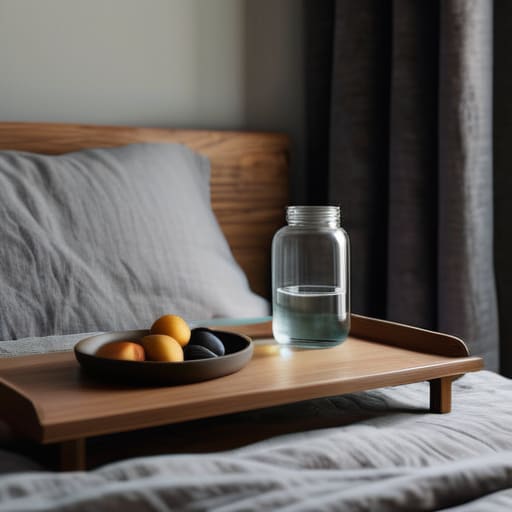
To actually protect your rest, we have to move past the generic advice of “avoid caffeine” and look at the mechanics of your environment. This means treating your daytime sleep like a sacred, clinical event. It requires optimizing rest periods through aggressive light control—blackout curtains aren’t a luxury, they are a physiological necessity—and managing your core temperature. Most people fail here because they try to sleep in a bedroom that is too warm, which is the quickest way to fragment what little sleep you do manage to get. It’s about creating a sensory vacuum that mimics the night, even when the sun is up.
Key Things to Know

First, let’s clear something up: your wearable’s “recovery score” is not a medical diagnostic tool. It’s a collection of algorithms trying to guess what your heart rate variability means, and it often fails the moment your schedule gets complicated. When I’m looking at a real polysomnography study in the clinic, I’m looking at brain waves and respiratory effort, not a proprietary number from a silicon ring. If you are managing fatigue in rotating shifts, you need to stop chasing a perfect score on an app and start looking at your actual physiological state.
The reality is that most of the “hacks” you see online are useless for someone whose internal clock is constantly being yanked around. You don’t need more lavender oil; you need rigorous circadian rhythm disruption management. This means being incredibly intentional about light exposure and temperature. If you’re trying to sleep while the sun is coming up, your body is fighting a losing battle against its own biology. We need to focus on the variables you can actually control—like the darkness of your room and the consistency of your post-shift wind-down—rather than obsessing over a digital number that doesn’t understand your life.
Practical Tips and Steps
First, let’s address the bedroom. If you’re coming off a night shift, your brain needs a signal that the day has ended, even if the sun is screaming through the curtains. This isn’t just about “sleep hygiene for night shift” workers; it’s about biological warfare against the light. Invest in high-quality blackout blinds or a heavy eye mask. If your room is even slightly warm, your core temperature won’t drop, and you’ll spend your precious hours tossing rather than resting. You need a cool, dark cave to trick your physiology into thinking it’s midnight.
Second, stop treating caffeine like a lifeline. I see so many patients who use stimulants to power through the 4:00 AM slump, only to find they’ve effectively sabotaged their own ability to crash at 8:00 AM. When you’re managing fatigue in rotating shifts, you have to be strategic. Use caffeine early in your shift, but draw a hard line a few hours before you intend to sleep. It’s also worth looking at nutrition for shift workers; heavy, sugary meals during a night shift can cause glucose spikes that make your eventual rest much more fragmented. Consistency, even in a chaotic schedule, is your best defense.
Common Mistakes to Avoid
The biggest mistake I see—and I see it constantly in the clinic—is people trying to apply standard “sleep hygiene” rules to a life that is fundamentally non-standard. You’ll hear influencers tell you to “wind down with a book” at 10 PM, but if you’re just finishing a night shift, that advice is functionally useless. Instead of trying to force a traditional routine, focus on circadian rhythm disruption management. This means accepting that your biological clock is being pulled in two directions and stop punishing yourself for not being able to sleep like a person on a nine-to-five.
Another trap is relying entirely on your wearable to tell you how you slept. I cannot stress this enough: your tracker is not a polysomnograph. It cannot see your brain waves or your respiratory effort. If your watch gives you a “poor recovery score” after a shift, it might trigger a cycle of anxiety that actually makes the next rest period harder to achieve. Don’t let a piece of silicon dictate your sense of well-being; focus on how you actually feel when you wake up, rather than chasing a digital number that has no clinical basis.
Final Thoughts
Look, I know how exhausting this feels. When you’re staring at a ceiling at 3:00 AM while the rest of the world is dreaming, it’s easy to feel like your body has simply broken. But I want you to remember that much of what you are experiencing is a physiological response to a massive environmental mismatch, not a personal failure of willpower. Whether you are focusing on optimizing rest periods during your off-hours or trying to navigate the social fallout of a non-traditional schedule, please stop punishing yourself for being tired.
The goal isn’t perfection; it’s stability. You cannot force your biology to ignore the sun, but you can certainly work on circadian rhythm disruption management by being intentional about your environment and your light exposure. If you can manage even two or three of these shifts—getting the room colder, the blackout curtains tighter, or the meal timing more consistent—you will start to see the difference between being “exhausted” and being “clinically depleted.” Be patient with yourself. You’re managing a difficult physiological balancing act, and you deserve more than just a “good luck” from the people who work nine-to-five.
Five ways to actually protect your rest (without the gadgets)
- Stop chasing a “perfect” sleep score on your watch. If you’re working a night shift, your tracker is going to tell you that you slept poorly because your heart rate didn’t drop in the way it does at 3 AM on a Tuesday. It’s not a failure of your body; it’s just a limitation of the sensor. Focus on how you feel when you wake up, not the number on your wrist.
- Anchor your wake time as much as the biology allows. I know, it sounds impossible when your roster changes every week, but the body craves a rhythm. If you have a block of days off, try to keep your wake-up time within a two-hour window. Drastic swings between “night owl” and “early bird” modes are what cause that heavy, brain-fogged feeling.
- Treat your bedroom like a recovery ward. When you are sleeping against the natural light cycle, your environment has to do the heavy lifting. That means blackout curtains that actually work—not just thin fabric—and a room temperature that is lower than you think you need. If your room is even slightly too warm, your body will struggle to stay in deep sleep.
- Manage your light exposure like it’s medicine. On your way home from a night shift, wear sunglasses. It sounds silly, but preventing that bright morning sunlight from hitting your retinas tells your brain the day has started, which triggers cortisol and shuts down your sleep drive. Save the bright lights for when you actually need to be awake.
- Differentiate between “tired” and “disordered.” If you find that even with a dark room and a consistent schedule you are gasping for air or waking up with a racing heart, stop trying to “lifestyle” your way out of it. You might have a clinical issue like sleep apnoea that no amount of caffeine or blackout curtains will fix. Get a proper referral.
The bottom line
Stop chasing a “perfect” sleep score on your wearable; for shift workers, the data is often noise that just fuels more anxiety.
Distinguish between a genuine sleep disorder and the physiological chaos of an irregular schedule so you don’t waste time on the wrong fixes.
Focus on environmental control—specifically light and temperature—rather than trying to “force” your body to sleep through sheer willpower.
Frequently Asked Questions
My wearable says my sleep score is terrible after a night shift, but I feel fine—should I be worried about my recovery?
If you feel fine, stop staring at the app. Your wearable isn’t measuring your sleep; it’s guessing based on movement and heart rate, and it has no concept of the physiological chaos a night shift causes. These devices are calibrated for a predictable circadian rhythm, not the reality of rotating shifts. If your cognitive function is sharp and you aren’t gasping for air, your “score” is just an algorithm being confused by your schedule. Trust your head, not the wrist.
How can I tell if my exhaustion is just a result of my schedule or if I've actually developed a clinical sleep disorder?
It’s the question I get most often in clinic. Here is the litmus test: if you can get a solid, uninterrupted seven hours of sleep on a weekend or a day off, and you wake up feeling relatively functional, you’re likely dealing with circadian misalignment—your schedule is just fighting your biology. But if you sleep for ten hours straight and still wake up gasping, or feel like you’re dragging through sludge regardless of your hours, we need to look at a clinical disorder.
If I can't control my shift pattern, what is the one most evidence-based thing I can do to protect my sleep quality?
If you can’t control the rota, stop trying to fix your sleep and start fixing your light. It sounds simplistic, but light is the primary driver of your circadian rhythm. The most evidence-based thing you can do is use bright light exposure immediately upon waking to signal “daytime” to your brain, and then aggressively use blackout curtains or high-quality eye masks to simulate darkness when you need to sleep. Control the light, and you control the signal.